How Women’s Basketball Became Troll-Proof

South Carolina women’s basketball coach Dawn Staley was up on game before a trollish question was asked of her on the eve of the women’s national championship last month. The garnet-colored words on her black visor, outlined in white, were almost as loud as what she had to say next. GAME ON.

The question? An unserious bit about one of the “major issues” in women’s sports right now – transgender athletes. Staley’s answer? If you consider yourself a woman, you should be able to play. Then she stood on business.

“So now the barnstorm of people are going to flood my timeline, and be a distraction to me, on one of the biggest days of our game,” Staley said. “And I’m OK with that. I really am.”

Her Gamecocks kept the same energy the following afternoon against Caitlin Clark and Iowa the following afternoon in an 87-75 title-game win that capped off an undefeated season. It’s hard to imagine there being much of a conversation after South Carolina’s undisputed run. But this is the power of Staley and of women’s sports. There was a time not too long ago when women’s sports only made headlines for trollish and sexist behavior. 

The game has changed.

***

Women’s basketball has always been a standard-bearer when it comes to social issues – whether related to racial justice or healthcare. The life and legacy of Houston Comets linchpin Kim Perrot are an invitation to learn more about the illness which claimed her life. The courage of Maya Moore and select Minnesota Lynx players was on full display before George Floyd became a martyr and those who avenged him set Minneapolis ablaze – literally and figuratively.

This is part of the reason why it has been my great joy to watch women’s basketball become hater-proof and troll-deterrent. There was never a question of the nobility of the sport, nor its entertainment value. Women’s athletics in general have been marketed to us in a way that promotes superficiality and lends to both racism and sexism.

A week or so after Staley’s press conference, a portly man who once argued against the right to vote for women made a crude comparative analysis on the basis of femininity which juxtaposed Brittney Griner and Angel Reese: “I wish Angel Reese would cover up a bit. But I much prefer the Reese look to Brittney Griner.”

This vile commentary, much like the question posed to Coach Staley, had the opposite effect of which it was intended. Those viewpoints promoted divisiveness, but in the triumphs of Griner, Reese and Clark, there’s room to celebrate inclusiveness and indomitability.  

What else is there to say about Griner? She survived a harsh 10 months inside of a Russian prison, an experience she recently recounted in a new, harrowing book. Griner talked about the adversity that she has faced since her childhood, her sense of patriotism and her PTSD, among other things. And yet, she remains undeterred, as evidenced in what might seem to be a modest question:

Q: Your DMs are still open?

A: Oh, yeah, yeah, yeah. I mean, they still come in. I thought about [closing them], but then, that one DM I get from a young basketball player that’s asking me for advice or something and I see it. …That could be one person that I help. I’m getting all these other people, but I don’t want to let them win, honestly. That’s why I won’t stop. They want me to just disappear.

Some see Reese as a forever antagonist to Clark, even though it has become abundantly clear in the last few years that they aren’t just rivals on the court, but in terms of celebrity. In a stunning 24-hour period, Reese made her way to the Met Gala, then made her presence felt in a preseason game for the Chicago Sky in a 101-53 romp over last year’s Eastern Conference champs, the New York Liberty. The turn of events was more than an affirmation of Reese’s vibrant personality. It was a star-powered stamp on what she means to her team and the WNBA.

It was a far cry from the tears she shed after her final college game, an Elite Eight loss to Clark and Iowa. What endured from that day was the care and concern of her former teammate, Flau’jae Johnson, as well as Reese’s commentary on receiving “death threats,” being “sexualized” and her mental health, which was encapsulated in one overarching phrase: “I’m still a human.”

Clark is a lightning rod in her own right, but save for Staley, she represents an epicenter in the sport. There are folks who are uncomfortable with that media bias and that perspective, for the same reason folks were uncomfortable with Larry Bird being celebrated over Magic Johnson in the 1970s. What resulted was both players eventually being recognized as saviors of the NBA. Clark’s Midwestern origins and long-range game are Bird-like in that regard, and there’s one person who sees the attention geared toward Clark as a blessing, not a burden.

“I want to personally thank Caitlin Clark for lifting up our sport,” Staley said after the Gamecocks won the national title in early April. “She carried a heavy load for our sport, and it just isn’t gonna stop here on the collegiate tour, but when she’s the number one pick in the WNBA draft she’s going to lift that league up as well.

“So Caitlin Clark, if you’re out there you are one of the GOATS of our game and we appreciate you.”

***

What happens now in regards to women’s hoops – and athletics in general – is largely up to us. Yes, the WNBA has to meet the moment when it comes to fan interest, and when it comes to charter flights, should heed the frustration of the sport’s biggest star, A’ja Wilson. Still, these challenges should not be used as they have been historically – as an indictment of the WNBA and its players.

I bought the WNBA League Pass a few weeks ago and just caught the Las Vegas Aces preseason game in Columbia with my mom for Mother’s Day weekend. The multiracial and multi-gendered collection of people in attendance weren’t just the result of a homecoming for Wilson or the Gamecocks’ dominance. It even goes beyond the staying power of Staley, who has excelled as a player, coach and an ambassador. We are seeing the dawn of something much bigger, something that ties in the sport’s proud past with a promising future.

The WNBA declared that it had “next” almost 30 years ago. It is beautiful to see the league – and women’s basketball – in the here and now.
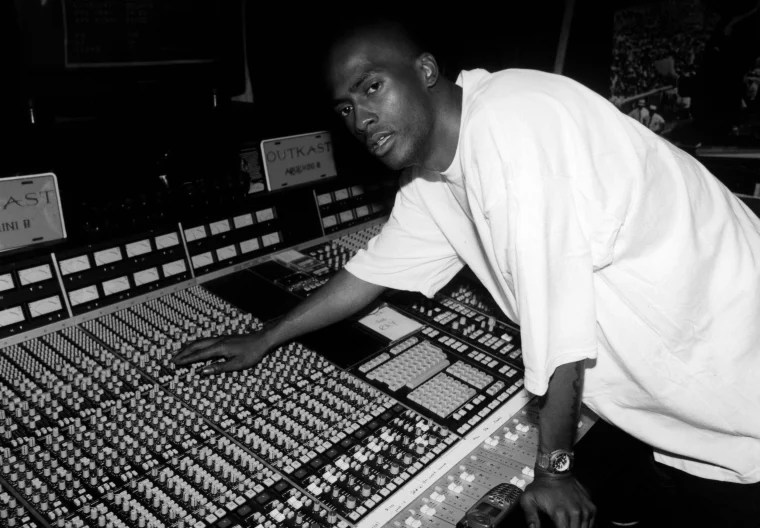

A World With No Future (Requiem For Rico Wade)

The Future is arguing with hip-hop, arguing with Drake, arguing with Kendrick, arguing with J Cole. Some call it beef, but I call it an impossible burger – eating from the troughs of artificial intelligence. The future feels myopic, but not because of the songs which might or might not be taken off of streaming services. Rico Wade just died, and that devastating loss has shown just how disorganized the noise really is.

If Rico’s death hurts at this moment, you know about the legends of “The Dungeon” and how that miry clay molded the South. Above many things, it is a testament to what happens when you invest in Black children and the arts. That would be a conversation for another day, if there were a future.

I’m thinking about dreams right now, how they can be glimpses into tomorrow. Mostly, they are shiny shards which cut conviction and regret, in the hands and across the face. How’d you think you got all of those wrinkles? I’m grateful for the producers like Rico, folks who refused to ignore their loud, bass-thumping premonitions. I’m a writer, supposedly, and that’s cool, but the words keep me up at night.

Sometimes there are no words. I went to the Variety Playhouse and listened to Three Stacks play the flute. Some people didn’t understand why, much like they didn’t understand The Love Below or why the South got something to say. But I listened to Andre and I appreciated the unpredictability of it all, laughed at his impish humor and mischievous grin. He told me to make up new languages with my children. He was trying to save the future.

Killer Mike, whose politics I don’t always agree with, can’t find the words right now either. That’s saying a lot for someone who just won a handful of Grammys for exceptional rap prowess in an era of streams which lack consciousness. The awarded album was so poignant, so spiritual that it carried the name of an archangel – Michael.

When I first came across Janelle Monae, it was at a festival in Augusta with a quirky name – Westobou. She was quirky, too, and electric, like James Brown. She slid across the stage, talking about tightropes, a troubadour with a pompadour. I saw her again some years later, when she was just a face in the crowd at the funeral for the Rev. Nathaniel Irvin, perhaps my favorite pastor of all time. In his old age, he had a firm, yet playful jab, and a knack for charity.

He was from a place called Boggy Branch, which was a dungeon of sorts, and he, too, got it out the mud. That day reminds me of how, in the Southern soil that cultivates civil rights and art movements, that you never know when you’ll bump into a giant or two.

I’ve written so much and yet I haven’t said much about Rico Wade, the father, the son, the Black man. This is what Black Christians do – we profess one thing, but we often celebrate the created more than the creator. It’s why the performers who were formed in and by the Dungeon Family have amassed more fame than Wade, even with the ONP documentary and various legends. That is why it’s particularly sad that the good brotha died at 52, and not just because I’m 40 and just had a few cheddar biscuits and a brownie sundae for leisure yesterday. Fifty-two should be reserved for the number of weeks in a year, not the number of years in a lifetime. I spoke to Danyel Smith once, she with her finger on the pulse, the vibe. Last year, she wrote about the mortality rate of our hip-hop heroes, and how many of them had died at a young age. It was harrowing, much like the time Phonte Coleman wrote about expensive genes. “It’s like 40 years is ¾ life,” he wrote.

Ten more years is no future, certainly not enough future to raise my children. It makes the future tense, makes what we “might do” or “will do” that much more deficient. It’s gotta be done now, and with that, a singular prayer – that Black men might be able to enjoy the fruits of their labor, to enjoy old age. There are some, albeit few brothas, who resent being called “Unc”. But Unc is a blessing – a title and rite of passage that so many of our brothas were unable to attain. In the old way, that phonetic sound signified the key to life – ankh. I love that it is abbreviated, because in the old way, saying “uncle” was a concession. And I’m not willing to give up yet.

Better to wade in streams of consciousness, like our dear brother Rico, who like Atlanta’s native son, understood the fierce urgency of now. Or, as CeeLo Green put it:

You’ve got to realize that the world’s a test

You can only do your best and let him do the rest

You’ve got yo’ life, and got yo’ health

So quit procrastinating 

Augusta Wants A New Entertainment Complex, But Has A Governmental Complex To Solve

This column appears in this week’s edition of Urban Pro Weekly.

Forty years ago, in the old St. Joseph’s Hospital, I was born. I love Augusta. Always have, always will. When I see people promoting a project with a tagline of “Building Augusta’s Future,” I’m all ears. If the project is promising new jobs, economic impact and exciting acts, even better.

I just believe we can do those things independent of a $400 million price tag.

Anything that you love, you must learn, and so it goes with Augusta. There are some people who want a new entertainment complex, but haven’t yet made peace with the city’s governmental complex.

I was a younger reporter more than a decade ago when conversations were had over the boondoggles known as the convention center and the parking deck. Since that time, I have wondered how the city could have used those funds more constructively.

The answer wasn’t in buildings or businesses. The answer has always been and will always be the people.

It’s tough for me to talk about building a new entertainment house, when so many Augustans are homeless. It’s tough to talk about the promises of shuttles to alleviate potential parking problems with a downtown arena, when lack of transportation denies opportunities to so many.

This isn’t just an Augusta problem – it’s a national problem. Society prioritizes entertainment over empowerment, and we elect men and women who carry out this shallow agenda. I’m not disregarding the arts – Lord knows, as someone who works in the media and as someone who has young children, I believe in the enriching cultural power of music and storytelling.

I also understand that part of the reason why Augusta can’t get big acts is because of the government’s refusal to allow Black media to tell this city’s story. I can personally attest to reaching out to the entertainment companies who carry Augusta’s name, only to be ignored or unheard. That infrastructure is just as important to promoting community and raising arenas as the physical materials we use to build.

I find this conversation ironic as I notice a certain devil in the details – the disappearance of James Brown’s name in talks of a new Augusta arena. For Brown’s flaws, there were two things that he valued – people and the power of the media. This is why the holiday charity events which carry his name still endure, and why his legacy as a radio station owner, ever hidden in plain sight, shows his power as an entertainment mogul. Leaving Brown’s name out of the arena and out of the entertainment conversation is like putting a statue of James Brown in town that pales in comparison to other nearby statues, much less the white and racist confederate monument only a few blocks down the street. Surely Augusta wouldn’t allow that to happen.

Augusta has an opportunity to help people, and it isn’t through an entertainment arena. We can increase economic impact, create new jobs, bring in new acts and raise community morale by improving transportation, building houses for the homeless and creating the type of partnerships between Black media, the government and the community that inform and empower us all.

We can do all of that for well under $400 million. Best of all, we get to keep the change.

Feature photo via the Jordan Trotter website.

Streaks

I drove to Graniteville, South Carolina last Friday and stood at the 20-yard line. My eyes became lost in the sea of orange that was crashing into the night sky. I was there to see the unexpected — the miracle that might be Midland Valley High School’s first football win over rival North Augusta High School in a quarter-century.

Twenty. I’d seen a lot of streaks in my 20 years covering high school football. The first star was Brian Leonardi, who wore the green and gold garb of my alma mater. He ran right down the middle of Petticoat Junction, cutting a path right through Silver Bluff’s heart en route to a defensive touchdown.

I was younger then and devoid of the understanding that journalists don’t cheer in the press box. “Run,” I yelped at the top of my Aiken lungs. The fans a few feet underneath cut their blue eyes at me.

The next streak was Dekoda Watson. I don’t remember whether it was at Aiken’s or South Aiken’s stadium — all I remember is that Watson scooped up a fumble and ran in the face of history. I still can’t believe he didn’t score, but history can be like the wind sometimes.

I blinked again and Watson had retired from the NFL. Only yesterday, he blocked a punt against UCLA in the Emerald Bowl and showed he was a hidden gem. Watson’s streak was less about games played or plays made, though. It was about a streak of push-ups and prayers that he lifted as a kid, a road paved with literal faith and works.

Streaks are fleeting. One minute, the expectation of beating your crosstown rival is a birthright; the next minute, the winds of history are eroding your hapless and foolish traditions.

Not only are streaks just a flash in a pan, they don’t tell the whole story. How could they? A streak only cares about winning and losing, which is ironic because we define a hint of someone’s character as, you guessed it, a streak.

That 20-yard-line was my temporal loom. I saw the faces of the future fly past me, into the stands and down the sidelines. There was Midland Valley’s Traevon Dunbar, on a 2,000-yard dash from Silver Bluff to Midland Valley to a D-1 program if these college coaches have any good sense. There was North Augusta’s Corey Tillman, whose fleet feet and charmed arm paled in comparison to his black and gold heart.

There were the faces that looked like mine. When I streaked toward recess on the first day of first grade at North Aiken Elementary School, I was intercepted by the playground bully, Travis Mays. Years later, he put on football pads and never stopped raising hell.

I saw Travis and laughed, in that gregarious way old friends do. Dap is insufficient to convey appreciation. A hug ensues. Travis is a mentor now, and Trav sounds too much like Traevon to be a coincidence. Streaks cannot convey this.

Streaks might forget the indomitable Daniel Carr, whom God not only saw fit to name after a sleek, motorized machine, but also made his spirit animal a wild horse. Carr never beat North Augusta in football, but he didn’t need to on his way to winning state titles in both football and basketball. I remember him, nearsighted, playing basketball with my kid brother. He took off the glasses and became Superman.

It’s not enough to stuff 5,000 or so people into a modest high-school stadium. You gotta fit their hopes and dreams in there as well. Blue and orange and black and gold pushing back and forth against each other for an eternity. And then, it happened. Fourth and four, The Valley up 49-42.

Surely, Midland Valley’s Mustangs would give the ball to Traevon Dunbar, one of the best running backs in the area. No, the state. No, the country. They didn’t.

Surely, North Augusta’s Yellow Jackets would concede four more yards on top of the countless yards that both defenses had given up over the course of the evening. They. Didn’t.

Tillman got the ball in his hands and became a quarter-century’s worth of inevitability. A throw here, a run there. Now you see me, now you don’t. Touchdown. 49-48, MV. Two-point conversion because why not? We are.

Full stop. No good!

“No good?” inevitability said. No, WE good. Jackets recover the onside kick and the darkness starts to overtake The Valley. Again.

I find myself on Midland Valley’s sideline as all of this is happening, next to two young men who work at a nearby ice cream parlor. This wouldn’t mean much, except they are draped in inverted orange sherbet jerseys, with a hint of blueberry. For weeks, I would go get Sunday dessert for my wife and kids, and they would tell me about their undefeated team. Funny thing is, I never saw them as football players, just kids working a summer job into the autumn. Streaks can’t convey this.

With five seconds left, inevitability lined up for a field goal down the middle of the Valley. It took a few steps back, then to the left. The snap, the hold.

Inevitability was blocked.

Those melting Dreamsicles were wrapped up in delirium. Orange floats. The announcer lost his mind, as if this wasn’t supposed to happen. It was.

A broken streak only tells half the tale. The other side of it is that a new streak begins. That still feels deficient because I know what it’s like to fight for a yard, to try to find the words after seeing something indescribable, and better yet, feeling something that you can’t explain.

That scoreboard ain’t nothing but a bunch of lights, talking about winning and losing. But the speed of light ain’t as fast as the universe is vast. I didn’t come to appreciate that from winning and losing. I came to appreciate that from learning. And that streak is a Mobius strip.

Angela Bassett and the Paradox of Color

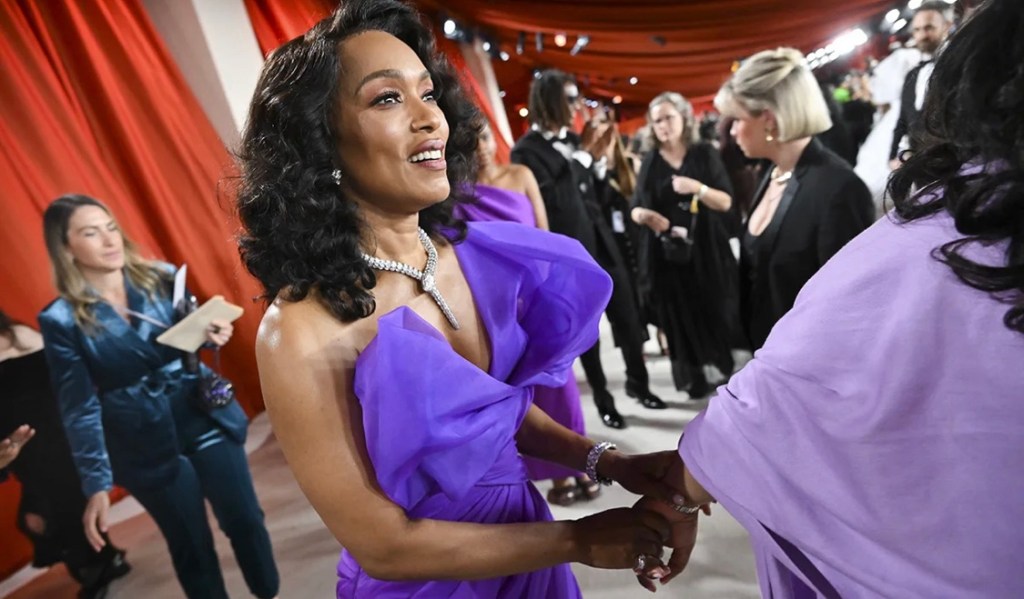
Angela Bassett was the picture of royalty long before she put on the crown of Queen Ramonda. Thirty years ago, she took on the iconic role of Tina Turner, the Queen of Rock and Roll. The year before that, she played the role of Malcolm X’s honorable wife, Betty Shabazz.

Last Sunday evening, Ms. Bassett, draped in regal purple, was poised to receive a long-awaited Oscar. And then, she didn’t.

The contortion of Ms. Bassett’s face became a point of contention, as some believed she was a “sore loser.” I contend that it’s not her expression that we should second guess, but the Academy Awards’ treatment of Black people in general.

I could talk about the segregated circumstance in which Hattie McDaniel received her Academy Award, but I honestly don’t have to travel that far back in time. I can simply look at the lack of nominations for Viola Davis in The Woman King and Danielle Deadwyler in Till as woefully apparent examples. I used the term “indignity” in a previous review of Till, and that term holds well in the present in light of recent news.

According to reports, an anonymous male Academy Award voter dished out a vitriolic response to the lack of nominations for “Till” and “The Woman King”:

“When they get in trouble for not giving Viola Davis an award, it’s like, no, sweetheart, you didn’t deserve it. We voted, and we voted for the five we thought were best,” he finishes. “It’s not fair for you to start suddenly beating a frying pan and say [they’re] ignoring Black people. They’re really not, they’re making an effort. Maybe there was a time 10 years ago when they were, but they have, of all the high-profile things, been in the forefront of wanting to be inclusive. Viola Davis and the lady director need to sit down, shut up, and relax. You didn’t get a nomination — a lot of movies don’t get nominations. Viola, you have one or two Oscars, you’re doing fine.”

This arrogance doesn’t happen in a vacuum, as evidenced by a decided lack of diversity among Oscar voters. #OscarsSoWhite as a hashtag, or rather, a way of life, doesn’t deter the prevailing culture of the Academy Awards. Why? Theirs is a monopoly of power far more than it is a menagerie of prestige. The final indignity for someone as accomplished as Ms. Bassett, or Ms. Davis, is to expect them to consent in silence.

Color should not be a paradox, and yet, it is – everything, everywhere, all at once. Michelle Yeoh won Best Actress for her role as Evelyn Quan Wang, and some outlets noted that she was only the second “woman of color” to win Best Actress at the Academy Awards. Respectfully, that homogenizing “woman of color” tagline did some heavy lifting.

Color, diversity – pejorative terms for some – can be burdens of responsibility for Black actors while being beacons of light for other nonwhite thespians. This is not unlike the realities of America’s various civil rights movements, which see profound gains for other marginalized groups while African-Americans suffer in anti-Black policy and practices. This is not an indictment of Everything Everywhere All At Once, as it was truly a beautifully eclectic movie with familial and existential themes. It is, once again, a challenge to Hollywood’s white lights and seemingly supremacist infrastructure. 

Ironically, a pair of pugilists provided solace to Ms. Bassett. “Hey Auntie,” Michael B. Jordan said slyly, a callback to his famous line as Killmonger in “Black Panther.” 

“We love you,” added Jonathan Majors, who shared the screen with Mr. Jordan in the wildly successful third installment of Creed. Their response was in lockstep with the attitude of Black Hollywood over many decades – graciousness in the face of grating results. The snubs are countless, and the face of that disrespect might be Denzel Washington. Even his Best Actor win for “Training Day” paled in comparison to setbacks after iconic performances in “Malcolm X” and “The Hurricane.”

Of course, color was never the problem. If anything, color has accentuated silver screen productions since the invention of Kinemacolor, then Technicolor and subsequent innovations. It is unfortunately ironic, then, that Hollywood’s biggest stage remains largely colorless. Further, the industry that is at times openly critical of “superhero movies” is largely silent when it comes to film’s greatest villain – racism.

A Self-Fulfilling Prophecy

Hours before Jackson State University won its second consecutive SWAC football championship, before its celebrity coach caught a plane in the dead of night to roam with the Buffaloes of Colorado, Tiger fans joined in unison to serenade Deion Sanders with a bit of King George’s “Keep On Rollin’.” 

“If you wanna go baby, go ‘head walk out the door, one thing you gotta remember, is one monkey don’t stop no show,” many fans in attendance jeered, with a tone that sounded jovial, albeit jilted.

Depending on where one stands with Sanders’ decision to take the job as Colorado’s head coach, he’s either a savior who did all he could for Jackson State and historically Black colleges and universities (HBCUs), or a sellout who used Black college football as a stepping stone to the resources (and money!) of a predominantly white institution (PWI).

Respectfully, I think most people – Sanders included – have made him the epicenter of this experiment for the last two years. Now is a good time to widen our collective gaze and look beyond Coach Prime and athletics, and into the intent and mission of HBCUs.

The mission of Black schools is a radical one within the framework of American history and politics: to educate Black children. It’s no coincidence that a host of Black schools were established in the years following Reconstruction, nor is it a coincidence that a host of Black schools have been heavily underfunded by state (and by extension, federal) governments.

In short, we can’t have a conversation about HBCUs, certainly not Black college athletics, without talking about the mutual history of underfunding and integration.

“Equal but separate,” the segregationist doctrine we commonly note as separate but equal, was always a misnomer. Black institutions – hell, Black people – would always be denied monetary resources and governmental access under a racist regime. Integration presumably, and that presumption is working double overtime, allowed Black people to engage in white spaces, or more appropriately, allowed Black folks within the proximity of resources only allowed to white people. This allowance did not change the cultural underfunding of Black spaces and Black people.

This is the crux of where Sanders’ decision to leave JSU hurts. Whether intentionally or not, Coach Prime is perpetuating the assumption that Black schools are “second-class” to PWIs. It’s not just hurtful that he will likely transport the resources from a Black school to a white school in a town with a microscopic Black population. It’s the callousness with which he is doing it, from his abruptness after winning the SWAC championship on Saturday, to the lack of care in which he addresses players at both JSU and Colorado in terms of the transfer portal.

Undoubtedly, some people will say Sanders’ move is for the culture. Sanders himself said in the coaching ranks, you’re either “elevated or terminated.” Absolutes such as those make me wonder whose “culture” is that? Capitalist culture? Football culture? Reminds me of Kendrick Lamar’s commentary on culture on “The Heart Part 5”.

Personally, I believe our perspective of culture has become far too individualistic and materialistic. That myopic view is how people can simplify Coach Prime’s decision by essentially saying it’s a matter of a pay raise. Sanders’ contract at Colorado is a product of HBCU uplift, contrary to the thoughts of those who see his presence at JSU as a one-sided benefit. Jackson State gave Sanders a place to cultivate his coaching prowess when PWIs weren’t checking for him.

When it comes to HBCUs, community has always been more important than capitalism. It is certainly the community that has sustained our beloved institutions. I appreciate this more so as the son of HBCU graduates and a proud Florida A&M alum. I think about the tireless efforts of my former academic advisor, Frances McMillon. In hindsight, she stood in the gap for my scholarship brothers and sisters, people whom I share kinship with more than 20 years later. She represents so many Black women in the HBCU space – nurturing and challenging students who will soon become professionals.

I think about those mothers, I think about foundational Black historians like Carter G. Woodson, the “father of Black history,” and I shake my head when I hear people say Sanders “doesn’t owe Jackson State or HBCUs anything.” It’s why I bristled at his perpetual criticisms of HBCU “tradition,” because they came from a place of capitalism, not a place of care. The distinction between Sanders and HBCU faculty and staff members of tenure isn’t just investment of time and tutelage over many years. It’s about trust in something bigger than yourself.

Being fair, Coach Prime made it clear that he would leave for a PWI at the first opportunity he received. I didn’t need him to make that declaration, because he said nearly 30 years ago that money would change his wardrobe, his phone number and his address.

Must be the money, he said. It was a self-fulfilling prophecy.

Who Won The Warnock-Walker Debate? Not Black Men

My sincerest prayers and condolences to anyone who watched last Friday’s political debate between Georgia senatorial candidates Raphael Warnock and Herschel Walker. Some outlets had the nerve and audacity to ask which of the two Black men “won” the dialogue, even after a photo of a badge-toting Walker went viral. 

I don’t think there’s any question about who would be the better candidate for the seat. Warnock is more sensible, politically savvy and conscientious than Walker. With that said, I can tell you definitively who LOST the debate – Black men.

During the discussion, the moderator asked both candidates if they believed that the minimum wage should be raised. Regretfully, neither candidate said it should be raised.

Walker’s stance was expected – he is, after all, a badge-carrying Republican. Warnock’s stance was disappointing, since he is the pastor of the world-famous Ebenezer Baptist Church. I’ll share a quote from one of Ebenezer’s former ministers, the Rev Dr. Martin Luther King Jr., from his last book, Where Do We Go From Here: Chaos or Community?

I am now convinced that the simplest approach will prove to be the most effective–the solution to poverty is to abolish it directly by a now widely discussed measure: the guaranteed income.

Dr. King wrote that in 1967, and we are here 55 years later watching two Black men discuss their reluctance to slightly bump the minimum wage. It is a familiar approach by Black folks in politics – making reformist suggestions, if any suggestions at all, instead of radical ones.

This approach, which lacks courage, certainly hurts Black people, the working class, and poor people overall. When Black men are the faces of such an approach in politics, it flies in the face of the realities which face brothas overall.

The outcomes that we face in education, healthcare and employment require us to be bold. The Black women in politics are reflective of educated sistas – upwardly mobile. Their politics can be similarly conservative at times, but there is cohesion and charisma with the likes of Stacey Abrams and others.

We see none of that with Warnock and Walker – and that is part of the reason why this race is so close. There needs to be a radically political uprising among Black men, one that responds to the perpetual disrespect we face in this society. This doesn’t mean we should run to the Republican Party – far from it. We need to craft our own local political movements and unify in a way that demands the attention of states and the nation overall. 

Anything less will leave us at the mercy of bad politics, and those politics are mercilessly emasculating Black men.

Revenge and Tradition

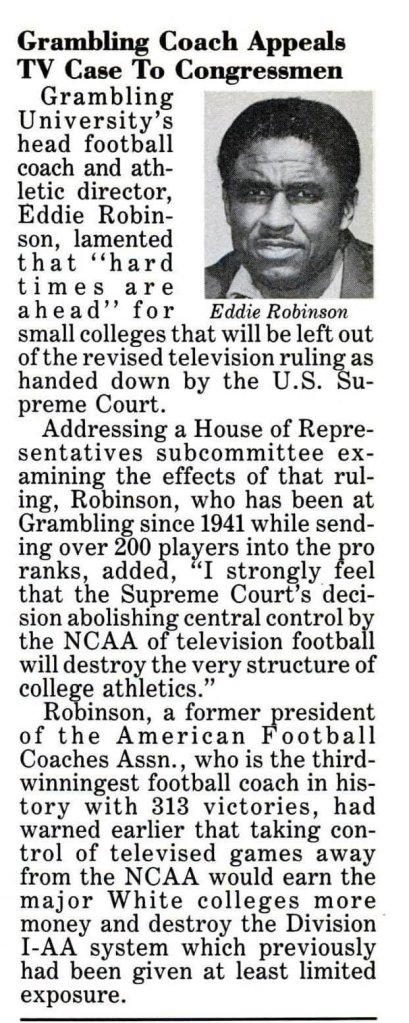
When you hear the names Deion Sanders and Eddie Robinson, you think about the absolute best that Black college football has to offer. What the two men offered after last Saturday’s homecoming game between Jackson State and Alabama State was high-quality beef.

According to reports and viral video, there was some hand fighting between the two during the post-game handshake. Personally, I preferred the moves at the line during the Orange Blossom Classic between Chad Ochocinco and Coach Prime, but I’m a Rattler. The real excitement could be found in the postgame commentaries from Robinson (not related to thee Eddie Robinson) and Prime:

“(Prime) ain’t SWAC. I’m SWAC, he ain’t SWAC. He’s in the conference, doing a great job, can’t knock that, got a great team, his son should be up for the Heisman Trophy, I love Shedeur, great player, I love what he’s doing for the conference. …But you’re not going to come here and disrespect me and my team and my school and then want a bro hug. Shake my hand and get the hell off.”

Prime’s response?

“I’m not one to come back the next day and you going to pick up the phone and you going to apologize and we straight,” he said. “No, not whatsoever. You meant that mess. And one of the comments that kind of disturbed me out of all the comments, that I’m not SWAC. Who is? I got time today. Who is SWAC if I ain’t SWAC? Who is SWAC if I ain’t SWAC?”

Whether Coach Sanders is SWAC or not is as ironic as it is unimportant. Employing exclusivity against a man whose nickname is Prime is intriguing and yes, petty. With that said, I like to think that Black folks are much more adept at being familial than we are at gatekeeping, and what makes HBCUs a safe haven for all Black folks is that such institutions do more to welcome all people instead of warding them off. It’s not a perfect practice, but it fits our sense of hospitality.

With that said, there’s no disputing the spotlight that Prime’s brand has placed on HBCU football, which is a good thing. At the same time, Prime’s brand is a reflection of the man himself. He’s never been humble, only noble. I mean that in the elitist sense. Must be the money, yes? Is he at Jackson in the spirit of uplift, or the spirit of nepotism? Why bring in Barstool, a reported racist entity, to cover a potential revival in Black college sports, instead of a historically Black outlet? These are the tough questions that I asked quietly when Prime was hired, because I wanted his presence at Jackson to be about more than his brand. I knew that Black colleges were in crisis and that our fate is larger than football.

I think about our fate when I hear terms like “money game” and when folks derisively speak about HBCUs as being lesser. Black pride is a beautiful thing. It’s also an understandably sensitive thing. When you make comments such as those Prime made at halftime of the JSU-Grambling matchup and those before the Bama State game, conflict is inevitable, either spoken or unspoken.

Again, Black pride is a beautiful thing, because it is the start of Black power. We love greatness. We manufacture it, even if we aren’t always able to monetize it. In the current tone and lexicon of being “him,” we are THEM. And we’ve always been seen as them, even in this hellhole of a country.

I was reminded of that when a white man who spent the better part of his life exploiting young Black male collegiate athletes had the nerve to speak on reparations the same day as The Handshake. The unspoken part of Tommy Tuberville’s comments are that there are former and present coaches who share those same sentiments, not just about reparations, but about Black people. It’s why I resent respectability politics, whether it’s “bootstraps” gibberish or taking a proud logo off of a helmet as symbolism. Our morality shouldn’t be based on the white gaze or white supremacy. The souls of Black folk represent the soul and conscience of America.

There’s a lot at stake for Black folks as it relates to our colleges, and the role of athletics and communications within that framework. Thee Eddie Robinson understood that:

THEE Eddie Robinson.

Hard times are here, and we should be more courageous, if not outright radical. Six students at FAMU are suing the State of Florida in the name of land-grant “reparations,” a gesture that should be matched by every land-grant HBCU in the country. 

Turning pride into power in this way eliminates “HBCU level” and “money game” rhetoric because it challenges the status quo of college disparities. Truly, this effort is bigger than “winning and losing” because it not only holds oppressive forces to account, it encourages Black people to organize.

When people talk about Black colleges, this is my expectation. And when it comes to protecting and preserving Black schools, I’m of the mind of legendary FAMU coach Jake Gaither – be “mobile, hostile and agile.”

In Appreciation of Cam Newton

The flamboyant QB’s return to Charlotte brings back good memories

by Ken J. Makin

A single throw sold me on the prospect of Cam Newton being drafted by the Carolina Panthers — a fourth-down, fourth-quarter rope during the 2010 Iron Bowl.

It was a throw that Newton wasn’t supposed to be able to make. He was only a running quarterback, they said. Newton’s throw to Darvin Adams — a sidearmed dart toward the sideline where only the receiver could grab it — suggested something entirely different.

I’d seen a season full of highlights, and win or lose, I didn’t need to see anything else. It was big Terrell Owens energy after that — “that’s my quarterback.”

Of course, Newton led Auburn to an improbable 28-27 win over rival Alabama, having turned a 24-0 deficit into dust. Just over a decade later, Newton is back for a second stint with the Panthers, after a previous nine-year run that included an MVP award, a Super Bowl run and undeniable status as the franchise’s greatest quarterback.

Back in 2011, the decision on whom the Panthers should draft was easy. Andrew Luck decided to stay at Stanford. Jake Locker? Blaine Gabbert? They didn’t have Newton’s ceiling or credentials.

I knew what a Black quarterback would mean for the Carolinas. I watched as the city of Atlanta rallied around Michael Vick, and how he seemed to always be a step ahead of my Panthers. Now, it was our turn. Thankfully, the Cats picked Newton. There was inexplicable talk about how Cam wouldn’t be able to get it done as a passer, an assessment that was shattered in his first two NFL starts. He threw for 422 yards against the Arizona Cardinals, which broke the rookie opening day record set by Peyton Manning. He outdid himself with a 432-yard passing effort the following week against defending Super Bowl champion Green Bay.

Newton’s partnership with wideout Steve Smith was electric, and he won various awards, to include Rookie of the Year. It’s tough to compare that Cam with the injury-riddled player who struggled to get the ball downfield during the 2019 season.

I can appreciate Newton getting a second shot — largely because of his willingness to get the COVID vaccination shot. However one interprets Cam’s fashion sense or media presentations, one thing is indisputable — his love for the game of football.

That love extended to his play on the field. For all of the touchdown balls given to children in the stands, the play that I believe captured Cam’s essence happened in the 2016 NFC championship game.

Seven years prior, the Cardinals came to Charlotte and ruined a 12-4 season. Then-Panthers quarterback Jake Delhomme turned the ball over six times in a 33-13 season-ending loss

Things went differently for Cam and the Cats.

Up 27-7 late in the third quarter, Newton turned the corner and had a sure touchdown. And then, he went full Superman, dived over his offensive lineman and somersaulted into the end zone.

It was the type of play that some might deem “reckless.” A more choice word would be exuberant, or headstrong. 

That’s how Cam plays the game — flamboyantly and fearlessly, with a warmth extending to young fans and casual onlookers. He was a superhero of sorts, at times, less Superman than Meteor Man, where even as his powers waned, he remained true to himself.

At his best, he was a trash-talking savant who would run you over just as fast as he would flick a dart down the field. It didn’t matter whom he had as teammates, either. Newton had to do more with less, and that was a problem that led to some of his prime years being wasted. 

That 2015 year was special, though. It wasn’t just about the 15-1 regular season mark. It was about Cam’s candor, how he made it known that he was an “African-American QB that may scare a lot of people.” It was a statement as complex as Cam — loud in its delivery, yet subtle because in the case of how the NFL has historically treated Black quarterbacks, what’s understood doesn’t need to be explained.

Cam pulled back on some of those comments after the Super Bowl loss, which should be attributed to political influences within the Panthers organization. Still, with the rising influence of Colin Kaepernick, Newton looked to be lesser than as it related to social justice issues.

He wasn’t. He was a man trying to do it his way while figuring out the way to go. He regained his footing in 2018, when the Panthers started out 6-2 and Newton found some of that MVP SuperCam magic. Then a big hit from T.J. Watt in a blowout loss to the Steelers on a Thursday night led to a nagging shoulder injury. Just like that, the Black Cat mojo was gone. He became the Prince of a Thousand Enemies, some merited, some unmerited. 

But what a wild ride it was.

Newton’s journey is a cautionary tale. In the short term, it’s a call to get vaccinated. COVID largely derailed Cam’s career as a New England Patriot. From a long-term perspective, Cam’s time up North offered an unfortunate refrain — the thoughts of doubters who nitpicked his personality and his playing style.

Newton has always responded to those doubters with confidence, and I sense he will do the same now that he is back in Charlotte. Maybe this time, the franchise and certain Charlotte outlets will appreciate him. Perhaps once more as a heir to McNair, with his own flair, Newton will press his fists together, then move them away from each other in a show of strength. Here’s to Cam continuing to show people what he’s made of — pure heart.

Bonfire For The Vanities

Ken Makin

Before Wednesday’s inauguration, nearly 200,000 flags were placed to represent the hundreds of thousands of people who wanted to attend the presidential event, but could not because of COVID-19.

With respect to the laborers and the tremendous effort involved, twice as many flags should have been placed.

The morning before the inauguration, more than 400,000 lives had been claimed by the coronavirus — and the country’s mishandling of the pandemic. Two Wednesdays ago, the unthinkable happened — a storming of the Capitol by rabid Trump supporters who wanted to overturn the election.

And yet, here were our heroes for an inauguration — with pomp and circumstance, performance and grandstanding, because it takes a lot of imbalance to stand on the bodies of over 400,000 people.

What are we celebrating again?

During the course of King Solomon’s biblical lament, he remarked there is a time for everything — a time to weep, and a time to laugh; a time to mourn and a time to dance. But what are we celebrating, again? Did hell turn to heaven that fast?

Are we celebrating the end of Trump’s term? Ding dong, the witch is dead, they said. 

And yet the spell remains — the witchcraft of white supremacy, which certain predates the wicked witch. It can be seen in burning crosses and hoods with holes cut in them, and so much more. It is so potent, so pungent that even among the self-serving parade, Washington was a city at war. Even among the soldiers, one could not tell what each individual fought for.

Compromised? Compromise! Yes, that’s the word of the day. But you won’t hear it like that. You’ll hear the words “unity” and “bipartisanship.” We will forget that they have the power to reverse the policy of the last four years and the last four hundred years. This is what they campaigned on when they asked us to turn red into blue.

The sky is purple now, filled with the haze of hatred and hegemony. We laugh at sports teams from Georgia when they inexplicably craft losses out of sure victory. Yet here are the Dems, fresh off of recapturing the Senate, handing out concessions to a party that cosigned a coup.

The old man did say “nothing would fundamentally change.” And what a juxtaposition from that other old man who sat a few yards away with his arms folded. 

That old man wanted healthcare for all. He wanted to cancel select debts. He too, had a sizable lead.

And then the Secession State, with its oppressive history, stepped in. It remembered how much the old man loved that segregationist Strom Thurmond. And it lifted him as only this wicked country can.

The AUDACITY when that former president said only the old man could have beaten the wicked witch. Ah, bipartisanship! Cue the choir! And the choir director agreed to a selection of Lift Every Voice And Sing.

It wasn’t always this vain. There was the summer of lambs. Of George, Breonna and Ahmaud. And many more lambs. The world burned for a bit — no more singing. Just singed.

The cleansing fire threatened to reveal the truths of this “republic,” and expose the deceptions of this “democracy” and capitalism. 

But Black Lives Sold. As they did since the beginning. And those lives died in vain.

Surely the blood of the lambs should have given us more than a prince of prisons and a chief prosecutor? Our memories can’t possibly be this short!

They are.

The names change, but the game, it remains the same. We have been felled by fist bumps and fashion, by flowing robes and flowery rhetoric. We root for everybody Black — even if that “blackness” is a masterful caricature.

And while they drip, we drown.

We celebrate them having everything while they lead us closer to having nothing. Two thousand becomes 1,400 which was never enough in the first place and HAVEN’T WE HAD ENOUGH?

No. Hell no! Strike up the Black bands. Play the imperial march. And keep throwing in the dollar bills. And the dead bodies. So the bonfire can keep burning.

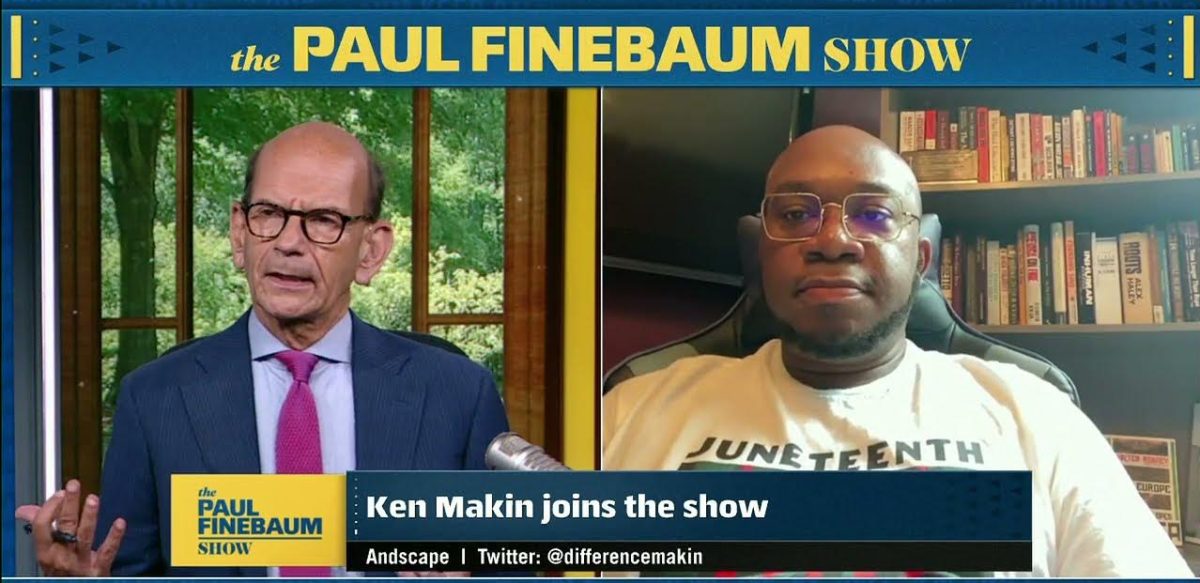
Ken Makin is the host of the Makin’ A Difference show and a freelance columnist.