Courage Under COVID-19

Second-generation public servant learning and leading on the fly

By KEN MAKIN
ALBANY, Ga. — Politics and public service aren’t just about responsibility for Commissioner Demetrius Young. They’re also about family legacy.

Young, the Ward 6 Commissioner for the City of Albany, is the son of two civic-minded parents. His late mother, Mary Young-Cummings, was the first Black city commissioner in Albany, as well as a civil rights attorney. 

Young won in a runoff in December, and surely expected to have a grace period to familiarize himself with his constituents’ needs and concerns.

Then COVID-19 happened.

It hit Albany especially hard, and at one point, the city with a population of 153,000 people had the third-highest death per capita rate due to COVID-19 in the world, according to the New York Times.

The Makin’ A Difference show reached out to Commissioner Young about the challenges of being a leader in the midst of the pandemic:

Makin’ A Difference: There are various reports about how Albany, Ga., became one of the hotspots for COVID-19 cases. Can you tell us about some of the vectors based on the information you have been presented?

Commissioner Young: There were two events that took place here in Albany that were associated with the initial spread of the coronavirus in our city. There was a funeral on Saturday, February 29th, and a second homegoing service on the following Saturday. While we are aware that there was a marathon attended by thousands of international and national runners, currently, none of the infections have been traced back to the marathon. That was the information we received from health officials and the epidemiologist who came to Albany. What the officials have told us is that the majority of the infections were associated with the two funerals, and were traced back to individuals who had attended those two funerals. The original individual who was infected was from Atlanta and was actually the first death associated with the coronavirus here in Georgia. He attended the first funeral, and the virus spread through those individuals to the second funeral. It even spread into our court system via a juror who had attended the funeral. I understand that my community is feeling some type of way, and rightly so, because many people are seeking to place blame rather than help people and find solutions. To date, we do not have any evidence that ties the infections back to the marathon.

MAD: What are your immediate concerns about the Governor’s attempts to “re-open” Georgia?

Young: My immediate concern about Governor Brian Kemp’s “reopening” of Georgia is that he did not give local officials the power to do what is necessary to protect their citizens based on their local situation with COVID-19. His reasoning was very conflicted and contradictory. Initially, he said that he was giving power to local officials to do what is necessary for their community. Later, he said that he wanted uniformity regarding a statewide “reopening” — even as the virus begin to proliferate through the state. This was especially frustrating given the data that we were seeing here in Albany, and even more puzzling because it conflicted with the guidelines coming from the Trump administration as well. Adding fuel to the fire was the fact that the businesses he sought to open up were businesses where it would be most difficult to adhere to the social distancing recommendations. It would also be challenging for business owners to protect their workers and customers. We also know that these are businesses that are frequented by African-Americans, and African-Americans have been especially hit hard. We have suffered the lion’s share of the deaths from the virus. This is why so many in our community from celebrities, down to the man on the street wondered if the Governor was placing us in harm’s way intentionally. As of right now, we know cases are on the rise in Georgia. As more testing is being made available, what I think you will see is a more accurate picture of how widespread the infections are throughout Georgia. We know it is not safe here in Albany to reopen businesses, and thankfully, for a large majority of the restaurants, barbershops and hair salons, they have chosen not to open.

MAD: As a “freshman” in politics, there really hasn’t been a “grace period” for you in terms of being in office. Everything is happening really fast, especially with the pandemic. How are you dealing with everything?

Young: Things are happening really fast, so I haven’t had a chance to assess how I’m doing. Right now I’m just doing, which is my general mindset. It was already enough to learn the ins and outs of being a public official. Many say it’s like trying to drink from a fire hose your first six months. Thankfully, politics has been my love for a long time — even before I really knew what politics was. Right now, I am in my element, just learning everyday. I am trying to better the conditions for my city, my ward, and Black folks in general. There are a lot of things that I had planned to do that have now taken a backseat, but in this “new normal,” we will all have to adjust. I do think there is an opportunity for us to rebuild struggling pockets of our communities through this pandemic. All of the conditions and the systemic ills that we have faced have been laid bare and have proved to be deadly for impoverished communities. If we in government do not recognize now that we have to do more to change our conditions, then we can’t say that’s what we want. In many ways, the situation here in Albany is so dire that I don’t have time for people who want to simply stand in the way because of ideology or playing politics. People are dying. Government must come to the aid of people who have signed a social contract with their lives.

MAD: You’re a second-generation public servant. What does your family legacy and your parents’ service mean to you personally and how you service your constituents?

Young: My family’s legacy in politics and public service is obviously something that I’m proud of. What I’m more thankful for is the way my parents left the simple legacy of treating people with dignity, fairness and love. That’s what our legacy truly is about. It’s something that I don’t take for granted and definitely don’t want to squander. I think for all of us who are blessed with a legacy of good parents, we should do our best to be good people. We should pass on what they did so that our children and generations after them will have a legacy that they can benefit from in terms of how they are treated and thought of in the community and society at-large.
Voices From The Frontline

Black labor, white privilege.

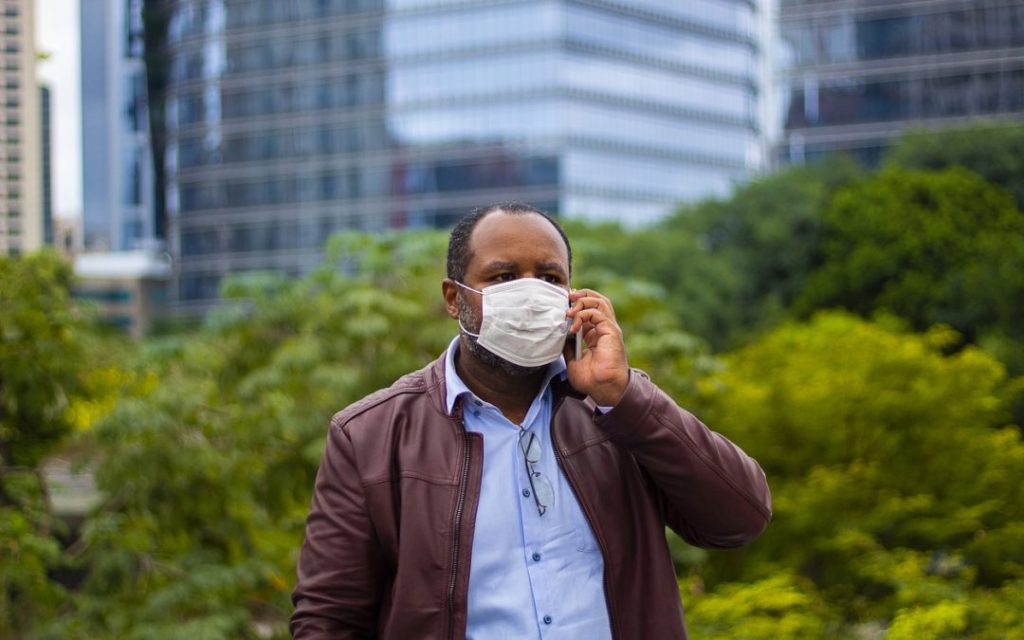
It is the untold story of the COVID-19 pandemic that ravages our country and our world. We’ve heard about the disproportionate cases and deaths of African-Americans with the coronavirus, but what we haven’t heard are the stories of the laborers who are on the frontline of this pandemic.

Until now.

Verses and Tiles, through the viewpoint of the Makin’ A Difference show, has reached out to Black workers throughout the country to gain first-person perspectives of working conditions. This is an ongoing commentary, which means that if you are on the frontline, you too can send your experience(s) to makinadifferenceshow@gmail.com.

The participants are anonymous out of the very real understanding that these stories may draw ire from companies and corporations. Here are their stories:

Trucker/Independent Insurance Broker

One of my Medicare clients reached out to me because she was in need. She is poor and doesn’t have a car. I took her five bags of groceries because the food bank ran out of food. I can’t eat when I know other people are hungry. My wife, who works with me, is still going on Medicare appointments to help seniors and social disability beneficiaries with Medicare prescription drug plans. It can be challenging because 80 percent of our clients are below the Georgia poverty level. We also help people pay their Medicare part B premiums, which are $144/month. People still need help and we’re going to help them. 

As far as trucking, it’s been a little tough because I’d rather be home with my family. At the same time, I know the country needs us to work, so I’m proudly fulfilling my duties to make sure I do my part to keep this country moving. Trucking has also been a little difficult because we don’t have the luxuries we used to have with all the closures, but we’re doing our profession with a sense of duty. 

One thing that makes me upset is people with resources are stockpiling while poor people can’t even get the basics. People need to be mindful of those who go without during situations like this.

Stocker

First, my job doesn’t supply my coworkers and I with masks or sanitizer, even though thousands of (coughing and sneezing) folks are coming in and out of the store all day. I see other jobs getting two more dollars an hour, and we only got a one-time $300 bonus, with part-time folks only getting $150. I don’t blame my store manager, I blame the company. They only care about the dollar bill. They’re hiring temporary workers now, only to keep us from getting overtime, and they’re going to cut everyone’s hours as well.

Department Supervisor

During an average eight-hour shift, you’re dealing with customers all day long. Customers come from different background and have differing attitudes. You come in and try to replenish the shelves as much as you can. A major change in terms of what I do is the concern(s) about safety. Some employees are either scared to have too much contact with customers, or are scared to cough because they are afraid of how customers may respond. Everyday, we come to work and risk the chance of bringing “The Rona” home to our families and children. The morale, which wasn’t great to begin with, has dropped because management is complaining along with the labor force. Management wants to see the store shut down and protections for employees. We were told that we don’t have to close because we sell “essential” goods. I can tell you personally, nothing out there is essential. A few weeks ago we did over $1 million in sales, and $200K of that was in the garden center alone. Home decorations did $68,000. Why were we really open? That’s not even 10 percent of the sales. As a result, you have an environment of people just not coming to work, which puts added pressure on the folks who are coming to work. There are arguments because employees are on edge, and customers will be customers, which is to say they are impatient. Because I’m in management, I’m supposed to “educate” the employees. I’m supposed to tell folks that “things aren’t that serious” and “to be safe” with a bunch of fancy words. I call that the “corporate sprinkles.”

Pharmacist

I’ve actually had a reasonably positive experience. The clinic that I work at has been on a soft lockdown for the last 2 weeks. Anyone entering the building, staff included, is stopped at the door and screened for COVID-19 symptoms. Only new HIV intakes, emergency visits and lab appointments are allowed in the building. The clinic director and other decision makers cut down staff significantly, allowing most providers (doctors and nurse practitioners) to work from home using our telemedicine capabilities . The only physician present in the building usually is the clinic director. The pharmacy has switched to mostly mail order. Our staff was cut significantly, also.  Considering we were NOT prepared for this at all, I think it’s working relatively well.

Stocker

My job is big on sales, which means we won’t be closing any time soon. I don’t even think the customers are that worried about it, being that they’ve been in the store every day from the time we open to the time we close. Basically, it’s been like Black Friday everyday. I’m not sure if the managers or people above them are that committed or focused about our safety. They have gave us a little bit of breathing room, saying we can call out if we feel sick or have symptoms but we would need to go to a doctor for that excuse. Overall, I think just because of the name and success of the company, the incentives could be way more considering we’re putting our health at risk. I won’t complain. I will continue to do what I can for myself to make sure I’m not affected by the virus and staying safe as possible while continuing coming to work until or if we do close down anytime soon.

The Best Team You’ve Never Seen

North Augusta High School’s girls basketball team posed with the coaching staff, cheerleaders and others after they won their first state title in 2017. They have since won two more titles in a row and will play for a fourth straight championship this Saturday.

I’m sure you’ve heard about the girls’ basketball team over at North Augusta High School. The Lady Jackets, winners of three straight state titles, will play for a fourth this Saturday in Columbia, S.C.

That probably isn’t news to you. Again, you’ve heard about the Lady Jackets. But have you seen them?

You meant to go see them after they won the first title. Then, they went back-to-back, and you missed out again. Honest mistake. It’s two years later, and these young ladies just can’t lose.

Still, you haven’t seen them. Hell, I haven’t seen them either. The last time I saw them, they rolled Wilson High School 61-37 in the state championship. I’ll never forget that game because one of the young ladies from my home church heaved the ball toward the basket as time expired.

It went in. 

I was on the baseline for that game. In fact, I was in prime position to get that last-second shot. I didn’t, because, in that moment, I became a fan. 

I was a fan of my church member. I was a fan of what these young ladies and a team from our area accomplished. I was a fan stuck in that moment — so shocked that I didn’t even take the picture of the last few seconds.

It wasn’t just a fresh feeling — the feeling of seeing a team win its first title. It was, unfortunately, a fleeting feeling.

I spoke to then-coach Crystal Cummings, the architect of this dominant run, a few weeks later. Her approach to basketball wasn’t only about the physical nature of the game. It was also about her psychological approach to the game.

North Augusta’s mascot was perfect for Cummings’ pressing, man-to-man (excuse me, woman-to-woman) defensive style, and to say they swarmed their opponents would be an understatement.

That should have clinched it for me — and us. It didn’t.

Our collective failure to appreciate this program and its accomplishments has turned into a literal sign of disrespect. Upon entrance of North Augusta’s city limits, there is a sign that commemorates the Lady Jackets’ three consecutive championships. The sign itself hasn’t changed, just a few of the numbers, which have literally been glossed over the last two years.

Remember when the sign read, “’17”? Then, “’17-18”? Now, it reads “’17, ’18, ’19.” The numbers are all scrunched together. Not even our local and state governments give these young ladies they respect they deserve.

It’s a clear indication that we aren’t as forward-thinking and progressive as we pretend to be — and I’m saying this as a fan of women’s basketball and sports in general. Part of the tragedy of Kobe and Gianna Bryant’s deaths were the impact that they had on women’s sports, and specifically basketball. We hailed Kobe as a champion for women’s sports and Gianna as the future, yet our mourning was about the Bryant surname more than it was about women’s sports.

Just to be clear, this isn’t so much a rebuke, as it is a challenge. Think about it — how does the city of North Augusta, and virtually any city in the state of South Carolina respond to a championship football team? There are high school programs that haven’t won a football title in decades, and those teams are celebrated as conquering heroes. 

Here’s the thing — we SHOULD celebrate those accomplishments. We should likewise celebrate the UCONN-type run that our own Lady Jackets are currently enjoying.

What’s exciting in this moment is that it only takes a singular action to change the narrative of these Lady Jackets from the best team never seen to the best team ever seen. They’ll take on an understandably vengeful and challenging South Pointe High School team this Saturday at 5:30 p.m. at Colonial Life Arena. 

It’s worth mentioning that Colonial Life is the home arena of the top-ranked women’s basketball team in the country — the University of South Carolina. The Lady Gamecocks won the title in 2016-17, which was the same season that the Lady Jackets won their crown. What’s remarkable is that the Lady Jackets haven’t relinquished their title since.

There’s been a petition going around on social media to give the Lady Jackets a real celebration. With respect to that petition, the biggest endorsement we can give these young ladies is to drive up to Columbia on Saturday and cheer them on, win or lose. Oh, and keep cheering next year, and the year after that.

And speaking of petitions and signing, can we get these young ladies a new sign? Hope that’s not too much to ask.

Links for the 2020 Democratic Presidential Candidates

You all wouldn’t believe how difficult it is to find a website or blog with all of the website addresses for the 2020 Democratic candidates for President. My approach to life is this — where there’s a problem, and the solution isn’t currently present, can I provide the answer to that problem?

In this case, I can. Below are the links for each of the candidates/power players who will be on the stage for the presidential debate in South Carolina on Tuesday, February 25, 2020. Candidates are listed in alphabetical order:

Joe Biden

Joe Biden
https://joebiden.com/

Mike Bloomberg

Mike Bloomberg
https://www.mikebloomberg.com/

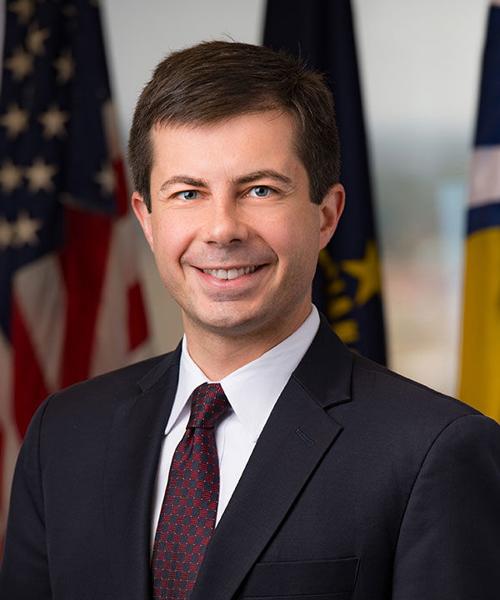
Pete Buttigieg

Pete Buttigieg
https://peteforamerica.com/

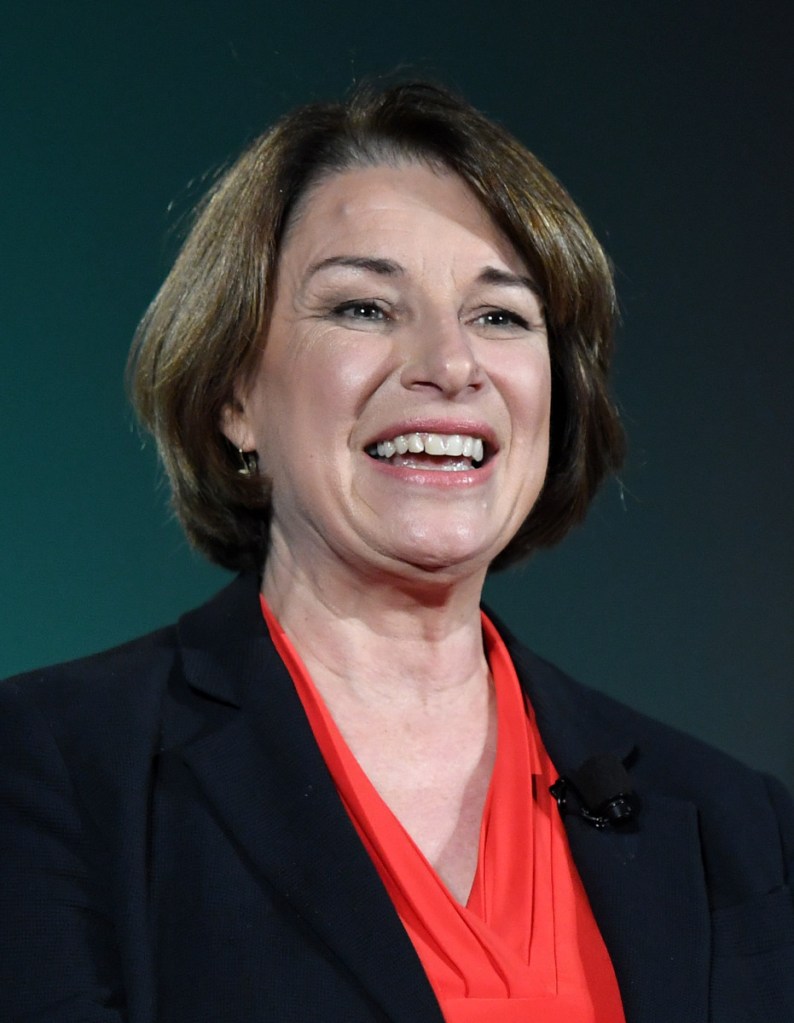
Amy Klobuchar

Amy Klobuchar
https://amyklobuchar.com/

Bernie Sanders

Bernie Sanders
https://berniesanders.com/

Tom Steyer

Tom Steyer
https://www.tomsteyer.com/

Elizabeth Warren

Elizabeth Warren
https://elizabethwarren.com/

Joe Biden’s Last Stand

South Carolina would provide a fitting backdrop for Biden to drop out

Joe Biden had his eyes on South Carolina from the start.
The Palmetto State would be his springboard to the Democratic nomination. It would be his “firewall.”
Months later, the frontrunner for that nomination ran to his firewall with his campaign in flames.
The picture of Biden running to South Carolina with his tail between his legs is certainly ironic. The support that he sought to cash in on was birthed more than a decade ago.
At that time, Biden hadn’t even been selected as Barack Obama’s vice president. Obama, his wife, Michelle, and entertainment mogul Oprah Winfrey wooed Black South Carolinians during a campaign stop that became one of the defining moments of Obama’s 2008 campaign and eventual victory.
Biden’s entitlement to those voters was certainly warranted, based on the polls. And yet, Biden distanced himself from the former president. 
When Biden asked Obama not to endorse him, it seemed like a noble gesture — the height of neutrality, even. As the campaign went on, Biden was so bold as to say he didn’t “need” Obama’s nomination.
Upon further review, Biden’s tender rebuke of Obama wasn’t about nobility, but being a centrist. Biden aspired to run a campaign that not only appealed to Democrats, but also the Obama-hating Trump crowd as well.
It’s in that same spirit which Biden spoke glowingly of infamous South Carolina legislator Strom Thurmond and other known segregationists. When he was challenged on those working relationships last June, Biden used the term “civility” to describe them.
Civility — a word that has been used to suggest togetherness, even as the political landscape is hyper partisan. It’s a word that often fails to promote accountability, even as it seeks to promote unity.
This is part of the centrist playbook — a methodology that Biden still employs. He does so to the detriment of the same Black voters he continues to petition in South Carolina.
At the same time, Biden’s opponents are invoking Obama’s support as a means of drawing voters. Michael Bloomberg has run a pair of ads suggesting that he has the support of the 44th President. Tom Steyer, who has seen an increase in support from Black voters in recent months, is running a more intimate ad with the presence of Obama.
Edith Childs, a Greenwood, S.C. councilwoman who Obama credited for the “Fired up! Ready to go!” campaign slogan, headlines Steyer’s latest pitch to (Black) voters. 
“We’re fired up, and Trump got to go!” she says at the end of a commercial endorsing Steyer.
Biden recently chalked it up as “billionaire spending.” But that spending has been noticeably effective, even if some view it as pandering.
Bloomberg has the support of Columbia, S.C. mayor Steve Benjamin, who has the title of “National Co-Chair” for Bloomberg’s 2020 campaign in his Twitter bio. Benjamin also spoke about Bloomberg’s “Greenwood Initiative,” a focus on economic justice for African-Americans, calling it “groundbreaking.” Bloomberg and the National Newspaper Publishers Association recently agreed to a $3.5 million ad buy, which means that Bloomberg’s Initiative will be advertised nationwide in 230 Black-owned newspapers.
The landscape for Democratic nominees is changing, particularly considering that voters of color will factor greatly in South Carolina and on Super Tuesday. Bernie Sanders, on the strength of his victory in Nevada and strong showings in Iowa and New Hampshire, is the new frontrunner for the nomination. He also has a strong coalition of young Black voters.
What does all of this mean for Biden? It may mean that the end of his campaign is coming soon. This past Sunday, Biden spoke to congregants at the Royal Ministry Baptist Church in North Charleston, S.C. Speaking in Black church pulpits are the tried-and-true method of many politicians. But again, the landscape is changing, because that particular outlet doesn’t engage young voters.
Biden is literally and figuratively counting on the old guard to keep his campaign afloat.
“Although I’ve had a lot of support from the community my whole career, I don’t expect anything. I’m here to earn your vote,” Biden said.
If Biden can’t earn that vote, he’ll likely have too much pride to drop out before Super Tuesday. Yet for all intents and purpose, though, not only will his firewall be extinguished, but so will his campaign.

The Black History Guidebook, Vol. 1

First African American Senator and Representatives: Sen. Hiram Revels (R-MS), Rep. Benjamin S. Turner (R-AL), Robert DeLarge (R-SC), Josiah Walls (R-FL), Jefferson Long (R-GA), Joseph Rainey and Robert B. Elliott (R-SC)

Volume One — Reconstruction

Nearly a year ago, I went to The King Center in Atlanta during a weekend trip with my beautiful wife. We drove down Auburn Avenue and I was honestly heartbroken by the poverty of the neighborhood. It paled in comparison to downtown and midtown Atlanta.
When we got to the King Center, I thought back to the last time I’d been to Dr. King’s tomb — during my teenage years. Sadly, not much had changed from my memory. In fact, the guard railing and caution tape took away from the somber regality of the tomb and waterfall.
The King Center wasn’t fit for a King.
I feel very similarly about Black history and how we celebrate our achievements. Next month, of course, is Black History Month (BHM), the time of year where we inadequately and predictably highlight the accomplishments of the likes of Dr. King, Rosa Parks and the usual folks we recognize.
Last year, we could barely recognize those folks for all of the companies using blackface to market their products in a troll-like fashion — hey, whether it’s positive or negative feedback, it’s all media, right?
Like The King Center, BHM and our interpretation of it needs some serious reconstruction.
Reconstruction is a fitting place to start. Most of our discussions about BHM involve the Civil Rights Movement, and that’s certainly understandable. However, Black folks’ contributions and triumphs do not all fall between the 1960s and emancipation from slavery.
Some of our most profound victories fall in between the period of slavery and Jim Crow. That period, from 1865-1877, is Reconstruction. If you’ve never heard of it, it’s perfectly fine, because very few people talk about it — we only talk about the residual and repressive effects of it.
In this column, I want to briefly talk about what Reconstruction means to the Aiken-Augusta area. We don’t have to look far; as we speak, city officials in North Augusta are weighing a “counter” to the white supremacist Meriwether Monument.
You read that correctly. At the time of this column, there is a monument which memorializes the life of Thomas Meriwether, the lone white victim of the 1876 Hamburg Massacre, which reads the following:
“In life, he exemplified the highest ideal of Anglo-Saxon civilization. By his death, he assured to the children of his beloved land the supremacy of that ideal.”
The Meriwether Monument, and post-Civil War monuments of their ilk are literal and living memorials to white supremacy. It is hard to look past these eyesores, except for one reason: they are in the way of our beautiful Black history.
Take the story of Hamburg, South Carolina. Have you ever seen the stone remnants in the Savannah River next to the Fifth Street Bridge? If you look at them directly across from the Fifth Street Marina, you’re looking right into the former town of Hamburg.
After the Civil War, freedmen — both free Blacks and freedmen (emancipated slaves) settled into Hamburg. It was a hub of Black achievement and progress. The South Carolina elections of 1868 produced the first majority black state legislature in U.S. history. A new state constitution was drafted and Aiken County, of which Hamburg was a par, was formed from parts of Edgefield, Lexington, Barnwell and Orangeburg Counties. It was the only South Carolina county formed during Reconstruction.
I wish I had the space to tell you more. I’ll simply say this — read up on the 1868 South Carolina Constitution. It abolished debtors’ prison, provided for public education and overturned the oppressive Black Codes from the 1865 constitution. Also, read Tiffany Mitchell Patterson’s article, “What Everyone Should Know About Reconstruction…”.
That progressive period in Black history — and yes, American history — was thwarted by white violence. In the next volume, we’ll talk about retribution.

Death To ‘The Debate’?

GOAT comparisons should be about appreciation, not depreciation

The conversation is all too familiar on sports talk shows, comment sections and blogs — who’s the NBA’s GOAT?
The debate — rather, heated dialogue — was always flawed because it compared different players in different eras. With the recent passing of Kobe Bryant, that debate feels especially trite.
It is sad that it took Kobe’s death to turn a triangle of zealotry between his fans, Michael Jordan fans and LeBron James fans into a ring of respect. The dialogues that have followed should be the start of a new approach to such a complex conversation.
Honestly, I grew up a Michael Jordan fan. I have two picture-perfect clear memories of my Jordan fandom, and they’re not of the iconic shot he hit in Utah. The first is the day my youngest brother, Denzel, was born. He was born on February 13, 1998, the same day that Michael Jordan hit a buzzer-beater to beat the Atlanta Hawks. I remember being in the hospital and watching the game, and MJ hit that shot close to the time my kid brother was born.
The second memory is another buzzer beater that happened in Game 1 of the 1997 NBA Finals. You know the shot. Bryon Russell reached, MJ hit him with a hesitation move, pulled up and called game. I was in the den of my childhood home when he hit that shot. I ran and screamed into the kitchen like a roaring missile. I’ll never forget the incredulous (and clearly irked) look on my dad’s face, like, “Hell wrong with you, son?”
Those memories fueled my zealotry. As Kobe was poised to win his fourth and fifth rings, I harbored resentment for him because he inched ever so close to MJ’s championship total.
That number, six, represents a flawed standard — a moving goalpost. Jordan’s six championships aren’t the most in NBA history, but in combination with the mystique and marketing of Michael Jordan, we made it the ultimate standard.
And sure, MJ never lost in the Finals, but the media and the public has spent so much time trivializing the achievements of Kobe and LeBron because of that flawed standard. It wasn’t always like that, because we hold the accomplishments of players who didn’t win championships — players like Charles Barkley, Karl Malone, John Stockton and Patrick Ewing — in high regard.
Media and sports talk shows are complicit in this as well. How many times has the “GOAT debate” been incessantly rehashed during a slow news cycle, or on the cusp of a record-breaking achievement?
The intent is understood, but it unnecessarily diminishes the greatness of the game’s predecessors. The GOATs have acknowledged that such comparisons really are like comparing apples and oranges.
“We play in different eras,” Jordan said recently when asked if either him or LeBron was “the GOAT.”
“I know it’s a natural tendency to compare eras to eras and it’s going to continue to happen.”
When LeBron passed Kobe on the NBA’s all-time scoring list in Philadelphia last Saturday, the city truly lived up to its nickname of Brotherly Love. The mutual respect and admiration was apparent. Less than a week later, that display is sad and soul-wrenching, with only a single solace — LeBron was able to give Kobe his flowers while he lived.
In the days after Kobe’s passing, the “GOAT debate” was put on hiatus with a phrase — “don’t debate, appreciate.” There was a caricature of Jordan with his arms around Kobe and LeBron.
We don’t have to entirely do away with the debate. We just need to approach it in a way that edifies the greats and doesn’t tear them down.
I never thought the debate would end; but then, I never imagined a world without Kobe Bryant. His life is a lesson to us all on so many levels. In this case, it’s a challenge for us to appreciate greatness without bias.

The Color of Coaching

Rivera’s firing reinforces NFL’s woeful standard regarding coaches of color

When we think about injustice within the National Football League, a singular name comes up — Colin Kaepernick.

That is certainly understandable, with all of the media attention on Kap and the inexplicable reason why he’s not on a NFL roster. 

And yet, there’s an ugly hiring and firing practice in the NFL that doesn’t get as much attention — the league’s treatment of head coaches of color.

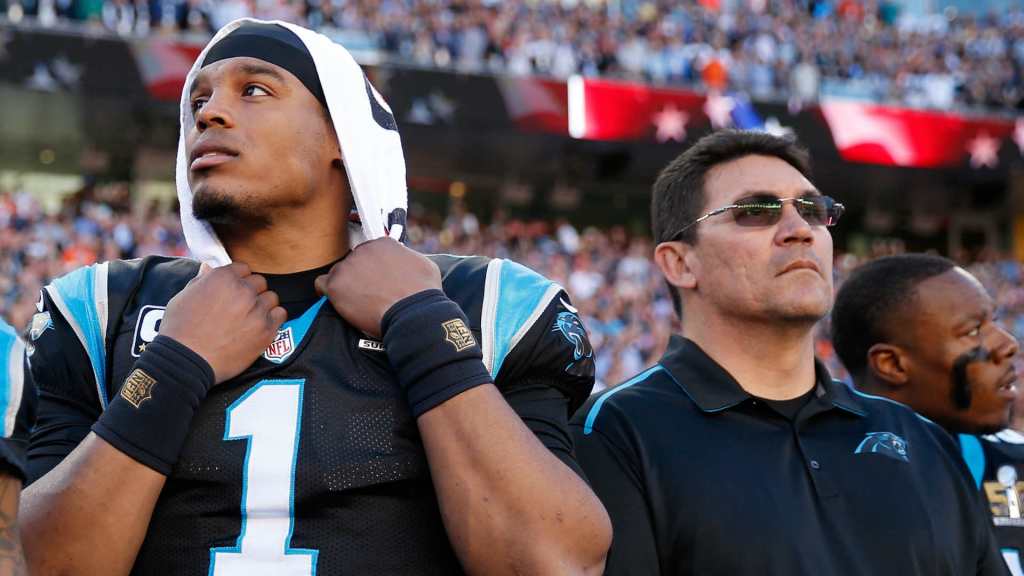
That dynamic was reinforced Tuesday when the Carolina Panthers fired head coach Ron Rivera. Rivera, who is Puerto Rican, had been with the team since 2011.

Panthers owner David Tepper said he “thought it was time” to fire Rivera, which is an interesting commentary considering the facts behind Carolina’s season.

For starters (no pun intended), the Panthers have been without franchise quarterback Cam Newton since Week 3, and haven’t had him at full strength since the middle of last season. Despite Newton’s absence, Rivera led the Panthers to a 5-3 mark with backup Kyle Allen before its current four-game losing streak.

Sure, there have been some bad losses to Atlanta and Washington. But what changed in a month’s time that warranted this firing? What would have changed a month from now at the end of the year, which would have at least allowed Rivera to finish the season?

There have been rumors around the franchise which suggest that Rivera and Tepper didn’t see eye-to-eye in terms of philosophy. Rivera’s more of an “old-school” coach, while Tepper is more of an “analytics” guy.

The rhetoric surrounding “analytics” sounds more like code than actual insight. It’s the kind of racial rhetoric that allows for whippersnapper white guys to not only get head coaching jobs, but fail up if and when they fall on their faces.

Steve Wilks, Carolina’s former defensive coordinator, was the head coach of the Arizona Cardinals for a calendar year. You read that right. Wilks was hired January 22, 2018 and fired on New Year’s Eve. He was replaced by a coach in Kliff Kingsbury who did not have a winning record in the college ranks and had no NFL coaching experience.

Todd Bowles, for his struggles with the New York Jets, was replaced by Adam Gase, who finished with a 23-25 coaching record during his tenure in Miami. Not only did he “fail up,” he was named interim general manager for almost a month after Mike Maccagnan was fired on May 15.

It’s a shameful trend that makes no sense. Marvin Lewis’ tenure in Cincinnati is an outlier that speaks more about owner Mike Brown than Lewis. The Pittsburgh Steelers, who are a standard of stability when it comes to head coaches, are showing their savvy by retaining Mike Tomlin. It’s paying dividends at the moment, despite a slew of injuries for Pittsburgh.

Moves such as Tepper’s are representative of a culture change, which sounds good in the short term and likely spells doom for Cam Newton’s tenure in Carolina. Those changes rarely work out as planned, and for middling franchises such as the Panthers, take several years to pan out, if at all.

It also denies Rivera a chance to finish out the season in strong fashion, something that is his (and granted, Newton’s) calling card. Save for last year’s 1-4 finish, Rivera compiled a 23-8 mark between 2011 and 2017 in the month of December.

The interim tag on defensive backs coach Perry Fewell would mean more for the Carolina-born Fewell if he had a chance to be retained in that capacity. He had the same opportunity in Buffalo in 2009 and was shipped out then as well.

Fewell’s tenure will be a stopgap — just like the “Rooney Rule” itself. It’s toothless — just like the Panthers as they separate themselves from the franchise’s most successful head coach and quarterback.

Madea Gets Into Politics

Last Wednesday, there was a Democratic presidential candidate debate in a predominately Black city with a noted Black political stronghold on the grounds of a Black-owned production studio. All that Blackness — and little to no talk about the concerns facing Black people.

As disappointing and discouraging as that sounds, it is predictable and ironic that such a spectacle would take place at Tyler Perry Studios (TPS).

Debates are mostly political theater that build and gauge interest, as well as invite prognostication. What better and “Blacker” stage to have it play out than the house Madea built?

That isn’t a knock on Perry’s work. The idea of a movie such as “Madea Goes Into Politics” sounds intriguing. A real-life version might inspire Black folks even more with the knowledge that TPS sits on a former Confederate army base.

Is it picturesque? Yes, especially with the backdrop of Atlanta’s civil rights history?

Is it profound? Not so much. And therein lies the tragedy.

In the party’s efforts to unseat Donald Trump, there is talk of restoring the “Obama coalition,” which is a kumbaya way of summoning the Black vote.

That methodology is certainly more graceful than allegations of homophobia being employed as reasons why Pete Buttigieg is unable to entice Black voters. It is no less shameful, though.

Dems have no problem making distinctions with Hispanics, the LGBTQ vote or women. It’s only when the issue of the “Black vote” comes up are African-Americans corralled into “people of color” or the “Obama coalition.”

Lack of distinction isn’t the only problem. The Dems also lack decisiveness.

At the same time that Dems are invoking the former President, Barack Obama himself is revoking the spirit of activism and socialism within the party:

“Even as we push the envelope and we are bold in our vision we also have to be rooted in reality,” Mr. Obama said recently to liberal donors. “The average American doesn’t think we have to completely tear down the system and remake it.”

These comments, in and out of context, are unfortunate. They are the words of a former president who went from “hope” and “change” to “whoa, not THAT much change” in less than a decade. They are also reflections into a party that doesn’t know whether it wants to ride a revolutionary youth movement and the focus on basic needs, or cozy up to corporations.

Say what you want about Trump, with his incompetence and corruption — his base is secure. The minority who voted for him are as rabid as ever. Meanwhile, the GOP establishment is scared to go against him — for now.

There is an important, yet rarely mentioned similarity between Obama and Trump, and by extension, Perry and the likes of Oprah Winfrey — theirs is the politics of celebrity.

Those politics are potent in any season, but especially in a season of hyper partisanship. Both zealots and fierce haters both leave with the wrong perspective. It’s hard enough to separate pageantry and policy as a sober critic. It’s near-impossible to do so as a victim of emotional bias.

One of the more radical civil rights icons — Malcolm X — decried celebrity culture in an 1963 interview at Cal Berkeley:

“Comedians, comics, trumpet players, baseball players. Show me in the white community where a comedian is a white leader,” Malcolm X said. “Show me in the white community where a singer is a white leader or a dancer or a trumpet player is a white leader. These aren’t leaders. These are puppets and clowns that have been set up over the Black community by the white community and have been made celebrities and, usually, they say exactly what they know the white man wants to hear.”

It may seem harsh, and X may have been wrong to name certain individuals. Despite the tone, it is still relevant and applicable.

There are issues which affect ALL of us — income inequality and access to healthcare — which still profoundly plague Black people. And still, there are issues that target Black folks specifically, such as police brutality.

Perry may have only been a host for the Dem debate, but Black people need more than hosts. In the biological sense, hosts adapt to the ways of parasites. In a more cordial, down-home sense, hosts make people feel important. And certainly, if you are hosting, you should have some input on what is on the menu. If not, then it may not be a matter of what is on the menu, but who is on the menu.