The look on Luis Ortiz’s face said it all Saturday night in Las Vegas.
It was an expression bereft of sweat and soul, wiped clean by Deontay Wilder’s right hand of God. It was the face of a man who had outboxed his opponent for six rounds.
It was a face that looked like the face of a fallen video game character.
I know how Ortiz feels. I could never beat Mike Tyson on “Mike Tyson’s Punch-Out,” either. I mean, the pattern was simple enough. If he winks, a jab is coming. If he blinks or flashes, it’s an uppercut. It didn’t matter. At some point, Little Mac would end up on the canvas.
“King Kong” Ortiz, with eyes bulged out, looked more like King Hippo or Bald Bull once he pulled his head up from the canvas.
Folks who say Wilder is a one-dimensional boxer, or worse, has no talent, either down’t know the sport or trivialize greatness. Wilder has turned the phrase “a puncher’s chance” into a franchise — an art form, really. He’s the surest thing from Tuscaloosa, Alabama these days — with a “sorry, not sorry” to the Crimson Tide football team. I mean, Wilder is the defending champion — 10 times over.
Forty-three fights. Forty-two wins with a single draw. Forty-one knockouts. His current run of title defense ties him with “The Greatest,” Muhammad Ali, for the most in the history of the heavyweight division. He went from a bronze medalist in the 2008 Olympics to the “Bronze Bomber.” And with all of those accolades, his punching power makes him “one of one.” The boxing community expressed those sentiments in the hours after the fight:
I don’t work with the dude anymore, but the “Wilder has no talent” narrative is trash. The ability to destroy an “A” level opponent, with a single punch, at any SECOND of a fight, is a singular, awesome TALENT. Give @BronzeBomber the credit he deserves. He is a scary man. #boxing
And even as we marvel at Wilder’s sheer power, we shortchange him. We don’t acknowledge his strategy, his guile. He made it a point to highlight Ortiz’s intellect after Saturday’s fight.
“With Ortiz, you can see why no other heavyweight wants to fight him,” Wilder said to ESPN’s Dan Rafael. “He’s very crafty. He moves strategically, and his intellect is very high. I had to measure him in certain places. I had to go in and out, and finally, I found my measurement.”
In that quote, there is a sweet science — setting up the counterpunch, much as Wilder did when he feinted left, then dropped the hammer on Ortiz.
“I saw the shot, and I took it,” Wilder later said. “My intellect is very high in the ring, and no one gives me credit for it. I think I buzzed him with a left hook earlier in the round, and I took it from there.”
Wilder is deliberate. His inspired conversation about Black struggle last November should have clinched that. Instead, we limited his impassioned speech to three words — “till this day!”
The next day of consequence for Wilder will be February 22, 2020. That is the scheduled date for a second “dream match” with a name made for a video game — Tyson Fury.
Fury has been the only one to stand toe-to-toe with Wilder — well, for the most part. Wilder dropped him twice in their previous bout last December.
In the meantime, we would do well to appreciate — and not underestimate — maybe the most charismatic heavyweight champion since Mike Tyson. And maybe someone can design a Deontay Wilder’s Punch-Out game before the big fight.
Kaepernick asserts freedom with defiance, dexterity
“Clothes make the man.”
It’s a shallow saying that suggests that what a person wears is more important than who the person is.
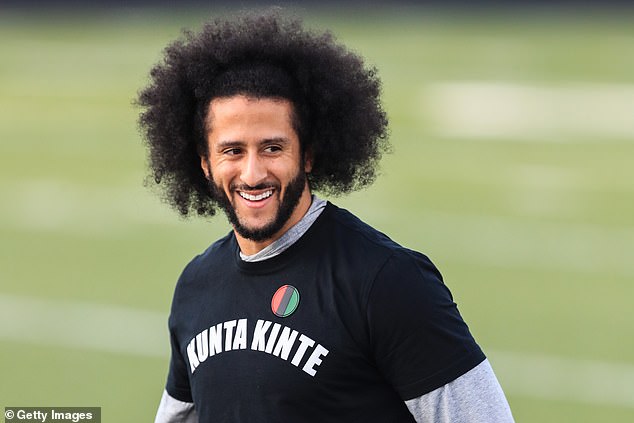
Colin Kaepernick is a professional quarterback — and so much more. He didn’t need to prove the former, yet did so in Atlanta on Saturday to prove that his NFL exile is less about talent and more about principles, specifically his stance on social injustice.
Who Kaepernick is got a supplemental boost from two words on a shirt that he wore during Saturday’s workout:
Kunta Kinte.
Kunta Kinte, like Kap, is a figure made up of both fact and fiction. While Kinte is a fictional character in the 1976 novel Roots: The Saga of an American Family, he is based on one of the ancestors of Roots author Alex Haley. Both figures have entered the realm of mythology, largely because of how they’ve been written.
As a fan of hip-hop, I imagined Kap throwing deft darts through haters’ hearts backed by a Kendrick Lamar soundtrack, specifically a single off of his “To Pimp A Butterfly” project entitled “King Kunta”:
I got a bone to pick I don’t want you monkey-mouth MFs sittin’ in my throne again Ayy, ayy, n—a, what’s happenin’? K-dot back in the hood, n—a! I’m mad (he mad!), But I ain’t stressin’ True friends One question
One question seemed to be on the mind of Kap’s supporters and critics alike: why submit yourself to the tryout process in the first place?
Those are the questions that come from mythology — where the lines between fact and fiction are blurred. A question along the same lines asks why and what Kap took a knee for. It wasn’t an anti-American stance, it was a stance regarding police brutality and the treatment of veterans.
As for football, Kaepernick has always expressed that he loved the game. It’s just that over the last three years, he has not compromised his principles to do so.
It has been the NFL who has rebuked those principles. First, it colluded to keep him out of the league. Then, there was the half-hearted tryout offer, with its petty refusal to allow certain permissions and a controversial waiver to potentially handcuff Kap.
No, Kap’s got his freedom papers now. It doesn’t matter if he never plays another NFL down — which, despite his comrade Eric Reid’s return to the pro gridiron, never seemed like a possibility for the face of a movement.
B—, where you when I was walkin’? Now I run the game, got the whole world talkin’ King Kunta, everybody wanna cut the legs off him Kunta, black man taking no losses, oh yeah B—, where you when I was walkin’? Now I run the game, got the whole world talkin’ King Kunta, everybody wanna cut the legs off him When you got the yams (what’s the yams?)
The allusion of yams draws from Ralph Ellison’s Invisible Man — the book’s protagonist declares, “I yam who I am.” It is a statement of authenticity and purpose.
Kaepernick has endured most of his journey alone. He was let down by not only a significant number of NFL players, but the NFL Players’ Association itself. He was let down by fans who might have agreed with him in principle, but not enough to take a hiatus from the NFL.
Yet when the NFL and detractors tried to take Kaepernick’s feet away — cut the legs off him — he found his footing. It’s beautifully ironic, really. The stereotype against Black quarterbacks is that they are “runners,” lacking intellect and leadership.
This year, above many others, proves that stereotype to be wrong. Lamar Jackson, who some suggested move to receiver instead of playing quarterback, is among the league’s best. The short list of standout signal callers includes Black faces such as Russell Wilson’s and Patrick Mahomes’.
There is one exiled name who rises above them all — not for what he’s doing on the field, but for what he continues to stands for off of it. Wearing a T-shirt to supplement that, in the moment of truth, is a sweet coup de grace.
Superhero series touches on familiar topic — how society views and values Black life
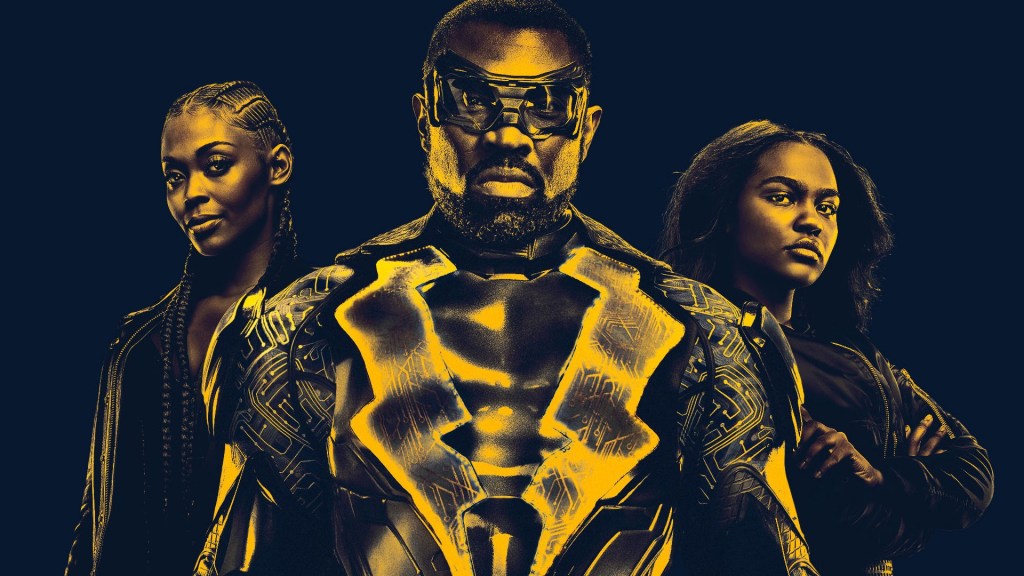
Early in the first episode of CW’s Black Lightning TV series, Black Lightning’s alter ego, Jefferson Pierce, is the victim of police brutality. His daughters watch helplessly as Pierce subdues his powers —to preserve his secret identity.
In the first episode of the series’ third and current season, we see those same young ladies, who are also gifted with superpowers, fearlessly take down a plot to detain other “metahumans.” They accomplish this task while their father willfully chooses to remain in the custody of a clandestine government agency.
Juxtaposing the two moments between seasons shows how the series comes full circle, yet at the same time, continues to tackle the challenges that Black people face in America.
The fictional city of Freeland, Ga., comes under occupation of the American Security Agency, or A.S.A., in Black Lightning’s third season. It puts a strain on the Pierce family and throws a predominately Black community into martial law. There’s a lot going on to follow in the series — almost too much — but one of the most recent story arcs hits too close to home.
“Requiem For Tavon” follows the doomed path of Tavon Singley, a Black male student at Garfield High School, where Pierce is a mentor and former principal. Tavon was initially detained by the ASA for showing signs of “metahuman” abilities — a claim that was later found to be false.
Tavon was ultimately rescued by one of Pierce’s superpowered daughters, Blackbird, but that didn’t keep the young man out of harm’s way. He was later killed in a battle that involved three of Pierce’s former students — his daughter, Anissa, Tavon and Painkiller, a formerly paralyzed (and thought to be deceased) young man with cybernetic enhancements.
Again, it’s a lot to follow, but the painful and powerful scene leading up to the fated battle weaves it together. Pierce meets with Tavon’s parents and promises them that he will protect Tavon. Their concerns, quite naturally, are that their son is in A.S.A. custody.
Pierce, acting as both a mentor and as his alter ego, Black Lightning, heartbreakingly fails to keep his promise.
When Tavon’s parents see his lifeless body, they are stunned and devastated. The viewer can’t help but hear the name “Tavon” and phonetically hear “Trayvon,” the latter of whom became national news after he was murdered by the vigilante George Zimmerman in 2012.
Tavon’s death promises to spark a revolution — an important refrain in the struggle for Black equity and civil rights. In one moment, the hero with powers seems powerless; and then, in the next moment, those “regular beings” without supernatural abilities feel a sense of empowerment.
“This is the spark we needed,” exclaims Black police chief Bill Henderson, himself torn between the events during the occupation.
That spark — both in the fictional and real world — is what powers the pursuit of freedom.
Before Cleveland Browns defensive end Myles Garrett clubbed Pittsburgh Steelers quarterback Mason Rudolph with a helmet, the NFL was already a league devoid of class.
The brutality of the sport aside, we see how the league treats its former and current players, as well as the important topic of social (in)justice.
And still, when we slow the moment down, watch it over and over again, there’s a lot that can be said about “class” — and not just from the perspective of what we deem to be “decent.” There’s also the function of class in how we treat (white) quarterbacks versus how we treat other players. There’s the function of class in how forgivable certain political views are versus others. And of course, there’s the function of class in how we allow the flawed NFL to conduct itself as judge, jury and executioner in its dealings.
First, we must deal with the reality of Thursday night’s events. Regardless of whom started the conflict, it was decisively and brutally finished by Garrett, who has been suspended indefinitely by the NFL. That’s the right move by a league that doesn’t always get it right regarding player safety.
The first and most important responsibility of the league is to protect its players. The picture of a quarterback absorbing a hit to the head via helmet flies in the face of those protections. The incident is a case of extreme brutality in a brutal sport — and we must never forget that football is a brutal sport. The collective outrage expressed on behalf of Rudolph should also be expressed when NFL owners propose a 17-game (or more) season. The physical toll that it takes on players may not be as sudden or startling as the attack on Rudolph, but it’s no less devastating.
Or, as ESPN’s Pablo S. Torre put it on Twitter: “Myles Garrett totally failed to respect the difference between consensual and nonconsensual brain damage.” A bar.
Myles Garrett totally failed to respect the difference between consensual and nonconsensual brain damage
Also, we can’t trivialize the fact that the quarterback in question is white. The picture of a Black man “savagely” attacking a white quarterback will certainly conjure race-based reactions. Add the politics of the white quarterback in question, and it’s a recipe for divisive hot takes.
Rudolph’s assessment of Garrett’s helmet swinging as “bush league” and “coward move” hits differently after reports about Rudolph’s politics. The Steelers’ quarterback and his activity on Twitter have led to reports that he supports the ideologies of President Donald Trump and commentator Tomi Lahren, both unrepentantly conservative.
In short, the views of classiness from someone who upholds such classless figures is comical, if not flat-out hypocritical.
Rudolph’s politics aren’t the only thing on trial here, but his privilege. Only a quarterback would have the privilege to confront (and later attempt to kick in the privates) a defensive end without the fear of repercussion.
That privilege isn’t just a function of race. t’s a function of how we feel about offensive players versus defensive players. We treat injuries and big hits on defensive players as “part of the business.” We treat the same in regards to offensive players (with exception to linemen) as tragedies. The most brutal hit or attack this year wasn’t the helmet hit. The response was understandably visceral, but the hit Marcus Peters endured on an interception and pick-six when he was still a Ram was the most brutal hit of the year. There was little to no outrage over that hit.
That’s not a new phenomenon. We celebrated the likes of former Pittsburgh receiver Hines Ward when he made blindside blocks on defenders. The NFL even implemented the “Hines Ward” rule, but that didn’t stop the Hall of Fame wideout.
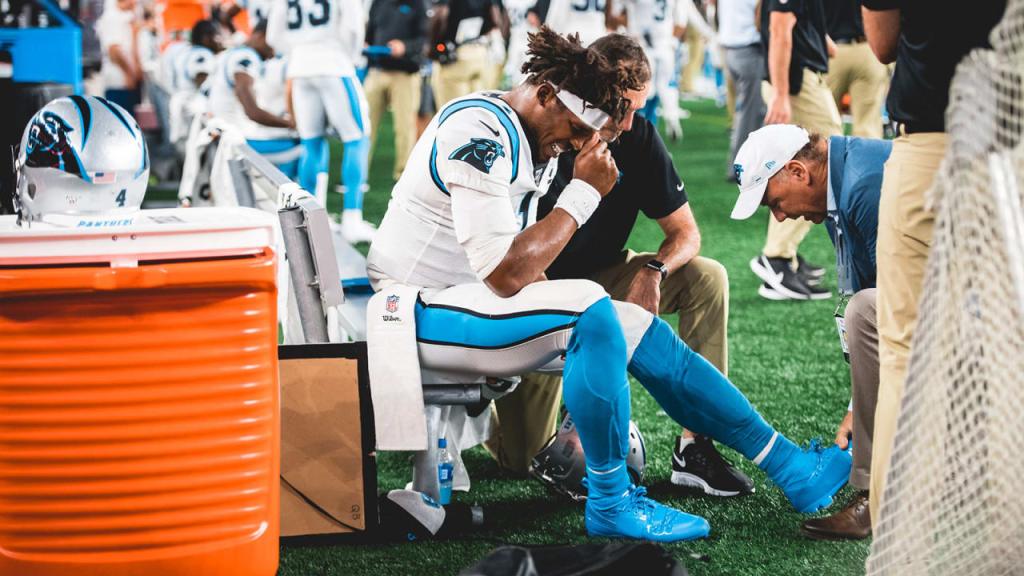
That privilege also doesn’t apply to all quarterbacks. Carolina Panthers quarterback Cam Newton seems to be a shell of himself as we speak because of the hits he sustained — some of which went unpunished, such as the hits against the Denver Broncos in the post-Super Bowl rematch to kick off the 2016 season.
All of these concerns fall under the umbrella of a league where “selective outrage” isn’t even its greatest sin. The willful attack against civil rights — which of course, extends to the labor of current and past players — is the league’s greatest failure.
It is a failure that continues to blackball former quarterback Colin Kaepernick, even in the face of a half-hearted offer for a tryout. This is the league that takes a tougher stance on players standing up for civil rights than players who commit domestic abuse. This is the league that pretends to care about player safety, but not only does that ideal not apply to all of its players, but it does little to nothing in terms of benefits for its retirees.
The moral fiber of the league is so frayed that, even in the case of an extreme act such as Garrett’s, it’s just another black eye on a disgraceful league. And it doesn’t take someone with a college degree to understand that.
Celebrity: Portrait of actor Nick Nolte (C), as Western head coach Pete Bell, posing with (L-R) Matt Nover as Ricky Roe, Shaquille O’Neal as Neon, and Anfernee Hardaway as Butch McRae on the set of “Blue Chips” movie.
Indiana 1/1/1993 — 12/31/1993
CREDIT: Neil Leifer (Photo by Neil Leifer /Sports Illustrated/Getty Images)
Good-natured coach, recruit are victims of NCAA’s war on benevolence
When the NCAA ruled Memphis center James Wiseman ineligible because of the kindness of his coach, Penny Hardaway, two words came to mind — Blue Chips.
Not because Hardaway is anything like Pete Bell — the role that Nick Nolte played in the 25-year-old movie. In fact, Penny is the opposite.
The former NBA entered the coaching ranks with inspiration from a childhood friend — Desmond Merriweather, who died at the age of 41 in 2015 after a long battle with colon cancer. Penny and Dez’s relationship was chronicled by a number of outlets, to include ESPN’s E:60 series.
The honorable, yet humble beginnings to Penny’s coaching career began at a middle school and grew organically into a high school prep powerhouse.
The very notion that a former NBA player would, at the request of his dying friend, take on a coaching job and father figure role to hundreds of kids, only to throw it all away as a seedy recruiter is as disingenuous as the NCAA’s war on benevolence.
Suggesting that Penny is a “booster” is the stuff of conjecture. It’s the legacy — unintentional or not — of movies like Blue Chips, which determines heroes and villains based on who plays the game “the right way.”
But it’s still a game — and the NCAA chiefly profits off of it at the expense of unpaid players, and by extension, the families they leave behind. Rarely do we consider the optics of that dynamic — the NCAA, with money for “facilities,” juxtaposed with young people and their families struggling to make ends meet.
Those problems aren’t just unique to college athletes, but prep players as well. In the case of Wiseman — and others, I can imagine — Penny related to their struggle. What’s more telling is that Hardaway’s relationship with Wiseman held up under scrutiny from both the Shelby County Board of Education (back in 2017) and just as recently as May by the NCAA.
More than dope kicks and a talking doll, Penny’s good-natured personality and benevolence are his legacy. I’ve had the good fortune, at the Nike Peach Jam tournament in North Augusta, S.C., to watch Penny interact with players, fans and basketball celebrities alike. He’s treated them in virtually the same fashion — as if they were the most important person in the room.
When Hardaway became the coach at Memphis, his former players at East said it was “weird” that he wasn’t able to impart wisdom, but instead settled in at the coaches section. In all accounts, Penny is a man that treats the people around him with dignity.
If only the same thing could be said about the NCAA.
Whether it’s Wiseman, or in a different circumstance, Chase Young, the NCAA cares more about its hypocritical application of rules than it does about the young men and women it deems as “student-athletes.”
Blue Chips made villains out of nearly all parties involved — players, coaches and boosters. Twenty-five years later, folks are wising up and fighting back against the real villain — the NCAA itself.
Movies about Black icons don’t miss out on greatness because of controversy, but convenience
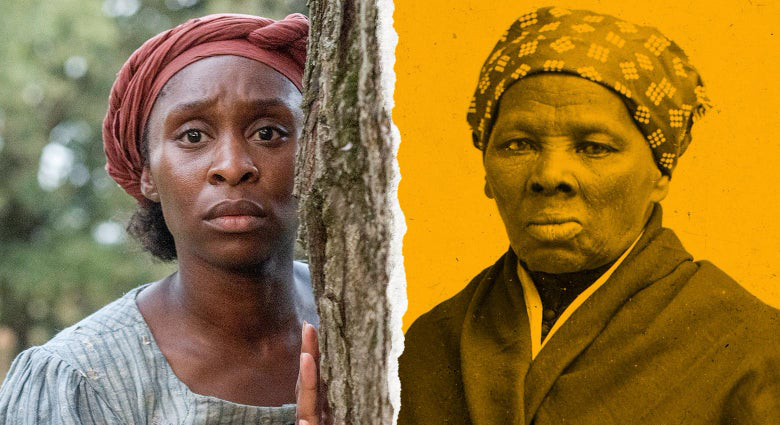
Long before Kasi Lemmons’ interpretation of Harriet hit theaters, there was a controversy about the lineage of the movie’s lead actor, Cynthia Erivo. During the movie’s opening weekend, there were claims that Harriet not only painted a negative picture of Black men, but also emphasized the role of the “white savior.”
It was tempting to weigh in on such claims on social media, but then, I saw the movie for myself.
What I saw was a mediocre movie — not good, not abhorrent — which had the potential to be so much more.
Most of us know the story of Harriet Tubman. She was born into slavery with the name Araminta Ross in Maryland in the 1820s. She became one of the most iconic and well-known abolitionists and activists in world history. The movie emphasized her sleeping spells, her trek to freedom in 1849 and how she led the raid at Combahee Ferry in South Carolina in 1863.
The picture of Tubman, flanked by Black Union soldiers providing cover to a swarm of runaway slaves was the highlight of the movie. It was a powerful and profound image — which was gone in an instant when Tubman and the soldiers were prepared to shoot down an angry white mob in pursuit of the slaves.
The failure to profoundly show Black rebellion through violence — instead of merely insinuating it — is a tragedy all too familiar to these types of portrayals. It shows that even within cinema that features and focuses on Black people, the medium is still inclined to center whiteness.
It makes the movie’s failure to mention Tubman’s role in the raid on Harpers Ferry, which was led by John Brown, almost deliberate. There’s a less subtle gesture of how Erivo’s character is mentioned as either “Harriet” or “Minty.” Even when the title character insists on being recognized under her emancipated name, the plot of the movie always threatens to reduce her to “Minty.”
The movie misses out on so many intriguing pieces of Tubman’s life — how her sleeping spells derived from being hit by a metal weight as a child. The movie didn’t show the audience that devastating visual. It eschewed strategy with the likes of Frederick Douglass or William Seward and settled for gaudy speeches.
That’s not nitpicking or pettiness — it’s important because that expression of Black rage is key to a full understanding of history. It’s irresponsible to allow white guilt to dictate truth telling.
A similar dynamic happened with the Nate Parker-directed The Birth of a Nation. A movie that also endured controversy because of rape allegations against Parker, Birth treated Nat Turner’s Rebellion as an aside to the tiring depiction of slave labor and brutality.
It’s easy to say that a movie didn’t do well because of controversy and/or public opinion. It’s more of a challenge to provide honest criticism that not only honors the icon, but also empowers the audience. That empowerment can come through education of the subject matter, to be sure. But to African-Americans, still the victims of various forms of racism and brutality, it’s clear that the subject matters to us in a more visceral way.
There’s honestly no excuse for movies such as Harriet to at least scratch the surface of that potential. There are a wealth of Black institutions and historians ready and willing to provide the unadulterated truth for a director or studio.
Some of the debate about the criticisms of Harriet suggested that we should hold movies to a lesser standard than documentaries, which are more researched and nuanced. That debate also turned into a “make your own movie” if you’re not satisfied with the current presentation. Both perspectives are intellectually dishonest.
We know about the challenges of seeing Black icons — hell, Black people in general — on the silver screen, whether due to finances or otherwise. That makes it much more important that we get these depictions right and make it real for both Black and white audiences.
We can’t afford to take liberties with people who did so much in the fight for liberty. The tagline for Harriet was “Be Free Or Die.” In the aftermath of Harriet, it’s clear that even within our own spaces, we are fighting for the right to be creatively free — unapologetically.
Early Thursday morning, while scrolling Twitter, I came across the name of Elijah Cummings. The entirety of the headline was concealed, so I clicked on the link, with the thought that Rep. Cummings had made national news again by virtue of his public service.
I was stunned.
“Rep. Elijah Cummings … dies at 68.”
It hit close to home for me. My father, born three months after Rep. Cummings, is also 68. It is amazing to think the burdens that men of their age are willing to carry — above all else, the burden of caretakers. My dad — a caretaker for our grandmother. Rep. Cummings — a caretaker for his constituency.
It’s not enough to think about the fact that Rep. Cummings was born in the earliest part of the 1950s. We must look at what that means for a young Black man growing up. How, as teenagers, both Malcolm X and Dr. King were assassinated. Even as a young child, Supreme Court decisions were being made that declared school segregation unconstitutional.
And then there was the moment that changed Rep. Cummings’ life forever.
In grade school, a counselor told the representative that he was too slow to learn and spoke poorly, which would never allow him to fulfill his dream of being a lawyer.
It turned Rep. Cummings into a man on fire.
“I was devastated,” Rep. Cummings told the Associated Press back in 1996. “My whole life changed. I became very determined.”
He went from being a child of the civil rights movement to legislating — and seeking to preserve — civil rights. He was versatile in his ability to investigate, whether challenging presidential administrations or the use of steroids in sports. He wasn’t afraid to say “Black Lives Matter.”
His journey is decorated and appreciated. It is also a cautionary tale — not just of the balance between work, health, and growing older. It is also a challenge for us, his successors. Our heroes are getting older. It is unimaginable that our mentors could ever leave us, yet here we are. And yet, there’s so much more that needs to be done.
According to Biblical accounts, the prophet Elijah was a man of fire — having brought fire down from the sky, and ascended to Heaven in the same fashion. When Elijah did, his protege immediately took up his mantle.
We owe it to the representative Elijah Cummings, a trailblazer if ever there was one, to do the same. Rest in power.
Cam Newton is one of a kind. Why try to make him someone he’s not?
Two commercials — one light-hearted and one dark — have served to define the post-Super Bowl career of one Cameron Jerrell Newton.
One of those commercials aired after Newton and the Carolina Panthers lost Super Bowl 50 to the Denver Broncos. In the commercial, Cam darts through a dark forest, with an ominous voiceover provided by his mother, Jackie:
All the world will be your enemy, prince with a thousand enemies, and whenever they catch you. … But first they must catch you, digger, listener, runner, prince with the swift warning. Be cunning and full of tricks. …Prince with a thousand enemies, never be destroyed.
In the aftermath of a 20-14 home loss to the Tampa Bay Buccaneers on Thursday night, Newton has a lot of enemies, both intentional and unintentional. Newton has always been prone to high throws, but with an ailing shoulder and foot, his misfires have been painful to watch. Even more pressing is the Panthers’ playcalling, which not only led to 51 passing attempts from Newton, but also went 0-for-3 on fourth down sans the quarterback sneak.
The last failed fourth-down conversion was the most costly. On fourth-and-1 from the three-yard line, Panthers’ running back/scatback Christian McCaffrey caught a direct snap moving to the left, but was pushed out of bounds short of the line to gain. In years past, the call would have been for No. 1.
The plan was simple enough, maybe even justified, considering Cam’s injuries. But with a Tampa defense keyed in on CMC, the call should have been clear. That’s not Monday (or Friday) morning quarterbacking. It’s a flat indictment of a franchise where brass has repeatedly expressed the desire for Newton to become more of a pocket passer, even though it has failed to give Cam the tools to do so.
That brings us to the second commercial.
The NFL Play60 spot aired early in Cam’s sophomore season, and it featured Newton and a young kid. Cam’s playfulness and spirited nature toward children is, in all honesty, one of the hallmarks of his career. In the commercial, the boy thanks Cam for coming to his school, and after playful small talk, the following exchange happens:
Kid: Then I’ll grow up to be big and strong, like you?
Cam: Absolutely.
Kid: And play in the NFL?
Cam: Yes sir!
Kid: And be drafted number one?
Cam: Maybe?
Kid: And become the starting quarterback of the Panthers?
Cam: Okay…
Kid: And you can be my back-up?
Cam: Excuse me?
Kid: And make Panthers’ fans forget about you?
Cam: What?
Kid: And become your mom’s favorite player?
Cam: Whoa…
Then, the kid does a windmill motion with his arm, as if he’s warming up:
“I’m just loosening up my arm.”
The commercial warrants a laugh, even if, in hindsight (or foresight), for the initiated, the racial dynamics could not be overlooked. A Black quarterback being challenge by a hotshot white kid? That hasn’t been a speculative or imagined process for Cam. It’s been his reality.
At one point, Derek Anderson was the “great white hope” to replace Newton. Last season, when Newton was shut down for the year, Taylor Heinicke and Kyle Allen were the hopefuls. This year, it’s West Virginia product Will Grier.
The blond-haired, blue-eyed quarterback supplanting the flashy Black quarterback has been a wet dream for a significant number of (white) Panthers fans, and quite possibly, the local newspaper, the Charlotte Observer. Panthers fan pages, where differences of opinion break down along racial lines, suggests as much. The Observer, for its part, ran an editorial cartoon of Newton doing his famed “Superman” pose with a Hello Kitty shirt underneath.
Even during his MVP season, fans didn’t know how to deal with Cam and his relentless dabbing. He suggested as much when he declared that he was an “African-American quarterback.”
“…That may scare a lot of people because they haven’t seen nothing they can compare me to,” he proudly said.
It was fitting that Cam would make such a commentary at the height of his powers. He was being true to his defiant, nonconforming self. Lest we forget, the “prince of a thousand enemies” proudly dresses like Prince Rogers Nelson. His apparel and demeanor were a lightning rod for criticism long before injuries dulled his play.
Cam’s coaches at Auburn let him be “Ace Boogie.” They were rewarded with a championship, and a comeback for the ages against rival Alabama. And if you go back and look at that comeback, Cam threw some absolute ropes. It’s almost as if the ability to freelance — his unpredictability to go along with his abilities — makes him a better passer and player overall.
Sure, Cam has his faults. He’s pouty. He can be flippant. But to quote CMC, he’s a “warrior.” When asked to judge Cam’s performance against the Rams last week, McCaffrey said “that’s not my job.” He then reinforced his belief in his quarterback and how he “puts it on the line” for the Panthers.
Newton threw for over 4,000 yards as a rookie — with two competent tight ends, one might add. Cam’s never had a problem being a competent passer, even with high throws. The problem has been reliable targets downfield, and a competent offensive line — both keys to any successful pocket passer.
It’s almost as if the “pocket passer” talk was more about conformity than actual production. And if that’s the case, then the Carolina Panthers franchise has been Cam’s biggest enemy all along. That’s entirely feasible, considering that it was the Panthers’ franchise who linked Cam up with a Republican strategist after the Super Bowl loss as a public relations strategy. Cam’s commentary on race changed as well, to his detriment. The franchise’s willingness to put Cam in a box, both professionally and personally, has given us a player who is a shell of himself.
Here’s hoping that the open road at the end of that fated Under Armour commercial isn’t the end of the road for Cam. The way that the Panthers continue to use Newton — both on and off the field — almost seems to make that end an inevitable and expedient one.
Late on the night of Thursday, September 5, 2019, after the dust had settled on Dr. Sean Alford’s inexplicable resignation as Aiken County Public School District, I headed over to Dr. Alford’s Twitter page (@AlfordOnTheGo).
The page read like a walk through the halls of Aiken County’s schools. It was chock-full of information and excellence happening within the district.
As of Friday, September 13, an ominous date, to be sure, Dr. Alford is no longer the caretaker, watcher and retweeter of those halls. And the district is so much worse for it.
By now, you’ve heard and/or read the story. Dr. Alford resigned after a three-hour special called Aiken County Board of Education meeting. His resignation was followed with two immediate resignations from board members, and another slated for September 13 — the same date as Dr. Alford’s.
Speculation, and I emphasize SPECULATION, has ranged from a threat against an employee to claims that the superintendent took “kickbacks” to marital problems.
I’m here for facts and researched opinions, not speculation.
Here are the facts — Dr. Alford’s tenure saw gains in not only student achievement, but tangible investments in education.
Last November, it was reported that nearly half of Aiken County’s public schools earned Excellent or Good ratings on the S.C. Department of Education’s “report cards.” The district also reported overall gains on test scores, specifically on the ACT, where the district consistently performed above the state standard.
The district didn’t only make present gains, but also had a vision of the future. That’s why designations such as Purple Star are important, because it shows a level of conscientiousness about what’s going on in the community and career opportunities.
Of course, very few people will find fault in catering to military families. However, when it comes to tackling issues of poverty, the despair and disparities in society are revealed.
When Dr. Alford and the school district initially presented its proposal for rezoning and restructuring select areas in the district, it was done to facilitate growth in certain communities AND to balance demographic averages for free and reduced lunch students.
Let’s make the demographics piece more personal and more specific. We hear terms like “low-income” and automatically think less of people. That’s unfortunate and insensitive. It is insightful — and rare — to have a school system which understands that education can and should provide a level playing field for everyone.
If standardized testing — hell, simple retention of information — is the standard of excellence for a district, or for individual schools, it is grossly unfair to compare a child who’s well-fed and worry-free to a child who has to worry about about his or her next meal, much less where he or she will be staying the night.
Educational standards define excellence through grades, yet trivialize that those grades are directly affected by socioeconomic conditions. Along with an inadequate teaching of the history of oppression in this country, it is one of the great failings of our educational system.
This issue of class is, invariably, an issue of race. Here are some startling statistics from the 2013-2017 American Community Survey 5-Year Estimates, which is a data collecting function of the United States Census Bureau:
The white to Black population in Aiken County is estimated to be about four to one — specifically, 115,355 white people to 39,841 Black people. That ratio does not extend to those living below poverty level. According to the survey, 14,103 white people live below the poverty line, compared to 11,015 Black people.
That’s a poverty rate of of 27.6 percent for Black people living in Aiken County, versus 12.2 percent for white people living in Aiken County.
That disparity doesn’t just play itself out in our classrooms. It plays itself out in virtually all walks of life in our area.
I saluted Dr. Alford and ACPSD then and I salute them now for creating a plan that not only allowed for the district to grow, but also sought to improve demographics and the conditions they might create. That commitment to excellence ultimately cost Dr. Alford his job.
I could talk about the politics behind Dr. Alford’s resignation, which began with the turnover in last November’s election. Dr. Alford was aware of those politics as well; he just fought and sought to unite the district. A local paper recently asked Dr. Alford what was the biggest challenge that the school district faced. His words:
“Our biggest challenge will probably be our continued constant striving for unity and synergy. We have focused over the past four going on five years now on oneness and not being five communities within the county. We are one team, and that’s been a struggle because there are a lot of historical, legislative and cultural influences that pull us toward being segmented, but I believe that people have seen the benefit of being unified and the synergy that we’ve gained from that particularly in the school district.”
He believed in people, even as some of those people worked against him and the district — and by extension, our kids. His and the district’s approach to “discipline” was more about student retention, with the understanding that students on the streets are more likely to be students who end up in prison. And still, those decisions on discipline weren’t micromanaged by the superintendent — he just became the face of them by virtue of his role within the system.
Dr. Alford dealt with these issues with grace and professionalism — with certainly more benevolence than was allowed him at Thursday’s board of education meeting. The remaining board members have an awesome responsibility in the midst of an inauspicious situation — maintain or exceed a level of excellence started by an award-winning superintendent. If they fail over the duration of their term, they too, should resign their positions.
There are many lessons in this disgraceful episode. First, sometimes great isn’t good enough. Also, all politics are local. The onus is on each and everyone of us to care about what’s going on in our schools — and not at the 11th hour.
It’s still ONE TEAM, even if we are losing one of the star players. And make no mistake, Dr. Alford was a beacon for Aiken County’s schools.
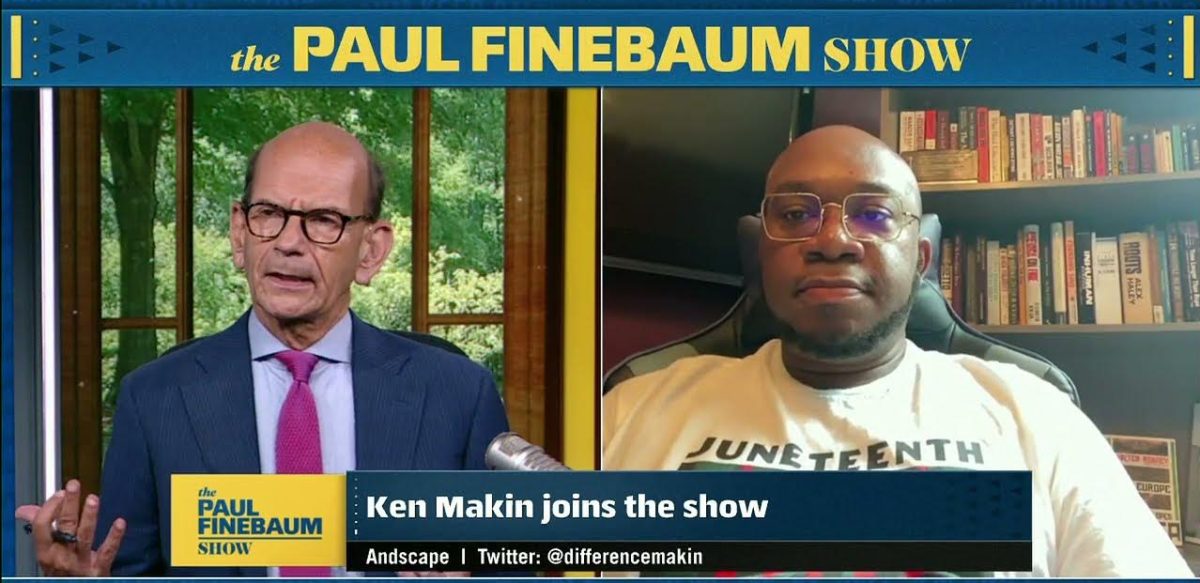
Ken J. Makin is a product of Aiken County’s schools, from North Aiken Elementary, to Schofield Middle, to Aiken High. He’s a former reporter for The Aiken Standard, and is the current host of the Makin’ A Difference show.
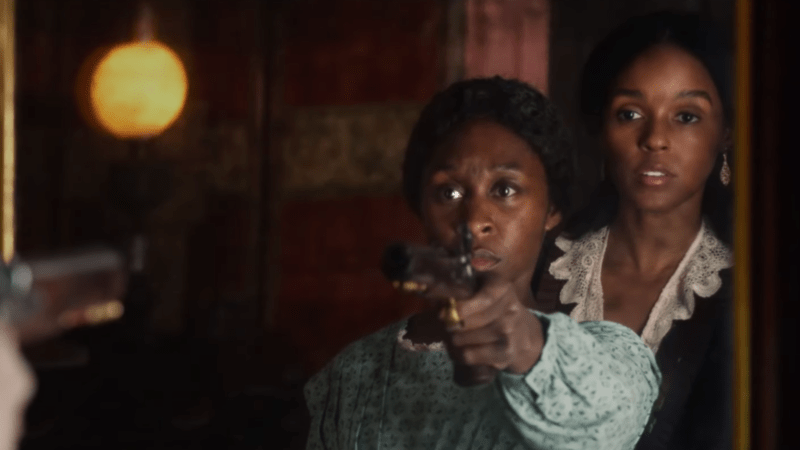
Cynthia Erivo (left) stars as Harriet Tubman in a biopic about the famous Black abolitionist. Also pictured is actress and singer-songwriter Janelle Monae.
We need more Black representation in film. So why are Black folks talking about boycotting a film of an icon?
David Oyelowo as Martin Luther King.
Chiwetel Ejiofor as Solomon Northup.
Cynthia Erivo as Harriet Tubman.
To the naked eye, those depictions seem innocent and adequate enough, especially with a trailer as captivating and compelling as the one for “Harriet,” which released July 23.
Yet there are calls to #BoycottHarriet because Erivo’s lineage — British and Nigerian — doesn’t match up with the American-born Tubman.
It’s a conversation that involves far more than movie roles and how Hollywood chooses to portray Black folks. It’s a necessary dialogue that inquires about the role of Pan-Africanism in the struggle for Black equality in America.
“All people of African descent, whether they live in North or South America, the Caribbean, or in any part of the world are Africans and belong to the African nation.” — Kwame Nkrumah
Nkrumah was more than the first Prime Minister and President of Ghana. He was a revolutionary who not only advocated Pan-Africanism, but he led the Gold Coast to independence from Britain in 1957.
His commentary about “all people of African descent” comes from his 1970 book, “Class Struggle in Africa,” which talks about capitalist exploitation and the relationship between race and class struggle, among other profound topics relating to the struggle of Africans worldwide. His criticism of the “bourgeoisie” is similar to those same criticism made by civil rights standards Dr. King and Malcolm X.
Years prior, in 1957, when Ghana declared its independence from Britain, Nkrumah invited Africans from all over the world to the country in the spirit of Pan-Africanism. The folks who answered the call included the likes of W.E.B. DuBois, Louis Armstrong and Brother Malcolm, who was so profoundly impressed with Nkrumah in their meetings and dialogues that he named his Organization of Afro-American Unity in 1964 after the one Nkrumah established in 1963.
“When we say Afro-American, we include everyone in the Western Hemisphere of African descent. South America is America. Central America is America. South America has many people in it of African descent.” — Malcolm X
To be clear, Pan-Africanism is a worldwide movement that advocates and pushes for solidarity between groups indigenous to Africa and those of African descent. Tubman herself has roots in Ghana, and two of her great grand-nieces made the trip there in 2005, where Tubman was honored with a festival and various honors.
The “diaspora wars” that take place in media — social media, primarily — can be found with a simple hashtag: #ADOS. The ADOS stands for American Descendants of Slavery. More information is available at ados101.org, but the essence of their fight can be found in this passage on the website:
“ADOS … seeks to reclaim/restore the critical national character of the African American identity and experience, one grounded in our group’s unique lineage, and which is central to our continuing struggle for social and economic justice in the United States.”
That lineage is important to ADOS — so much so, in fact, that they are part of those individuals on social media who are threatening to #BoycottHarriet.
It’s easy to dismiss ADOS founders Yvette Carnell and Antonio Moore as “trolls.” That assessment is likely unfair, based in their important work that addresses race-based wealth inequalities and the need for cash reparations for slavery.
Likewise, the history of Pan-Africanism suggests that boycotting isn’t the answer, either. Movies such as “Harriet” and one of its predecessors starring Cicely Tyson, “A Woman Named Moses,” can inspire constructive conversations that ask the tough question of how far we have truly come in the struggle for Black progress.
And still, there is room for criticism.
In a 2015 interview with the New York Times, Erivo criticized British media for boxing out Black female talent.
“The thing that disturbs me the most, being in England, is that on the screen, we don’t see very many of us — there aren’t very many Black girls,” Erivo said. “They don’t make the roles for us, or they don’t see us in those roles.”
She continued: “I don’t think it’s different to be a Black girl in England than it is to be a Black girl in America. We all collectively share in a pain of displacement and not feeling like we quite belong in places.” Oyelowo, for his part, has expressed similar concerns.
If Erivo and those of her lineage adhere to these ideals and concerns, then there needs to be a spirit of solidarity between actors which highlight the struggles of Black actors — regardless of lineage — in Hollywood. At the same time, if Erivo is going to take on the role of an icon, she has to rise above hurtful colloquialisms such as the one she expressed in a 2013 tweet:
“…(ghetto american accent) baby u know I gatchu imma sing It To you but I still gotta do wadigattado, you feel me…”
We need less of the 2017 squabbles between Samuel L. Jackson and “Get Out” star Daniel Kaluuya. We need more of the spirit of Pan-Africanism that not only respects similar struggles, but the willingness to stand together in those struggles. It is a cry for help by Black Americans — descendants of slaves — that has long gone unheard.
That type of nuance will not only serve all of us in the African diaspora when it comes to media representation and the fight against Hollywood, but also in our political representation when it comes to speaking up on behalf of Black people against an oppressive establishment.





 Ken J. Makin