Jay-Z, The NFL and Reasonable Doubt

NEW YORK, NEW YORK – AUGUST 14: NFL Commissioner Roger Goodell and Jay Z at the Roc Nation and NFL Partnership Announcement at Roc Nation on August 14, 2019 in New York City. (Photo by Kevin Mazur/Getty Images for Roc Nation)

When Jay-Z wrote and released “The Black Album” in 2003, it was supposed to be a (Black) swan song — well, it was advertised as such.

We remember the album for “Change Clothes,” “Dirt Off Your Shoulder,” and that epic mic drop on “What More Can I Say.” Yet there’s a telling commentary on the eighth track off the album, “Moment of Clarity”:

Music business hate me ‘cause the industry ain’t make me
Hustlers and boosters embrace me and the music I be making
I dumbed down for my audience to double my dollars
They criticized me for it, yet they all yell “holla”
If skills sold, truth be told, I’d probably be lyrically Talib Kweli
Truthfully I wanna rhyme like Common Sense
But I did 5 mill’ – I ain’t been rhyming like Common since (wooo!)
When your cents got that much in common
And you been hustling since your inception
Fuck perception! Go with what makes sense
Since I know what I’m up against
We as rappers must decide what’s most important
And I can’t help the poor if I’m one of them
So I got rich and gave back, to me that’s the win/win
So next time you see the homie and his rims spin
Just know my mind is working just like them (rims, that is)

Folks have pulled the “Common Sense” and “I can’t help the poor” one-liners and turned them into commentaries on their lonesome, but it is important to look at the entirety of that second verse.

It is, in many ways, a declaration of capitalism. “F— perception! Go with what makes sense!”

That declaration is important, because it makes Jay’s decision henceforth more understandable. Not justifiable. Understandable. It lacks depth to suggest Jay is a “sellout,” because that general characterization doesn’t allow for accurate criticism of the decisions he makes — for better or for worse.

Rather than say Jay-Z is selling out, let’s just say he’s “playing the game” — the same excuse we make for not only taking on bad jobs, but also bad politics and relationships, for the promise of security and pay. And yes, it is a dangerous game.

•••

Colin Kaepernick hasn’t played the game in three years. That reminder was posted by Kaepernick himself on Twitter on August 14, in a 2-minute video that began with this text:

IT’S BEEN 3 YEARS SINCE

COLIN KAEPERNICK FIRST PROTESTED

AGAINST SYSTEMIC OPPRESSION

We shouldn’t need that reminder, but we do. This was always about more than Colin Kaepernick. It was about the people — Black people. It was always about systemic oppression, shown viscerally through police brutality and injustices extended to and through environmental and economic racism. 

The partnership between Jay-Z and the NFL was destined to be criticized, not because of the nature of social media or because our society is extremely polarized. It was justifiably criticized because social justice and entertainment aren’t two properties that can be mixed and packaged so callously.

When Jay-Z says the equivalent of “we’ve moved past kneeling,” it isn’t just a slight to Colin Kaepernick. It is a slight to the reasons — beautiful, yet oppressed Black people — for which Kaepernick kneeled.

And yet the oppression that exists in the NFL is deeper than Kaepernick. There’s the story of former Arizona Cardinals head coach Steve Wilks, a Black man. who was literally fired in a calendar year. He was hired on January 22, 2018 and fired on New Year’s Eve after a three-win season. Wilks didn’t even get an adequate chance to build a winning tradition. He was replaced by a white college coach, Kliff Kingsbury, who had a career 35-40 record. That trend has befallen the likes of former Denver Broncos coach Vance Joseph, and those coaches take virtual demotions as coordinators. Meanwhile, another coach with a losing record, Adam Gase, was not only hired by the New York Jets, but allowed to serve as an interim general manager for nearly a month.

That’s just the coaches. We know what the players deal with — being caught between white billionaire owners and a leisure-class fan base, a dynamic beautifully described in Howard Bryant’s The Heritage. And despite the fact that players put their lives and livelihoods on the line on virtually every down, there are still tired narratives of how much players are worth and whether they’re “giving 100 percent.” All of this with the potential of a work stoppage on the horizon in an American culture where we inexplicably side with management over the labor force, even as most of us are punching the clock.

It’s the height of hypocrisy, and I must ask Jay, in Nas’ voice and inflection from “Ether”: 

And these the guys you choose to make company with?

What’s sad is I love you cause you’re my brother
You traded your soul for riches

•••

Of COURSE Eric Reid is taking this personally. He has skin in the game and his brother is on the sidelines.

“… everybody knows I agree with what you’re saying [in Kaepernick’s underlying message]. So what are we gonna do? … [Help] millions and millions of people, or we get stuck on Colin not having a job.” — Jay

“These aren’t mutually exclusive. They can both happen at the same time! It looks like your goal was to make millions and millions of dollars by assisting the NFL in burying Colin’s career.” — Reid

Then, an inquirer asked how Reid could attack Jay-Z’s partnership when Reid, in fact, was in the NFL. And this is where depth is important, as Reid explained:

“You & some others seem to misunderstand that we had no beef with the NFL until they started perpetuating the systemic oppression that we are fighting by blackballing Colin and then me,” Reid wrote. “Nah I won’t quit playing but I will be a royal pain in the NFL’s a** for acting like they care about people of color by forming numerous disingenuous partnerships to address social injustice while collectively blackballing Colin, the person who brought oppression and social injustice to the forefront of the NFL platform.”

It makes one wonder why Reid and Kaepernick settled with the NFL if they felt so strongly. Was it because they knew the players, and by extension, the fans, gave up on them? Was it to recoup losses? Did they think taking on the League was a losing proposition? Personally, I felt that they should’ve fought the NFL to the end. But — that was truly THEIR decision to make. They had skin in the game.

Saying the equivalent of “all they did was take a knee” is akin to Cedric The Entertainer’s comments about Rosa Parks in the movie Barbershop. “Rosa Parks ain’t do nothing but sit her a— down!” seems provocative and, with the context of Claudette Colvin, may be compelling. It doesn’t make those comments any less disrespectful, and ultimately trivializes the struggle. 

And no — Kaepernick doesn’t have the social justice franchise cornered. But think about that for a second — the idea of social justice being a “franchise.” It just shows how corporate- and capitalist-minded our society is.

“I’m overchargin’ n—s for what they did to the Cold Crush 
Pay us like you owe us for all the years that you hoe’d us.”
— Jay-Z

•••

“It’s a standing ovation and a full embrace to the hip hop culture, first and foremost. And, for those that heard the lyric, Jay-Z saying that he was going to overcharge people for what they did to the Cold Crush, it’s actually happening.” — Jalen Rose on Get Up

To quote Dead Prez, it’s bigger than hip-hop. It’s about the continuing American tradition of profiting off of Black labor. It’s ironic for Rose, he who has been vocal about the failings of the NCAA, to mention the Cold Crush lyric. 

There’s no nobility when Jay-Z, along with the NFL, profits off the sacrifices and conscientiousness of Kaepernick. The optics of Jay-Z “skinning and grinning” with NFL Commissioner Roger Goodell are bad enough. But to think of Robert Kraft — with his ties to Donald Trump and the sex scandal allegations — “brokering” a deal between Jay and Goodell reek of establishment politics. And in this case, politics have made strange bedfellows.

That partnership, in and of itself, makes Jay-Z’s previous goodwill gestures seem more like currency —clout-building — instead of actual efforts to uplift our people. And that currency is being exploited by Goodell, Kraft and the owners in “Animal Farm”-like fashion:

The pigs and farmers return to their amiable card game, and the other animals creep away from the window. Soon the sounds of a quarrel draw them back to listen. Napoleon and Pilkington have played the ace of spades simultaneously, and each accuses the other of cheating. The animals, watching through the window, realize with a start that, as they look around the room of the farmhouse, they can no longer distinguish which of the cardplayers are pigs and which are human beings.

In other words, it’s business as usual.

The Eve of Construction

Before she introduced her album with an ode to Nina Simone,
Before she introduced a track listing that featured the names of esteemed Black women,
Before she even thought to name that album after the mother of all living,

Rapsody created a masterpiece.

When we think of the word “tease” in association with women, it harbors a negative connotation. We think of it in terms of sex — which is pretty much how society defines women. 

The very genesis (pun intended) of Rapsody’s latest studio album, “Eve,” was presented in a way that was not only sisterly, but spiritual. It was also presented in a way where we had to praise not only majesty, but mystique.

This is not what we ask from Black female artists. In fact, there was a shortsighted indictment of “female rap” from Jermaine Dupri last month that basically equated the genre to “strippers rapping.” That assessment inspired backlash from the likes of Cardi B, who was brutally honest:

“First of all, I rap about my p***y because she’s my best friend and second of all it’s because it seems like that’s what people want to hear. I ain’t even gonna front. When I did ‘Be Careful’ people was talking mad s**t in the beginning like, ‘What the f**k is this? This is not what I was expecting,'” she continued. “It’s like if that’s what people ain’t trying to hear then I’m going to start rapping about my p***y again.”

It’s also worth mentioning that Cardi did shout out a few women who made music without sexually overt themes — and mentioned Rapsody by name.

For her part, Rapsody has graduated from those conversations and criticisms. That’s what happens when you put aside petty debates and align yourself with a goddess.

Typing in genesis320.com will take you to the site of Rapsody’s latest project. That web address, along with a upside-down triangle, represented the initial “teases” of the project.

“Adam named his wife Eve, because she would become the mother of all the living.” — Genesis 3:20

That level of intricacy is what makes this project truly brilliant. It’s one thing to appreciate Black women. It’s something entirely to celebrate Black women not only collectively, but individually — pain, progress, “flaws and all,” as Beyonce once expressed.

It’s the attention to detail in a logo to accompany the project — an upside-down triangle which is “female, lunar and symbolizes Mother,” according to Rapsody’s Instagram post from July 24. 

Those gestures, in addition to an article from Essence Magazine, were the eve of construction. 

“Women are realizing we can support each other,” she said. “We can talk life and good things into each other. We can compete musically because we all should compete musically. …When you compete like that, it helps the art, and outside of that, you still can respect each other and love what each other brings to the table.”

Again, graduation. That followed with “Ibtihaj,” a project which featured D’Angelo and GZA. A song about an accomplished Black Muslim female fencer with a guest appearance from he of the liquid swords himself. Oh, and the video took place in Harlem — the Black mecca.

And then came the track listing. 

Nina. Cleo. Aaliyah. Oprah. Whoopi. Serena. Tyra. Maya. Ibtihaj. Myrlie. Reyna. Michelle. Iman. Hatshepsut. Sojourner. Afeni.

Those names are standards for not only Black women, but for the best their respective fields have to offer. And so it is with Rapsody’s “Eve.”

From the punctual and passionate intro — complete with Nina Simone sample — to “Afeni,” with its nod to her son Tupac and inspiration from Deniece Williams’  “Free,” Rapsody celebrates Black women with incredible detail and depth.

Oh, and there are bars. Or, in her words:

I don’t speak on it nowadays, I just meditate
Y’all can have the bars n—, I spit hard metal gates
Henry Louis Gates when I cop me some new estate
Make room for myself, I’m in a way different mental place

She draws lines without showing her body — again, her words and her skill. Intricate wordplay has always been part of Rapsody’s forte, but adding an intricate concept to her natural gift has the potential to change the way we look at rap — regardless of gender. This album is that important, even down to the final track, which is less a rebuke of Black men and more a plea for togetherness. 

The Tupac vocals from “Keep Ya Head Up” are familiar and iconic:

And since we all came from a woman
Got our name from a woman and our game from a woman
I wonder why we take from our women
Why we rape our women, do we hate our women?

The vocals from PJ Morton also take a page from Tupac, expressing that Black women are “appreciated.”

That appreciation is about more than five stars or awards of critical acclaim. It’s about finding your lane, and realizing that lane is the Euphrates River. Or the Milky Way. That’s the standard which Rapsody has created with her latest project — truly, the Eve of construction. 


Manufacturing Controversy

nike-air-max-1-betsy-ross-colin-kaepernick

Nike’s ‘Betsy Ross’ Flap An Ironic Twist On ‘Sewing’ Discord, Lies

It was the shot heard ‘round the world — according to certain Republicans.

Nike’s decision to pull its Air Max 1 Quick Strike Fourth of July trainers, which featured a Betsy Ross flag on the back of the shoe, angered Arizona governor Doug Ducey to the point where he sought to pull financial incentives for Nike across the state.

The fact that the decision came at the behest of Colin Kaepernick, former NFL quarterback-turned-GOP Public Enemy No. 1, only riled critics even further.

The whole episode was on-brand with Nike’s willingness to engage controversy. Are we really to think that Nike, with its b/rand awareness and attention to detail, didn’t know how folks would respond to a Betsy Ross flag on the back of its sneakers?

This was a masterful troll job only days before the Fourth of July, and the controversial kicks have already seen a dramatic markup on resale sites.

And yet, the irony of the backlash behind Nike’s decision to pull a shoe with the “Betsy Ross Flag” cannot be overlooked.

Faux patriots are angry about a flag likely based on a lie.

Elizabeth Griscom Ross was born a New Year’s baby in 1752. She’s credited with the design of the flag — even though there’s no recorded or archived evidence to uphold that claim.

In 1870, Ross’ grandson, William Canby, delivered a paper before the Historical Society of Pennsylvania entitled “The History of the Flag of the United States.” In that paper, he shared what Ross told him before she died. He was six at the time of her death.

Nearly a century prior, in 1776, Ross said she was visited and commissioned by a group, to include former president George Washington. The paper and story claimed that Washington showed a rough design for a national flag, and Ross not only suggested changes, but later presented them with said design.

Except for the fact that Ross made flags for the Pennsylvania Navy during the American Revolution, there’s no proof that she made the first American flag. Yet her story resonates with people who fancy themselves patriots or nationalists — in the traditional sense.

There is a more wicked idea of nationalism — white nationalism — that the Betsy Ross flag debate is currently centered around. And the ugly truth of it all is this — both the “Betsy Ross Flag” and the idea of white nationalism are both powered by ahistorical and willfully ignorant narratives.

It’s the idea of “white nationalism” that believes the extent of American history is about flags and Confederate statues. The very idea of the Confederacy is anti-Union — anti-American — in nature. That didn’t stop monuments from being erected many years after the Confederacy lost the war. Even today, there are inexplicable debates about the relevance and reasoning for keeping monuments to slavery and oppression in public view.

Ross’ lie — or, at best, lack of historical basis — is dangerous and provides a cautionary tale on the importance of accurately depicting history.

Nike had every right to pull the shoe because of what the Betsy Ross Flag represents to certain people. And yet, Nike has crafted controversy into a money-making machine. Nike stock jumped after they ran Kaepernick in its line of “Just Do It” ads last year. The controversial Air Max shoes in question are up to more than $2,000 a pair on resale sites.

Controversy sells — but at what cost? Why intentionally weave discord onto and into a controversial shoe? Nike pitches itself on not only style, but substance. And if the brand wants to be truly authentic by integrating social awareness into its business model, then it has a cultural responsibility to engage controversial items with the intent of productive dialogue, not profits.

The last thing Nike wants to become is like the folks who peddle Betsy Ross flags and such — the same folks won’t let a few historical inaccuracies get in the way of a dollar.

A Crisis In Black Media

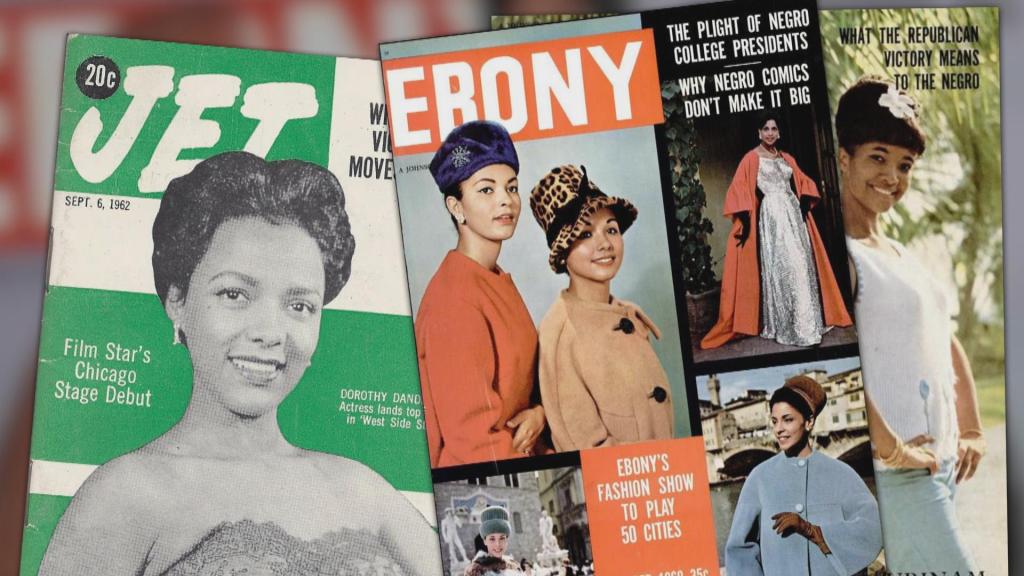
Back in 2015, Ebony Magazine recognized its 70th anniversary. It should have been an occasion where the publication, which was the crown jewel and flagship production of the Johnson Publication Company (JPC), celebrated its past and a prosperous future.

Instead, JPC sought a buyer for its iconic photo archive.

It’s been less than a week since it was announced that the archive is slated to go on the auction block, pending approval from a Chicago bankruptcy court.

As one can imagine, the archive has photos from the Civil Rights Movement, as well as other iconic pieces of Black activism and achievement. The fact that such a historic and honored hall is being peddled like flea market jewelry hurts in its own right.

There is a more pressing concern — if this is the fate of arguably the most successful Black media enterprise, what chance does the rest of Black media have?

Whether one agrees with its content or character, Ebony Magazine represented a marriage of two central ideas in coverage: news and entertainment. Ebony was so locked in to the idea that, in 1957, it welcomed a new advice columnist — the Rev. Dr. Martin Luther King Jr. While some of the commentary might draw a few side-eyes today, it was a year-long attempt at news and nuance.

One of the tragedies of Black media is, with so much focus on entertainment, it has lost fervor (and funding) for more hard-hitting news.

When one looks at their smartphone, or TV, or listens to the radio, there are a number of recognizable faces and presentations, and yes, some of them do attempt to cover the news. How much of that coverage is whimsical, though, because their bread and butter is entertainment?

Black media’s departure from news can be seen from another former Black media standard — Black Entertainment Television (BET). Launched in 1980, BET’s star shined so brightly that in 1988, it presented a news program, “BET News.” The network’s news coverage reached out to audiences and asked for their perspective about incidents such as the L.A. Riots. BET’s attention to news waned the closer it became to losing its Blackness; well, at least its status as a Black-owned business. It was bought by media conglomerate Viacom in 2001 for $3 billion. By 2005, BET had done away with both its “BET Tonight” and its “BET Nightly News” shows, and had gone so far away from news that it didn’t even offer live coverage of the death of Dr. King’s wife, Coretta Scott King.

Black people need Black media, not only for characterization, but for character. There are two dangers with mainstream media as it relates to Black folks — for starters, the wholly negative picture that it paints of Black folks. The other danger is that mainstream media would rather view Black folks as a monolith instead of a nuanced group of people with differing sets of views. We need dedicated outlets to focus on issues such as wealth disparities and police brutality — not with respectability politics, but realness.

I don’t want all of Black media to end up like the Ebony photo archive, which, as a professional photographer, I can’t help but think about through a lens. Remember that scene in “Get Out” where Chris is tied down in preparation for the transmutation and Jim Hudson said, “I want your eye, man?” So much of Black media has already been co-opted or left in The Sunken Place.

The crisis of media is also a crisis of vision. I hope people see what’s going on before it’s too late.

Black Males & A History Of Blackmail

DuVernay’s masterpiece “When They See Us” re-emphasizes a sordid perception of Black boys and men

“You know, I’m finally starting to wrap my mind around this s—. We’re in here for life. We’re gonna die in here! We might as well go up to the cemetery, pick out a plot and start digging.” — Martin Lawrence as Claude Banks in “Life”

When iconic comedians Eddie Murphy and Martin Lawrence collaborated on the movie “Life” in 1999, it was rightfully billed as a comedy-drama filled with laughs and hijinks. No matter how much we laughed at the movie, though, one unsettling fact remained:

Claude (Lawrence) and Ray (Murphy) spent their entire lives in jail for a crime they didn’t commit. What played out in a movie was the reality of so many Black men in the South and throughout the country, and it was no laughing matter.

“Life” was released on April 16, 1999 — almost 10 years to the date of one of the grossest miscarriage of justices that has ever played out in the public eye. Recently, we’ve relived the horror that befell the “Central Park Five” through the lens of director Ava DuVernay and her latest project, “When They See Us.”

The visceral and devastating four-part series begins with a single date — April 18, 1989. That was the date where a white female jogger was discovered in Central Park, and five boys — Antron McCray, Yusef Salaam, Raymond Santana, Kevin Richardson and Korey Wise were treated and tried as men. The series has been so tough for some to watch that folks could only stand to watch 15 or 20 minutes of the over four-hour series. The individuals who made their way to the fourth episode dived into the especially tough journey of young Korey, who, at 16, was tried as an adult and sent to the likes of Rikers Island and Attica Correctional Prison.

Wise’s personal and physical struggles are displayed to the audience in a way that almost mirrors the titular track from “Life,” performed by K-Ci and JoJo:

Temperature’s like a hundred degrees

Like I got chains on me

Black male in a family of three

Been robbed of my destiny

Reckon I’ll fly away

‘Cause it’s too much for the man

Shouldn’t have gone down this way

What happened to my master plan?

‘Cause I can’t figure out

I could have been a loved child

Shouldn’t have gone down this way

The Central Park Five served between six and 14 years in prison for a crime they didn’t commit, and the gravity of that injustice weighed so heavily in the series when we, the audience, saw their boys-to-men transition. They could have just as easily belted out K-Ci’s existential question — “Tell me, how did I get life?”

Instead, one of the previews for “When They See Us” asked a more pressing question that relates to Black men:

“When do we ever get to be boys?”

Fourteen-year-old George Stinney was tried and executed in South Carolina in 1944 in an unfair trial. Fourteen-year-old Emmett Till was lynched in Mississippi in 1955 because a white woman said he whistled at her. The “Scottsboro Boys,” whose trials predated both the Stinney and Till murders, were a group of nine teenagers from 12 to 19 who were accused of rape in 1931.

As much as racial injustice is a common denominator of these cases, there’s also the truth that America will not address honestly. This country cares more about the claims of a white damsel in distress than it does the obligation of justice for Black boys.

DuVernay displays this dynamic masterfully through her portrayal of diabolical prosecutor Linda Fairstein. The portrayal of Fairstein was so decisive that it has led to petitions and a call for Fairstein’s publisher to drop her. Some would like to take it a step further — specifically, for Fairstein to do time.

That will be hard for America to stomach. It’s still hard for certain folks to come to the realization that Rose Armitage was a predator and not a victim in “Get Out.” The silver-haired, pale-skinned Daenerys Targaryen wasn’t a ruler who demanded total obedience and killed innocents. No, she was misunderstood and had “daddy issues.”

The pathology and the solution can be found in the first two episodes of the four-part series. Elizabeth Lederer (played by Vera Farming in the series) was the district attorney assigned to the case by Fairstein. There’s a cold and calculated dialogue that she had with defense attorney Mickey Joseph (played by Joshua Jackson) in an attempt to make a deal:

Lederer: Fair? What’s that word mean, anyway?

Joseph: I don’t know, something to do with justice, I think.

Lederer: It’s no longer about justice, Counselor. It’s about politics. And politics is about survival. And there’s nothing far about survival.

Joseph: Survival at what cost? These boys don’t deserve to pay the price —

Lederer: I’m not interested in having a philosophical —

Joseph: Then what are you interested in?

Lederer: I asked you here to talk about a deal.

The “deal” comes at the expense of Black boys — our lives are collateral for the illusion of white innocence.

It’s why one of the most powerful scenes in the movie is the picture of the incomparable Aunjanue Ellis playing the role of Salaam’s mother, Sharonne. She storms into the police station and not only demands to see her son, but (temporarily) liberates him from the ravenous prosecutors and police.

That’s the same attitude that we must take with our children, and as so many examples show, our Black boys.

Their lives — our lives — depend on it.

A Modern-Day Scalping: The Terrifying Tale of Andrew Johnson

On Christmas morning, social media was gifted with a movie preview: the trailer for “Us,” a movie directed by Jordan Peele of “Get Out” fame. The “Us” trailer had all of the makings of a Peele flick — social commentary, horrific images and those now-infamous perpetually crying eyes.

The trailer, which also featured an ominous pair of golden scissors, jumpstarted a series of premature think-pieces and misguided commentaries. The irony of it all is tremendous, because we didn’t need to sink into the depths of fantasy.

Our reality is terrifying enough.

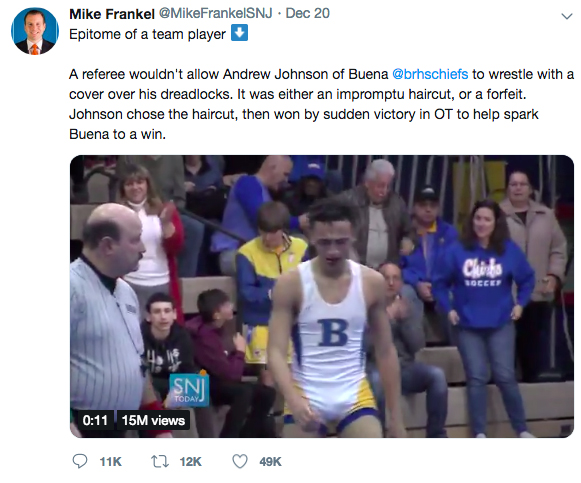
Almost a week before Christmas, there was a report about Andrew Johnson, a 16-year-old high school wrestler out of New Jersey who was forced to cut off his dreadlocks to participate in his team’s wrestling match.

Alan Maloney, the referee who made the controversial decision regarding Johnson’s hair, has a history of making racist remarks during his tenure. Yet the monstrosity of Maloney’s bigotry isn’t the biggest nightmare here.

It’s the inaction of the people around Johnson — his teammates, his coaches, hell, everyone in the facility — to speak up or stop what’s happening to this young man.

They all comply with the standard of racism, none more viciously than the team trainer, who lops off Johnson’s dreadlocks as if it’s old cloth or meaningless paper during the course of cringe-worthy video footage.

The footage ends with the “victorious” Johnson, with his lip bloodied, snatching his raised arm away from Maloney and walking off sadly.

To the initiated and the cultured, it came off as a modern-day scalping — a brutal separation of one’s hair from one’s head. To both African-Americans and Native Americans, our hair isn’t just a covering, it is a crown. Scalping, which began as early as the 11th Century, became a means of suppression against people of color during the Spanish colonization of the Americas. The cruel process, which by definition, is the act of cutting or tearing a part of the human scalp, with hair attached, continued during the Indian Wars in the mid-1800s.

Scalping wasn’t only about savagery, though. It was also about sport.

Scalps were not only used for display and decoration, they were also used for currency.

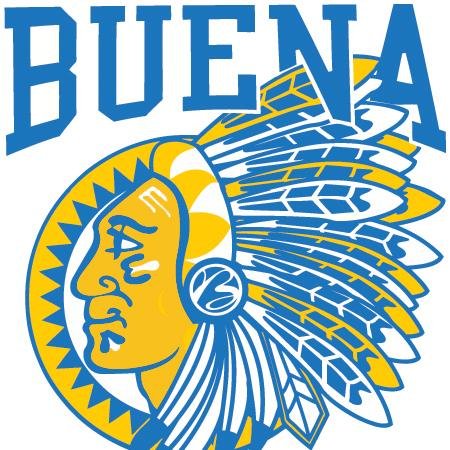
Again, the irony of the situation is tremendous. We find this teenager in a conflict — a wrestling ring, no less — where he competes for Buena Regional High School. Care to take a wager at the high school’s mascot?

64Eoa31z

And then, there was a poor assessment of the situation from local media:

frankel

“The epitome of a team player” is the perfect white bread response from white-bred media.

Only one player had to make a sacrifice — the mixed kid with the “Black” hairstyle.

It would be almost comical to think of Maloney, with his “Three Stooges” balding pattern, making a decision regarding a kid’s full head of hair, if it wasn’t such an insidious part of this country’s culture.

The Supreme Court, allegedly the highest court in the United States of America (the court of public opinion is fast-approaching), refused to address the issue of workplace discrimination regarding hair only months ago. Earlier this year, a six-year-old was forced to withdraw his enrollment from a “Christian” school because his hair was too long. The United States military only allowed female soldiers to wear dreadlocks last year.

It’s an unholy type of assimilation that is synonymous with this country’s job practices and views on being a “team player.” Being a part of the “team” is nothing more than empty rhetoric and respectability politics that not even the Black establishment is immune from. Centuries and centuries of oppression provide a cruel reminder almost daily — “assimilation” is nothing more than compliance with white supremacy.

That supremacy vilifies and villainizes a child’s Black hairstyle, but provides multiple chances to Maloney, who in 2016 reportedly used a racial slur against a Black referee. After the incident was reported, he participated in “sensitivity training,” which, according to what happened recently, has not worked.

Even now, the decision to not assign Maloney to any wrestling events until further notice feels like a slap on the wrist. History indicates that Maloney’s reign of terror will be allowed to continue.

Such actions reinforce a culture of supremacy and silence, and, as the late Rev. Dr. King said in an indictment of the war on Vietnam, “there is a time when silence is betrayal.”

Those times say so much about Us.

54d41c9c560ce_-_redskin

The Carolina Panthers Don’t Need A New Quarterback. They Need A New Fanbase.

Fresh off of their team’s first Super Bowl appearance in the 2003-2004 season, fans of the Carolina Panthers were rewarded with a premium primetime matchup to start the season — a Monday Night Football game against the Green Bay Packers.

The game didn’t go as planned. The Panthers took a short-lived 7-3 lead in the second quarter of a game that Carolina eventually lost 24-14.

The loss wasn’t the sad part. The ungrateful nature of the fans provided the real gloom.

After Green Bay took a 24-7 lead in the third quarter, fans furiously booed their hometown Panthers — the same Panthers, mind you, who just lost a heartbreaking NFL championship game to those cheating New England Patriots only seven months earlier.

During the Panthers’ surprising playoff run, a defining motto for the franchise was brought to life by the late Sam Mills: “Keep Pounding.”

A whiny and complaining contingent of Panther fans continue in the legacy of those boo-birds from that September night. They would rather keep pounding and railing on their team instead of rallying behind them.

keep pounding

Some 15 years after the franchise’s first Super Bowl run, the team finds itself in the midst of an improbable six-game losing streak after a tough 12-9 loss to the hated New Orleans Saints on — you guessed it, Monday Night Football. Reports indicate that quarterback Cam Newton will miss the rest of the season with a shoulder injury. Most fan bases would mourn the fact that their franchise quarterback could miss significant time, or worse — face an injury that could cut into their favorite player’s prime.

Not Carolina fans. The Panthers’ Facebook page, which boasts 2.2 million fans, featured comments such as these:

“I been a Panthers fan since day one, but Cam just a mediocre QB.”

“Cam is a bust, dude will never win a title.”

“Looks and plays like a sissy b—h.”

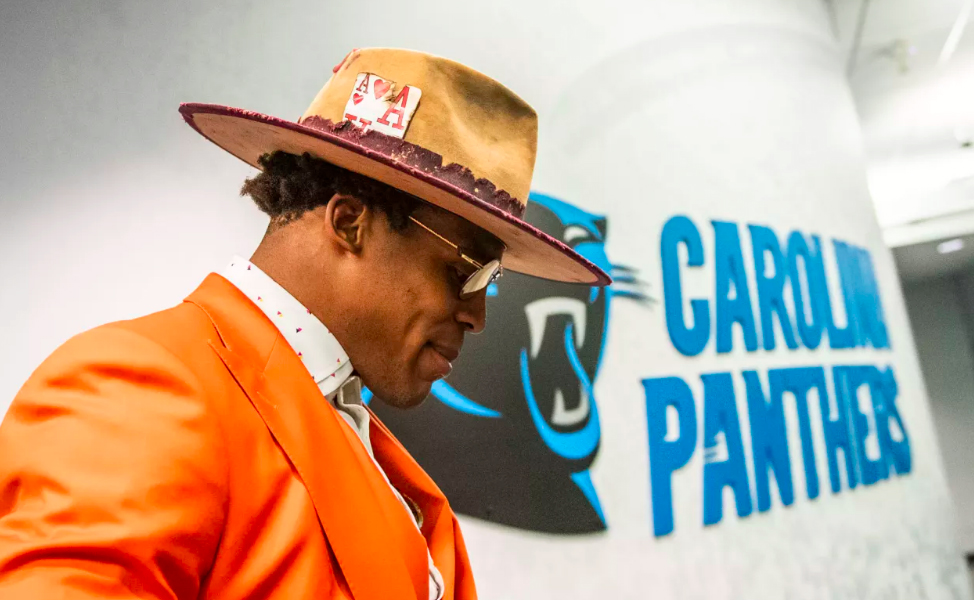
There are two things that are questionable about Cam: his fashion sense and, for the last six weeks, his shoulder on the injury report. Here’s what’s NOT questionable about Cam:

• He’s the greatest quarterback the franchise has ever seen. Cam is Carolina’s all-time passing leader with 28,469 yards. For the first eight seasons of his career, he’s thrown for 3,000 yards. Only one other quarterback has ever done that — Peyton Manning. Those are his numbers as a quarterback, which speaks nothing of his exceptional talent as a runner and his nose for the goal line.

• The Panthers’ last Super Bowl appearance doesn’t happen without a MVP campaign from Cam, which led to a 15-1 regular season record.

• Cam is this generation’s Steve McNair. McNair was a paragon of leadership for the Tennessee Titans, a player who played fearlessly as he suffered through various injuries. Cam’s competitive nature and fearlessness also fuel the Panthers, yet only tell part of the story. Despite a shoulder injury that became progressively worse, especially after a big hit by Pittsburgh’s TJ Watt, Cam got the Panthers off to a 6-2 start where he played some of the best football of his career.

• Cam’s leadership extends beyond the football field and shouldn’t come into question because of how he brands himself as a fashion icon. He gives his time and resources to the Charlotte community and clearly has a heart for children.

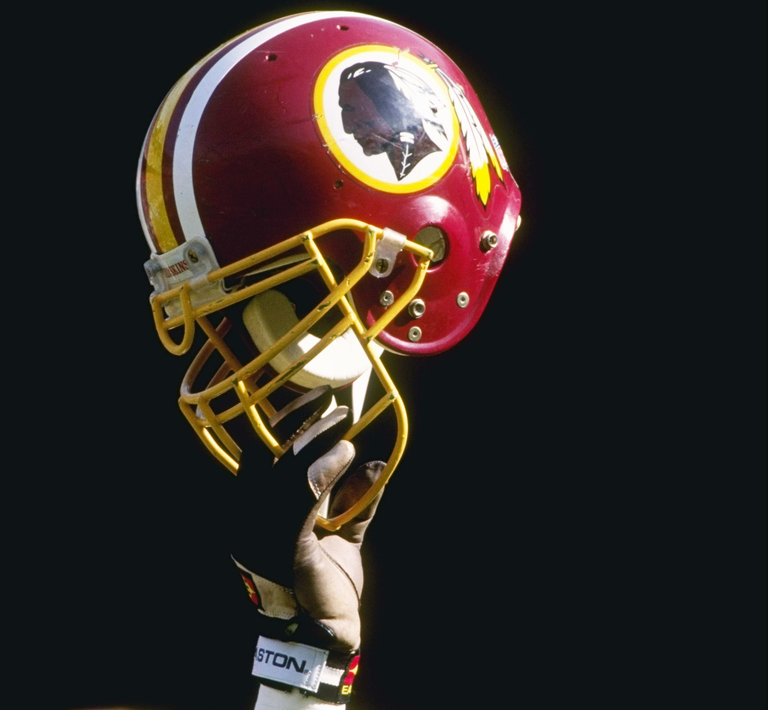
That’s not enough for these backwater fans who tee off in the comment sections. Wonder why? Could it be the same reason that these same fans want to fire Ron Rivera, a coach of Hispanic descent? Could it be the same reason that these same fans belittle Eric Reid, a bold champion for social justice?

Of course it is. These fans will never be satisfied without a blond-haired, blue-eyed quarterback. Same goes for the coach as well. And don’t forget, “stick to sports.”

Regional politics certainly fuel this senseless bias. Charlotte, North Carolina, the home of the Panthers, is part of a congressional district that is currently under fire for claims of voter suppression targeting African-Americans. Two years ago, Charlotte was besieged with protests and riots after the shooting death of Keith Lamont Scott, a Black man, at the hands of police.

The backcountry boo-birds in the comments section are, not surprisingly, tone-deaf toward the feelings of Black people on these issues. The similarities between such unrepentant ignorance and the hate for “QB1” can’t be overstated or overlooked.

It’s a nonsensical and deep-seeded hatred that demands Derek Anderson start over Cam Newton. It’s a hatred that roots for backup Taylor Heinicke — not necessarily for the good of the Panthers, but instead to “humble” the Panthers’ franchise quarterback.

Truth be told, they don’t even represent the majority. There was a beautiful thread on Twitter in the aftermath of the Saints game where fans declared their love for the Panthers and their players. That was a gesture from real fans.

The vocal minority that bashes Cam is much like the vocal minority that controls so much of the media and political structure in our country today — savage and without a conscience. If these people hate diversity so much — a Black quarterback, a Hispanic coach, an athlete-activist — we should banish them to a life of misery in a place where we’re shipping a lot of former Panthers these days.

Let’s send them to Buffalo.

bills

GOAT Talk: There’s more to NBA greatness than ‘Jordan vs. LeBron’

For those who might be unfamiliar, GOAT is an acronym for “Greatest of All Time.”

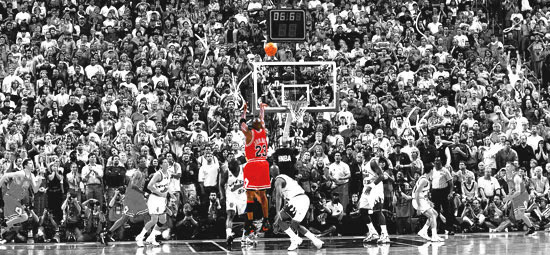
Next week will mark the 20th anniversary of one Michael Jeffrey Jordan performing open-heart surgery on the Utah Jazz.

I know you remember the shot. (How could you forget?) Jordan standing there with literally picture-perfect form.

It’s a moment frozen in time.

Or, are we the ones frozen?

michael-jordan-last-shot-anniversary-1

We have made the “Jordan Standard” an impossible one.

That’s not to say he isn’t arguably the best basketball player ever — his stats and accomplishments provide an exceptional argument.

Still, at what point do we at least admit that we’re stuck in a moment?

To quote Spike Lee as Mars Blackmon, is it the shoes? Twenty years later, Jordan brand sneakers are still flying off of the shelves.

Is it the Black Cat’s compulsive competitiveness? America loves a winner. We prioritize winning over everything.

Or is it a mix of mystique, marketing and media?

si_cover_lebron-e1487176174981

Enter LeBron Raymone James.

He was hailed as “The Chosen One” before he played a second in the NBA.

He lived up to the hype, but then came an opponent greater than hype — the “Standard.”

We hated Bron because he didn’t always take the last shot. We hated him because he made The Decision.

In a way, we hated him because he wasn’t Jordan.

James overcame those obstacles the same way he overcame the odds of a single-parent upbringing in Akron, Ohio — and those 73-win Golden State Warriors.

His stats and accomplishments made him one half of the question that we can’t stop asking — or hearing:

LeBron vs. Jordan — who’s the GOAT?

1_raDFCG6soUAyMyNFhfmdYQ.png

It may have been an honest question at first. Now, it’s a bonafide ratings booster, not to mention, a go-to discussion for talking heads and social media.

It can be fun at times. This spectacle has inspired GOAT NFL tight ends to (shamelessly) wear GOAT masks to honor LeBron, all while enduring criticisms from journalists who don’t skip a beat when it comes to LeBron slander.

Ultimately, though, it is a question that threatens the very fabric of NBA legacy. Why?

Because we are unable to appreciate greatness both in the present AND the distant past.

33691144_10212184895513567_8144771342122614784_n

The missing GOATs

The truth of the matter is this — no matter what your favorite sports show or your friends tell you, Jordan and LeBron aren’t the only GOATs.

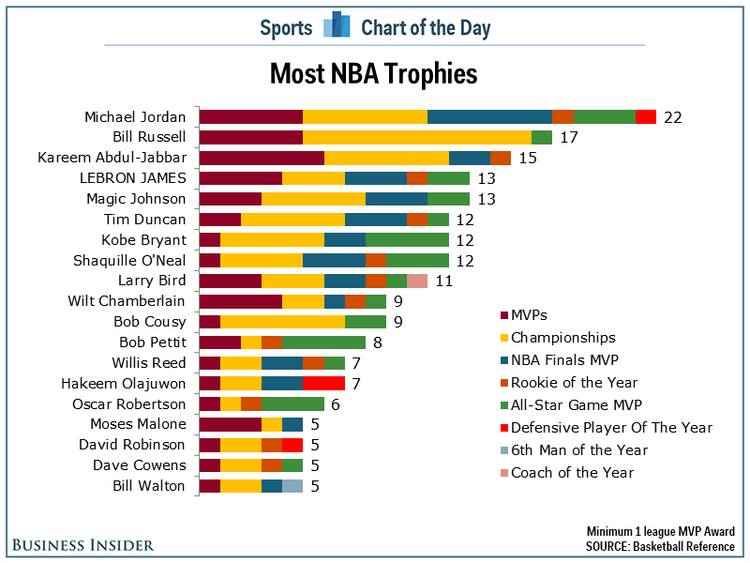
The “Jordan Standard,” at its core, is a championship standard. For many folks, six is the magic number.

Here’s the thing about that standard: there are two legends in NBA history who have either matched or exceeded that number.

Kareem Abdul-Jabbar, who played with both the Milwaukee Bucks and the Los Angeles Lakers, won his first title in his second year and won six championships, the same as Jordan.

Meanwhile, Bill Russell won 11 titles in a 13-year span with the Boston Celtics.

If we’re going to use the “Jordan Standard” as a barometer of GOAT status, then we can no longer leave Abdul-Jabbar and Russell out of the conversation.

But why did we leave them out in the first place?

b19ad280-2a76-11e6-9fb1-1327a1fc68ae_alijimbrown

The Price Of Activism

When it comes to statistics and achievements, it’s hard to look past the man formerly known as Lew Alcindor.

A three-time national champion at UCLA, Abdul-Jabbar not only won six MVP awards, he also left the NBA as its all-time leading scorer.

So why isn’t he considered the GOAT? Could it have something to do with the fact that he converted to Islam after he won his first title?

“Because of my fame as a professional basketball player and because so few Americans knew anything about Islam back in the ‘70s, there was a lot of angry backlash,” Abdul-Jabbar expressed in a book he co-authored, Becoming Kareem. “People did not want me messing with their idea of who I was or what I represented to them. To many, by changing my religion and name, I was no longer the typical American kid playing a typical American sport, embodying typical American values.”

Russell won big in a town that neglected his achievements and activism for decades. The Celtic great marched on Washington in 1963, as he was personally invited by the late Rev. Dr. Martin Luther King Jr.

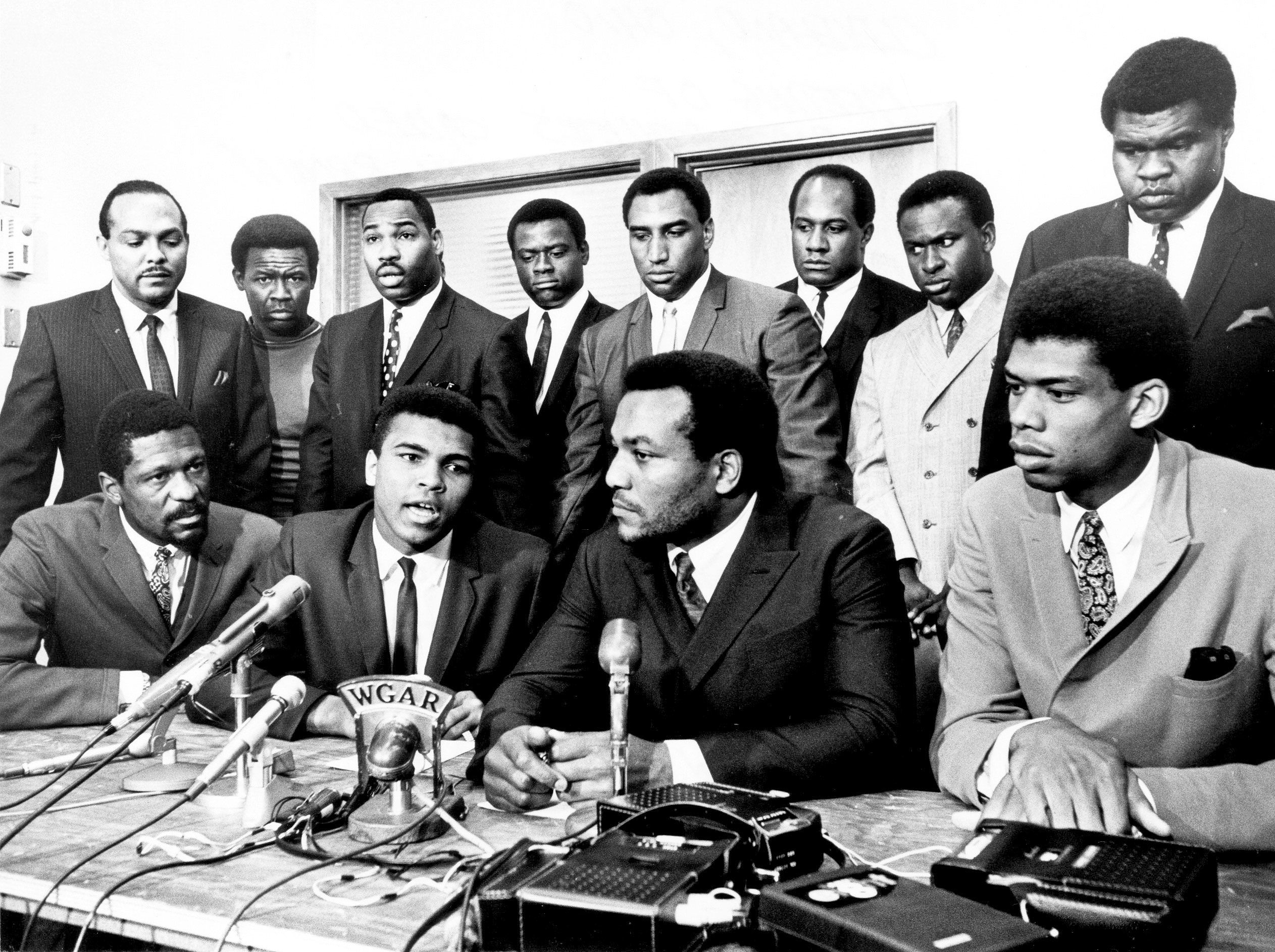
Both Russell and Abdul-Jabbar stood up for Muhammad Ali at the “Ali Summit” in Cleveland in 1967. Ali famously refused to be drafted for the Vietnam War, and both of the NBA giants stood alongside the boxing heavyweight champion of the world.

Here’s the thing about activism, though: it’s hard to market, especially when it has a Black face.

That is the very burden of responsibility that Colin Kaepernick is dealing with now, and sometimes, the price of activism is being shunned by sports leagues and discredited by the media.

rs-243524-GettyImages-517262270

The Decision II

No, I’m not talking about LeBron’s pending free agency. I’m talking about the decision we have to make as fans.

In the last two decades, we have allowed Jordan’s shadow to remain over the NBA, for better and for worse. The tragedy of that shadow is ironic, because we’ve allowed singular greatness to blind us to the greatness of the NBA as a whole.

Believe it or not, there is a solution. We’ve allowed ourselves to be limited by either Jordan, or the endless Jordan vs. LeBron debate. It’s time to look past those limits.

We can’t limit ourselves to biased sports memes.

We can’t limit ourselves to sports media talking points. Remember, it’s called “programming” for a reason.

We can’t limit ourselves to becoming prisoners of the moment. Legacy is best defined through a body of work, and is defined at worst through a game-by-game analysis.

There’s a saying that today is a gift — that’s why we call it the present.

Well, there’s a greater gift when it comes to GOAT talk — the ability to appreciate the moment, even as sports become almost as polarizing as politics.

There’s only one way to describe being able to appreciate the present as it’s happening, with context:

GOAT-like.

How Black Was Beyonce’s Coachella Performance?

Last August, there was a full solar eclipse, during which the path of totality was about 70 miles wide and stretched from Oregon to South Carolina.

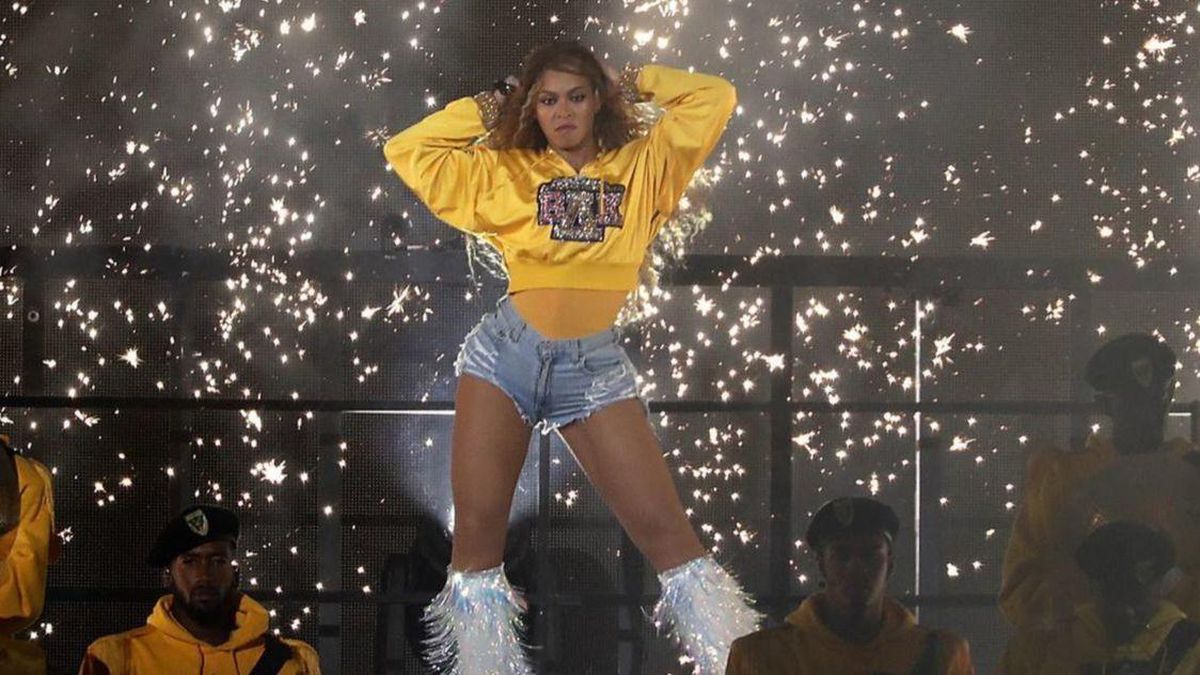
Last weekend, there was also a full solar eclipse, during which Beyonce eclipsed the traditional whiteness of Coachella and effectively turned the event in to a HBCU homecoming.

So, just how Black was Beyonce’s Coachella performance?

Joint was blacker than the Rev. Dr. Martin Luther King Jr., with a pool stick in hand, and the Brother Minister Malcolm X, with his Detroit Red hair and flair, doing the Kid and Play dance, wearing African-American College Association hoodies and Cross Colours pants. During halftime of a Florida A&M-Southern game at midnight the day after a full solar eclipse in September with Earth, Wind and Fire on the sidelines nodding in approval.

-deep breath-

(And people STILL hating on Beyonce? After a BLACK Super Bowl performance and this BLACKER Coachella heat? If you hating on Beyonce at this point, you’re one of those unapologetic Hoteps that hated Black Panther or you one of those folks that wanna see women cook, clean and be quiet. Or both. Either way, update your app.)

-deeper exhale-

(And I’m not even a Beyonce fan. My beautiful Black wife is enough of a Yonce fan for boffus. I am a SUPER fan of Blackness. And this joint wasn’t Black, it was -Plies voice- BLIKE.)

It was obsidian oozing from cracked-open vibranium and into the pores of Black consciousness, exfoliating foolery and leaving a gold shine. It was one nation, under a groove, stomping divinely nine times until it broke open the earth and thunder roared across the highest of seven hills. Those drumsticks beating at the beginning of the performance? Those drumsticks were dripping ice cream flavored with chocolate caramel, mad that it doesn’t have its own Drumstick flavor (because vanilla caramel ain’t BLIKE ENOUGH).

Blacker than a chant of “I’m Blacker than Black, and I’m Black y’all!” in unison by HBCU alums, past and present, led by Euripides, with everyone holding up a fist…

…Yeah, you get the gist.

beyonce_en_el_festival_de_coachella_vestida_de_balmain

The Night Jefferson Pierce Became King

The night before the 50th remembrance of the assassination of the Rev. Dr. Martin Luther King, Jr., the CW network had either the good fortune or the great foresight to air an episode of its hit series “Black Lightning.” The episode was entitled: “Black Jesus: The Book Of Crucifixion.”

The parallels between Dr. King and Black Lightning’s alter ego, Jefferson Pierce, cannot be ignored.

Both men are well-dressed, charismatic leaders. Both are seemingly larger than life and are proud pillars of their respective communities.

Both men are respectable, and it is that respectability that juxtaposes with mistreatment by police so bitterly, yet so profoundly.

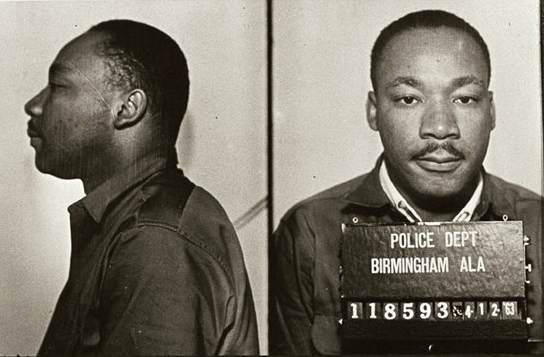
Even now, when one looks at a mugshot of Dr. King, it almost looks unbelievable.

kingmug

What did he do to deserve this?

It couldn’t have been because of any wrongdoing on his part.

We know through painful experience that freedom is never voluntarily given by the oppressor; it must be demanded by the oppressed.

— Letter From A Birmingham Jail

When Freeland Police rushed the campus of Garfield High School and searched Jefferson’s car, the students and faculty were struck with disbelief.

What did Mr. Pierce do to deserve this?

It couldn’t have been because of any wrongdoing on his part.

Even as police apprehended the people’s principal, Jefferson’s daughters and his students came to his aid. Those three incidents — a trinity of conflict featuring Jennifer, Tavon and Anissa — show his impact as a father and a father figure.

The feeling of helplessness is overwhelming for the viewer, and Jefferson reciprocates that feeling as he looks out of the back of the police car, which is on the way to a nearby jail. That feeling took us back to the opening scene of the pilot episode, where Jefferson is essentially pulled over for a DWB — “driving while Black.”

At that time, he struggled to control his power in a moment of tense conflict. During this episode, that struggle played out masterfully and in heartbreaking fashion.

mrpierce

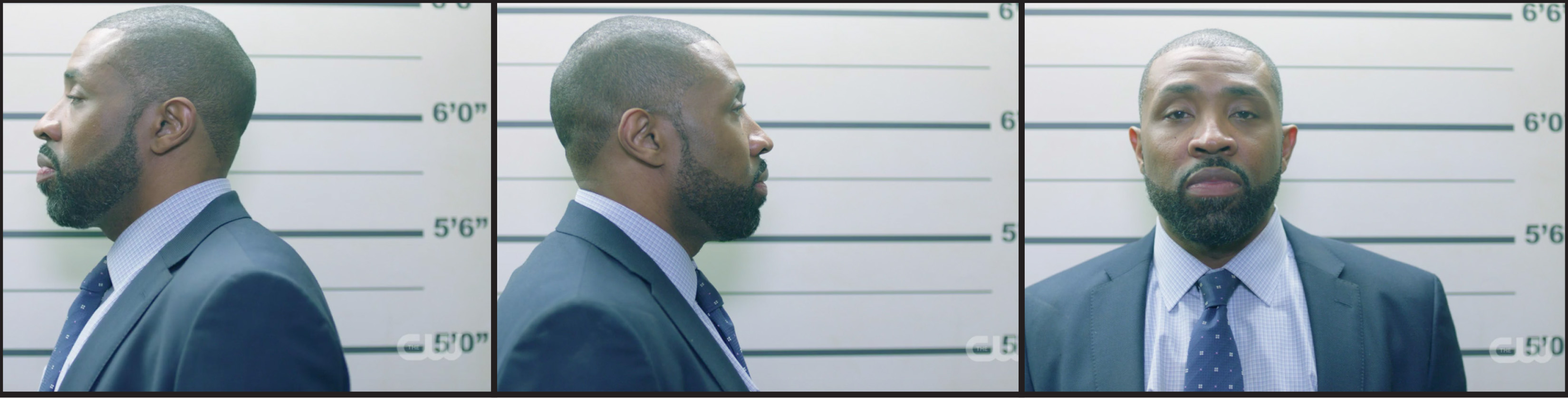
First, there were the mugshots. Then, the fingerprinting. Later, there was a moment, after Jefferson was dragged through a hallway by Freehand Police, that played out almost biblically:

Instead, one of the soldiers pierced Jesus’ side with a spear, bringing a sudden flow of blood and water. — John 19:34

In this episode, one of the policemen pierced Black Jesus’ side with a punch, bringing a sharp pain and a hint of electricity.

Prior to a commercial break, Jefferson was forced to strip down as part of a cavity search. Again, the crackle of electricity shown in his eyes. It was a watershed moment, a moment where, on Twitter, I said, “That lightning in the eyes of #BlackLightning represents the sentiments and frustrations of (most) every Black man in America.”

Imagine Jesus on the cross, Jesus in custody, with the power to break out of that situation, yet choosing to remain in bondage for the good of the people. As a Black man, that frustration is a recurring nightmare, albeit in a more helpless and almost hopeless situation, when we think about the likes of Stephon Clark, Oscar Grant and countless others.

It begs the question — an existential question, as a powerful dialogue between Jefferson and Anissa described earlier in the episode:

Anissa: “So then, I don’t know, shouldn’t we all just get along?”

Jefferson: (corrects Anissa) “Can’t we all just get along?”

Anissa: “What?”

Jefferson: “No. Rodney King asked, ‘Can’t we all get along?’ It’s an existential question, rather than a directive.”

Anissa: “OK, so can we?”

Jefferson: “I don’t know.”

The dialogue referenced Jefferson’s frayed relationship with Peter Gambi, but it just as easily speaks to the human condition and, specifically, racial discrimination. It was another touch of irony in an episode rife with it, as Jefferson went from correcting his daughter to reflecting upon her response.

The episode itself had a happy ending — Jefferson was exonerated by a Black cop, Bill Henderson, who himself had to to weave through the corrupt inner workings of Freeland’s police department. Yet, much like the Black experience, you couldn’t help but look over your shoulder, a feeling that the writers played upon with a simple knock on the door.

Altogether, this episode showed the evolution of the series and the evolution of Black television — a series that could touch on the entire spectrum of Black issues, not in a corny fashion, but in a real and rugged way.

It was a fitting tribute worthy of Kings.