Meet Jamie Quarles: Former Augusta Univ. Coach is part of Buffalo’s ‘Bull Run’

4Fs7kpTW

BOISE, Idaho — Jamie Quarles is accustomed to Madness in March.
He was a senior on the Augusta University squad in 2007-08 that competed in the Division II National Championship.
Ten years later, he had a front row seat to one of the big upsets in the 2017-18 Division I NCAA Tournament.
Quarles, now an assistant coach with the University of Buffalo, was on the sideline for the 13th-seeded Bulls’ 89-68 upset win over the fourth-seeded Arizona Wildcats.
“Two things we will do for sure are compete, and play hard. We have adopted a blue-collar mentality here,” Quarles said prior to the matchup with Arizona. “Regardless of the outcome when the final horn sounds, Buffalo will, without a doubt, have played hard and competed.”
Previously, Quarles had been the top assistant coach for six seasons at Augusta.
“Playing in the NCAA tourney in my first year is still surreal,” Quarles said. “I was very fortunate to coach in several Division II national tournaments during my time in Augusta.
“March Madness, however, is something that, as a young guy breaking into coaching, you dream about.”
How did Quarles make the trek from Georgia to New York and end up on Buffalo’s sideline? A friend in coaching made him aware of the opportunity, he explained.
“(Buffalo coach) Nate Oats was pretty open. He was looking for a hard-working guy to take a chance on,” Quarles said. “I was fortunate that he gave the opportunity to be that guy, and the rest is history.”
The 2008 graduate of Augusta University with a B.S. in Education achieved his master’s degree in Kinesiology & Health Science in May 2013. He was also highlighted as one of the Top 10 Young Professionals To Watch by Augusta Magazine.
Quarles credits his coaching experiences in Augusta, and Jaguars coach Dip Metress for preparing him for the Buffalo job.
“While at Augusta I had an opportunity to do everything from help run practice to ordering the meals and washing the uniforms,” Quarles said. “Dip gave me tons of responsibility. That has helped mold me into the coach I am today and the coach I aspire to be going forward in this business.”
Next up for Buffalo is a matchup with fifth-seeded Kentucky.

Reclaiming Our History: The notion that Black history ends in February is unforgivably wrong

When California State Representative Maxine Waters sliced through Treasury Secretary Steve Mnuchin’s question-dodging last July with three words, “reclaiming my time,” she represented defiance and courage in the face of President Donald Trump’s controversial cabinet.
I think we need to display similar courage and similar defiance in the face of how we view Black history. And so, I’m here to say, it’s time to reclaim our history.
When Carter G. Woodson founded Negro History Week in 1926, it was done with the intent to ultimately ensure that Black history is taught perpetually.
It wasn’t meant to be a stopgap. It was meant to be a paradigm shift.
Yet here we are.
This failure to build on Woodson’s legacy — and, more importantly, his urgency — created a world where folks prefer and pretend to understand Black heroes. As a result, the interpretations of Black historical figures lack accuracy and integrity.
Take a familiar Black figure — the Rev. Dr. Martin Luther King Jr. We are so far from understanding his pursuit of economic justice that, just last month, Ram ran a Super Bowl ad with an excerpt of Dr. King’s “Drum Major Instinct” speech.
It goes without saying that the ad displayed commercialism at its most crass. Yet as I sat and watched this commercial play during the Super Bowl, I witnessed as some folks nodded in agreement with the commentary.
That commercial is a perfect example of why we need to reclaim our history.
Dr. King’s “Drum Major Instinct” speech (look it up via Google!) is an anti-capitalist message that not only SPECIFICALLY criticized car ads, it also challenged listeners to not keep up with the Joneses.
Too often, we allow our heroes to be co-opted. We allow their movements to be used for commercial gain, and in some cases, to power other movements at our expense.
Recently, Dr. King’s name has been invoked in the argument against illegal immigration. The conversation that includes DACA and the DREAMers has included Dr. King’s familiar “I Have a Dream” speech.
I understand the concerns of those who are fighting for DACA and consider themselves DREAMers. I will also acknowledge that the original dreamers in America are the descendants of slaves (DOS) who built this country — Black people.
If government and the populace are willing to support the rights of (formerly) illegal immigrants, then we need to have that same energy and drive when it comes to talking about reparations for DOS.
Reclaiming our history isn’t only about reclaiming our heroes, though. It’s about reclaiming our honor.
Take Malcolm X and the Black Panthers. Whitewashing of history has led to negative reviews of Brother Malcolm and the Panthers.
The former Malcolm Little wasn’t the bloodthirsty and unrepentant extremist that America paints him out to be. He was a conscientious leader who loved Black people. Less than a year before his death, he founded the Muslim Mosque, Inc., and the Organization of Afro-American Unity. Those outlets promoted Muslim faith — regardless of race — and highlighted beautiful Black pride.
The Black Panthers, meanwhile, weren’t just gun-toting “thugs.” Their ten-point program highlighted self-protection, yes, but also ensured that the youth in the community were fed.
And still, reclaiming our history is about more than heroes and honor.
It’s also about heralding the forgotten.
Last year, I had a chance to learn about local Black history when I spoke out against the supremacist obelisk that sits in downtown North Augusta, S.C. I learned about the brave Black militia that fought and died in the Hamburg Massacre.
In all my years of journalism, it was only last year, and in the time of his passing, that I learned of the legacy of Simeon Booker. He was a trailblazer in this field — the first Black journalist at The Washington Post. He is credited with helping to present the story of Emmitt Till’s murder to a national audience.
My ultimate point is this — Black history doesn’t stop in February. We need to reclaim our history so that we can truly reclaim our time — not only in the present, but also the past, so that we can ensure our future.

BPP (Black Panther Protocol)

Today is a great moment in Black history.

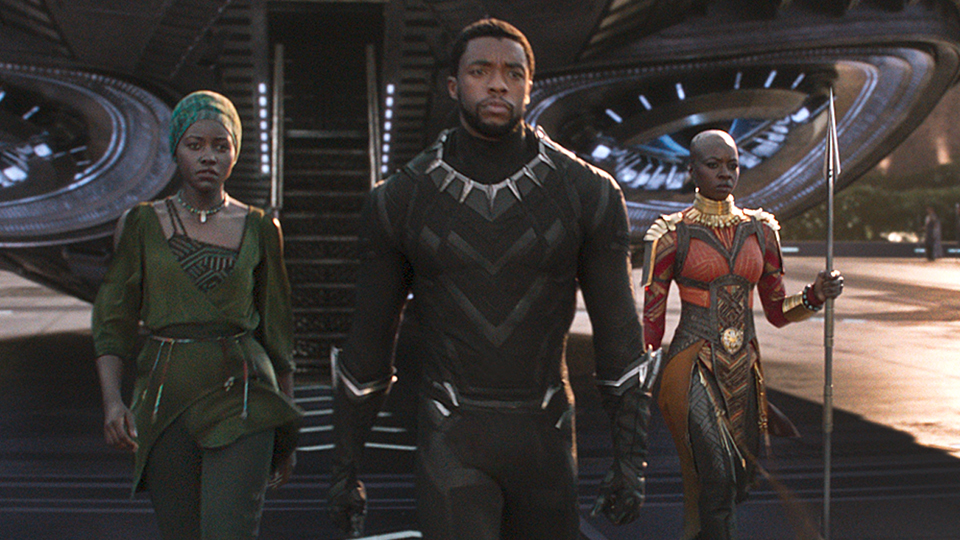
If you’re reading this, it’s either Black Panther Day or Black Panther Eve — yep, it’s time to go to the movies to see Black Panther!

Black Panther GIF - Find & Share on GIPHY

Over these past few months, I’ve been hearing a lot about what we would wear to the movie, what we should eat at the movie, and how we should conduct ourselves at the movie.
Keeping all three of those things in mind, here’s some proper protocol and procedure for watching the Black Panther movie in theaters (because if you buy a bootleg or watch it on Fire Stick, you will never enter the kingdom of Wakanda):

What we should wear to the movie:
• Brothas and sistas, if you want to reenact “Coming To America” and dress like Zamundan royalty, I’ll allow it.
• Brothas and sisters, if you want to go full cosplay, go for it. Bonus points for the sistas who shave their hair in the spirit of the Dora Milaje (and Zhane).
• Dashikis? Yep. Dressing up like you’re going to a 70s party? Count it. Channeling Black heroes of the past? God bless you.

In short, wear whatever you like.

What we should eat at the movie:
• Movie food is expensive, but I believe it’s worth it, in this instance.
• I SAID, MOVIE FOOD IS EXPENSIVE! Brothas and sistas, these are the moments that the big purse was made for. Go ahead and stash something in there to drink. And bring your own snacks. Yeah, I said it.
• I SAID, BRING YOUR OWN SNACKS! SNACKS, I SAY! NOT A SOUL FOOD PLATE! Small chicken wings and fingers are approved in the BPP. Chicken boxes are not.
• Non-perishable food items are OK, unless you need machinery to open them. In that case, they’re probably best for home and/or a local food drive. Thanks.

In short, eat whatever you like. Just save the Sunday spreads for the house.

How we should conduct ourselves at the movie:
• Talking during the movie is absolutely and positively allowed. I am unapologetic about saying this. If you missed something, it gives you another reason to go see the movie. As a matter of fact, I’m planning on using this excuse with my wife.
• If you plan on holding your breath for two hours and 15 minutes because you don’t want to miss a single word that passes from the mouths of Chadwick Boseman and Michael B. Jordan, I respect your unearthly breath control. And you might just be the next great superhero.
• If you insist on acting out every fight scene, I am excited for you. I only ask that you not repeatedly punch the person’s seat in front of you.

In short, be you. Unapologetically.

This movie means a lot of things to a lot of people.

It will be fairly (and unfairly) criticized. I choose to enjoy this experience as I have enjoyed the anticipation leading up to the movie, by buying every single bit of Black Panther mer — forgive me, I had a moment.
I choose to enjoy this experience as I have enjoyed the anticipation leading up to the movie — not by treating it as some social experiment or an exercise in respectability politics.
I just want to have some fun, y’all. We deserve it.

Go enjoy this movie!

Love In The Time of Social Media

I think one of the most ironic things above love on social media is that it’s not actually driven by the idea of love.

It’s driven by likes.

I mean, surely this wasn’t the intent of the founders of social media. They just wanted to make money and to create networks that would make friends and family more accessible. By virtually bringing college buddies and close kin from thousands of miles away to your fingertips, social media changed the way we communicate.

And verily, when they created likes, they changed the laws of love.

Now, people define their very existence by Facebook’s thumbs-up button, or a well-placed heart on Twitter or Instagram. “Likes” validate one’s words, and in some cases, one’s worth.

Evaluating your self-worth through the approval of others sets a dangerous precedence from the outset. But when we evaluate intimate relationships and pending marriages by the impossible standards set on social media … have mercy on us all.

This dynamic came into play on a recent Facebook post about $24 engagement rings sold at Kay Jewelers. Apparently, the initial poster thought it would be funny to pick on recipients of said engagement rings. Of course, this turned into an unhealthy and deeply conflicted discussion about “real love” and commitment.
Is it “cheap” to invest in an engagement ring that’s 30 bucks — after tax? I suppose it depends on how much you have to spend.

Know what’s cheaper than a $30 ring? Cynically linking finance to romance via the sounding board of social media.

I’ll tell you a personal story about engagement rings. Years ago, before I got married I taught a group of teens in Bible study about doing things in “God’s timing.” One of the examples I used expressed the importance of financial preparedness before marriage. I mentioned engagement rings, saying how such a ring could be a large investment if you’re not careful about interest rates.

I wish I’d taken my own advice.

Something that was more expensive than the engagement ring was the wedding. Tens of thousands of dollars spent on extravagance and people — some of whom I haven’t seen since my wedding.

Currently, my beautiful wife and I have a son who is less than a month old. I’m just thinking about what I could do for my son with the money that disappeared with the extravagance and the people.

Most people, if they are honest, have a similar story. They’ll tell you they wish they had saved their money.
That doesn’t make them cheap or mean that they’re falling out of love. It simply means their perspectives and priorities have changed over time.
Another plot twist — Black folks, on average, have little to no wealth. How realistic is it to spend a thousand dollars or more on a ring when some reports say the median Black family is worth $1,700?

Now, I understand it is somewhat unrealistic to expect such a dialogue in the entertainment-based world of social media. And that FURTHER underscores the reason why we should be very careful about how we police the idea of love on social media.

It is time for us to grow up.

We must honestly include finance in our conversations about romance. That honesty could help the relationship between Black men and Black women.
We allow social media to dictate social policy and standards among Black folks, with negative consequences. Despite all of the banter about interracial relationships and parenting, Black people statistically choose each other when choosing a mate. Black parents DO love and want their kids.

Now is a time to be responsible, not reckless.
Our words do matter.
We can’t let personal hate or public scrutiny determine social policy.
It’s time for mutual respect.

It’s time for love. Not just likes.

Anus (Ain’t Us)

Following up Trump
Is like keeping up
With the itsy bitsy spider who went up the rump
Crawling around the toilet bowl
It’s almost as disgusting as Trump’s soul

Unprecedented in being unpresidential
This dude is simple-
Ton of – you know what?
He may be a genius!
Getting elected off of America’s thesis
Fine print
Treating Black folks like they not ish
Coppers beat us like we not worth one cent
Remember, this is the “law and order” president
Now that’s a steaming pile of BS
Yet some folks think this prez is the best?

Stop caping and trying to explain this anus
Who voted this abyss into office? Ain’t us
Everything Trump touches gets tainted
Whole thing got the country looking brainless

Media debating whether to say “s—hole”
Media delaying, clever way of playing their role
What a bunch of boobs
Feeding us Trump through their expensive tubes
They some s-holes too
Trading influence for affluence, riches to rags
Living up to a standard of faux news — sad!

White power hand gesture looks like a pucker
Foreshadows how the country gets reamed by bloodsuckers
Politics is a dirty game
And that’s before Trump called Haiti and Africa out of their names
Dog-eat-dog capitalism plan
Then take a doggie dump in a foreign land

So if comments squirt out that don’t smell like class
It’s the digestional tract of a president who’s an ass

Mourning The “Majority”: Augusta’s commissioners, constituency need to stand strong

This column appears in the December 21, 2017 edition of Urban Pro Weekly.

I first began my coverage of Augusta politics in 2009. Prior to that, my only experience in journalism was in sportswriting. What changed, you ask? My growing interest in social activism led to a quick study of Augusta’s political structure.

The idea of politics might be intimidating to some, yet I am here to tell you that it really isn’t a difficult idea to understand. I believe it’s an idea where representatives of the people work in the people’s best interest. The money from the government, which comes from the people, is allocated in a way that helps the entire populace.

Of course, this is not politics as we know it — in Augusta, or America, for that matter.

Politics is a big money game (I am tempted to type “scheme.”) It is pay-for-play in every way imaginable. Our elected officials don’t do the bidding of the people. They do the bidding of corporations.

Politics isn’t just about economics, though. On a very simple, yet fundamental level, politics is also about race.

Take the Atlanta mayor’s race and runoff, which Keisha Lance Bottoms won by the “skin of her teeth.” A map that displayed the voting results by precinct showed a literal divide down the middle of the city. (The map is pictured here). 

No matter how progressive or civilized we like to think we are, oftentimes, we vote for the candidate that looks like us.

It’s an undeniable bias. But what happens when the elected officials who look like us don’t truly represent us?

This is exactly the case of what happened when the Augusta Commission — a governing body where six of the 10 commissioners are Black — balked on a deal to build a new James Brown Arena at the Regency Mall property.

The four white commissioners stood firm. They knew anything short of retaining the JBA in downtown Augusta would be a loss for them.

The six Black commissioners? Not so much. 

Whether intentionally or no, they have mishandled the JBA proposal at Regency Mall so poorly that they ended up, to quote Teddy Pendergrass, as “two-time losers.”

First, and most importantly, they let down the predominately Black constituency in South Augusta, and Augusta overall. For the time being, and seemingly the foreseeable future, they failed to secure an economic jewel that could revitalize South Augusta.

Secondly, the six Black commissioners did nothing to earn the respect of those who were opposed to the proposal in the first place. They are still seen as a bunch of incompetent stooges.

Ironically, and with a touch of racism, a boisterous group of (predominately) white folks also see the commissioners and Mayor Hardie Davis as “corrupt.”

Of course, there was very little talk of “corruption” as Augusta built a TEE Center, a parking deck and gentrified downtown Augusta. What, you think white folks in power are going to tell on themselves?

So, the question remains — what do we do?

It’s simple in practice, but hard to execute. We must maximize our majority.

Here’s what commissioners and other elected officials need to understand — representation is more important than re-election.

Elected officials spend so much time trying to please the media and corporate entities that they forget about serving the populace.

Truth is, Black commissioners will never please Augusta’s white-owned media. That’s why it’s foolish to build a legacy on what they think and say.

Instead, build your legacy on the ABC’s — be men of action, boldness and candor.

People will not always agree with you, but at least conduct yourselves in a way where you demand peoples’ utmost respect.

Black folks might not always have the money, but there are times when we have the masses. And it’s important, in those moments, to push our weight around and make a passionate effort to create lasting change in our community.

Why Are We Still Surprised? Celebrity revelations, sexual allegations show that Hollywood, politics are one big lie

This column appears in the November 30, 2017 edition of Urban Pro Weekly.

Today Show host Matt Lauer. CBS This Morning host Charlie Rose. Minnesota Senator (and former Saturday Night Live actor) Al Franken. Michigan State Representative John Conyers.

All of these men have been in the news, and some have been fired, in the face of sexual harassment allegations. Their names aren’t the only ones.

Ever since early October, when scandal found its way to Hollywood producer Harvey Weinstein’s doorstep, sexual allegations have made the news on virtually a daily basis.

The response I’ve gathered from the media, as well as family and friends, is one of shock and surprise, even as the tawdry laundry list grows.

Whenever “revelations” such as these hit the media, I try to look at the bigger picture.   

First, let’s look at the greater society. Our relationships lack civility and benevolence. In relationships, whether business or personal, we are power-hungry and sex-crazed people. This leads to symptomatic problems on a small scale such as catcalling. On a larger scale, there are scary divorcing trends.

In the case of Hollywood and politics, we see a familiar story — SYSTEMIC oppression. The names we see in the news represent a larger problem — a culture of celebrities wielding their power in an abusive and destructive way.

I will ask the same question again, though: why are we still surprised?

Let’s look at what’s happening another way. Instead of looking at these allegations post-Weinstein, let’s look at these allegations post-Trump.

In doing so, it is perfectly logical to wonder how in the world President Donald Trump is able to retain his status and position in the face of sexual allegations, as other celebrities lose their jobs and social standing.

The answer is simple — Trump has the financial backing and the zealots to withstand the media frenzy. As a matter of fact, the grabber-in-chief embraces the controversy, almost to the point of trolling us all. His Twitter posts and questionable leadership keep him in the public eye, which is all the better for him, and all the worst for us.

Still, there is a larger issue.

We see celebrities and politicians in a glorious light. Love them or hate them, we worship them to a fault. We study their every move and define our lives through theirs. As Black people, we associate our aspirations of wealth (and sometimes our wealth itself!) to the likes of Oprah, Beyonce and Jay Z. This is a recipe for disaster.

As it relates to our politicians, we care more about their personal lives than we do the policies they enact. This is also a recipe for disaster.

This series of sex scandals in Hollywood and in the political realm should make us not only question these individuals, but the systems themselves. If we can’t trust the shining stars of Hollywood, who can we trust? If we can’t trust our elected officials, who can we trust?

Leave it to me, with a smiling face, to answer that question — trust NO ONE but God.

Challenge yourself to look past the glitz and glamour of Hollywood, along with the prestige and popularity of politics. Look at the least of those in your communities and ask how some people can have so much while some people have so little, and very few people show WITH THEIR ACTIONS that they actually care.

Today is the day to stop acting surprised. Hollywood and the political realm have been exposed, and we are all the better for it. We should also hold folks in our communities accountable for this type of behavior. I don’t care if it’s your favorite pastor or your dearest relative — sexual abuse cannot and should not be tolerated.

Unknowingly (or knowingly), we are the ones that make up the systems which allow celebrities and politicians to prosper. If we want to dictate change, then we have to uphold these entities to a higher standard.

In other words, stop being surprised by a system of lies.

The Paranoia Paradox: Why is it so difficult to separate the message from the messenger?

This column appears in the November 16, 2017 edition of Urban Pro Weekly.

Steve Bannon.

His name is a polarizing one. His alignment with President Donald Trump and his alleged ties to white supremacy ensure that his name will always be at the center of some controversy.

Yet here he was recently in Charleston, S.C., with a group of Black business leaders, where he said the following:

“Minority entrepreneurs are the biggest customers of community banks. And you know why they didn’t get recapitalized? Because nobody cares. When it comes time to make the deals, you’re not in the room.”

In short, Bannon said that Black-owned businesses are more likely to rely on local banks — banks which didn’t receive the same bailout opportunities as bigger banks nearly a decade ago.

Oh, I know what you’re thinking: Bannon has an ulterior motive. It is quite possible. That doesn’t make the message any less true.

I choose to describe this dynamic as the “paranoia paradox.” It’s a dynamic where a profound message may come from a questionable source.

Make no mistake about it, I don’t trust Bannon. His policies and ideologies speak for themselves. 

As Louisiana State Representative Cedric Richmond explained when Bannon left the Trump White House in Augusta, “firing Steve Bannon is not enough because the issue of him working in the White House has never only been about him.

“It’s also been about the racist and discriminatory policies he’s helped draft and implement which hurt African Americans and other communities of color.”

A return to harder drug laws? Check.

Muslim ban? Yep. 

A threat to sue universities with affirmative action policies? Noted.

Here’s the thing, though. When I heard Bannon’s comments and that he met with members of the Black business community, I had a singular thought:

“Why aren’t liberals talking like this?”

With all of the turmoil going on in the Democratic party, it really is a sad day when conservatives — no, supremacists — engage your base regarding wealth inequalities.

How it is that an alleged white supremacist can speak with more conviction about the concerns in the Black business community than the party whom Black folks have married themselves — for better or for worse?

Allow me to explain the difference between Republicans (well, Tea Party Republicans) and Dems. Teapublicans, on the whole, don’t want to associate or identify with Blacks — and the current political climate doesn’t inspire any urgency to do so. They are comfortable with using terms such as “Black on Black crime” and “single parenthood” to characterize our people.

Democrats, meanwhile, will pander to you, pray with you and even promote you politically.

There’s just one catch — you can’t speak for yourself with the Democrats. The Dems, in their current neoliberal state, want to speak FOR YOU.

Why is this significant? Because politicians (READ: the establishment) are afraid to say things like BLACK LIVES MATTER. They are slow to explain why the ‘hood looks the same under Democratic leadership as it does under Republican leadership. 

Ultimately, letting a politician speak for you is like letting a corporation speak for you. Why? Because politics are controlled by corporate interests (and money) like never before.

This is why it’s imperative for Black people to not get caught up in party politics. Even further, we can’t dismiss conversation simply because it doesn’t come from the right person from the right party at the right time. We must learn to separate the message from the messenger, because the truth is always in season.

And rest assured, Bannon should be held accountable for this truth. Whenever he pushes policy opposite of this commentary, we should be there to blast him.

Black people, on the whole, are in too precarious of a position to fall victim to the paranoia paradox. 

Like the Good Book says, the truth will make you free.

Superdelegates And The Culture Of Protecting Party Politics

This column appears in the March 17, 2016 edition of Urban Pro Weekly.

If you’re reading this column in Urban Pro Weekly, my guess is that the most vile, repugnant term you can hear in politics is “Donald Trump.” Or “Republicans.”

And truthfully, I understand your angst. The fact that Trump could run a campaign based in fear, misinformation and without policy is alarming and disgraceful. In terms of the Republican Party, it is, as Malcolm X said, an example of “the chickens coming home to roost.”

However, when it comes to the Democratic wing of politics, there are some skeletons falling out of the closet as well. (That’s why America needs to get past the two-party system, but that’s a conversation for another column.) It started with a simple question recently – “What is a ‘superdelegate’?”

Google defines it as “(in the Democratic Party), an unelected delegate who is free to support any candidate for the presidential nomination at the party’s national convention.” Wikipedia gives a more in-depth definition, gives historical perspective and even outlines who these “superdelegates” really are.

In short, they are 20 “distinguished party leaders,” which consists of high-ranking political figures, past and present; governors; House and Senate members, and Democratic National Committee members.

For Google and Wiki’s specific and dynamic definitions, I have one that cuts to the heart of the matter  – it’s a way for Dems in power to protect party politics and to ensure their survival. They are doing so at the expense of their constituents.

Take the current race between Hillary Clinton and Bernie Sanders. As of Tuesday night’s primary results, Clinton had a 1,094-774 advantage in pledged delegates. That is by no means a runaway; in fact, looking at a streak of states which favor Sanders, it shows the race is not nearly over. However, Clinton has a 467-26 advantage in “superdelegates.” The influence of high-ranking officials and “party pals” gives Clinton a sickening boost.

It is ANYTHING but Democratic.

I understand that primaries are nothing more than projections, but how can Democrats legitimately advocate the idea of “one man, one vote,” when there are party officials who essentially have the voting power of ENTIRE STATES? It is absurd and un-American.

It has also inspired a social media campaign from yours truly. I am a superdelegate. Why? Because I vote in every election. I am aware of and inform people about the politics in my community, whether local, state or national. I am democratic with my intake of information, as well as what I share with the public. My vote AND my voice matter.

Recently, the people of Chicago made their collective voice matter in their disapproval and protest at a recent Trump rally. The nation appeared to stand up in applause. It was a seminal moment during this campaigning period. In the face of Trump’s disgusting presentation to a base focused on hateful rhetoric, the protest made me proud to be an American.

I am convinced that a similar disapproval of “superdelegates” must be declared. The process of pushing political influence by the powers-that-be is as un-American as Trump’s ideals. Remember, our VOICE matters just as much as our VOTE!

The Poverty Problem: Mo’ Money, Mo’ Problems? Try No Money, Mo’ Problems

This column appears in the October 26, 2017 version of Urban Pro Weekly.

I had a lively conversation with a gentleman in his mid-40s just a few weeks ago. We talked about concerns facing Black people.

I explained to him that the problems among Black people derive from a lack of wealth and resources. His contention was that Black people needed to do for self and needed to have “more discipline.”

Be honest — it’s a commentary that you, the reader, often hear in the media, in the streets, or even in the pulpit.

Wherever you hear it, I am here to tell you, respectfully, of course, that such a commentary is WRONG.

We will start with a comparative analysis of poverty rates in Augusta, as well as two nearby cities — Aiken and Augusta.

In Augusta, there is a majority Black population — over 105,000, according to census numbers. Of that majority, 31.3 percent of Black folks are living below the poverty line, compared to 17.1 percent of whites.

In neighboring North Augusta, Black folks make up close to 20 percent of the population — and 22.8 of us are living below the poverty line. Whites in North Augusta, who make up a significant majority, have a 7.9 percentage of folks living beneath the poverty line.

In the city of Aiken, the numbers are most distressing. Black folks make up just under 30 percent of the population in Aiken — and just under 40 percent of the population lives underneath the poverty line.

Whether we have a Black majority or minority in term of demographics, the problem remains the same — poverty.

Now, some folks will tell you that this poverty is character-based — that the reason why Black folks are so poor is that we’re “lazy.” That we’re shiftless.

Imagine that — the Black folks who built this country during slavery were “lazy.” 

The Black folks who banded together to strengthen their political and financial influence during Reconstruction were “lazy.”

The Black folks who worked during the Civil Rights Movement and those who participated in a boycott where they WALKED TO WORK instead of taking the bus were “lazy.”

Today, there are Black folks who work 50 to 60 hours for minimum wage, barely able to support their families, and they are called “lazy.”

There are more than enough statistics to describe why and how poverty is the problem. What’s sad is that a significant number of you all reading this don’t care about the stats and the facts. You only care about what makes you feel good. You only care about what makes you feel important — feel elitist.

That’s how people can say things like, “If only young men pulled up their pants!” That’s how people can say things like, “If only little girls would stop having babies out of wedlock.” And all the while, never realizing that these are the symptoms of poverty.

Here’s the irony of it all: as much as Black folks hate Trump and his cronies, when you repeat the talking points of respectability politics and Republican strategists, you might as well put on a comb-over with, you little Trumpster!

Fiscal conservatives and neoliberal put policies in place to ensure that rich folks get the big piece of the pie while the rest of us get the crumbs. And all the while, the “powers-that-be” fool us into thinking the poor and impoverished are the ones taking advantage of the system. It’s sick!

The poverty problem is made up of a lot of issues that most derive from wealth disparities. At some point, though, we as Black people have to acknowledge how we aggravate those problems with preconceived notions about the poor.

“It is time for the Negro middle class to rise up from its stool of indifference, to retreat from its flight into unreality and to bring its full resources — its heart, its mind and its checkbook — to the aid of the less fortunate brother.” — Dr. Martin Luther King Jr., “Where Do We Go From Here, Chaos Or Community?” (1968)