This column appears in the April 20, 2017 edition of Urban Pro Weekly.
The idea of “wearing the pants,” whether in the workforce or in a relationship, suggests dominance and executive decision-making.
In other words, whomever wears the pants wields the power. Simple, right?
It is with this idiom in mind that I challenge an idiotic and shortsighted proposal by Augusta (Ga.) Richmond County Super District 9 Commissioner Marion Williams.
Commissioner Williams is leading the charge on a “sagging pants” ordinance, which would ban the practice and possibly lead to fines.
“Your mother, your father and your wife shouldn’t have to ride down the street and look at other people’s underwear when they’re walking down the street,” he explained at a recent committee meeting.
I’ve said a lot of things about this proposed ordinance. I have talked about the irony and the tragedy of a Black commissioner (who also serves as a pastor) who presides over multiple Black districts passing an ordinance that would promote racial profiling. I have also talked about a Black elected official’s most important responsibility, regardless of location or position, should be to improve the economic plight of Black people.
Ultimately, one question keeps coming to mind: “Who wears the pants?”
It’s not the Augusta Commission. If that group, which has a majority of six Black commissioners, wore the pants, they would focus on serving their mostly Black constituency through economics instead of respectability politics. (Respectability politics is the notion that if you dress well and speak well, you will be prosperous and “respected.” We saw how that worked for Dr. King.)
If Commissioner Williams and his Black colleagues “wore the pants,” they would undo the work of the “Gang of Six,” the collection of six WHITE commissioner who, close to a decade ago, greatly cut into city services and made controversial executive decisions without batting an eyelash.
Don’t think for a second that our commissioners don’t know what’s going on in their districts. They know the problems and won’t fix them. Why? Because of fear.
The same thing is happening among our Black pastors. The problems of the Black community are economic in nature and are enforced through White supremacy. Black leaders know this and are scared to challenge the system because the backlash could cost them their livelihoods, and in some cases, their very lives.
Again, we saw how that worked for Dr. King. He was the standard of “respectability politics.” He was gunned down as if he was less than a man.
It is inexcusable for anyone who represents Black leadership – elected officials, pastors and PARENTS – to pass the buck to a supremacist system, chock-full of crooked cops and dangerous legislation. The moments leading up to the type of proposal that Commissioner Williams is presenting are the same type of moments that led up to the “War on Drugs.”
It is shameful that men who campaign on a pedestal of Blackness and campaign on behalf of the “common man” end up being nothing more than carriers of generations of supremacy.
It’s pretty bad when the editorial of a controversial newspaper that has a love-hate relationship with Black folks in Augusta gets it right, and the people’s commissioner gets it wrong:
“While there are decency laws on the books, you can’t legislate dignity or good taste. That comes best from prudent upbringing or creative teaching – not from a police officer.”
The Chronicle gets it and the commissioner doesn’t? Lord help us.
There are two gaps we need to figure out in the Black community AND FAST – the wealth gap and the generation gap.
The wealth gap is an issue of economics. We need more than jobs, we need ways to make money and pass it down to our kids.
The generation gap is an issue of empathy and communication. It’s time out for beating on our kids’ psyches. It speaks to the self-esteem of our entire community that we would rather blame our kids and young adults for society’s problems than to look in the mirror.
We need to do more than tell our kids to tighten their belts around their waist. We need to tighten up when it comes to facing the real issues in our community.



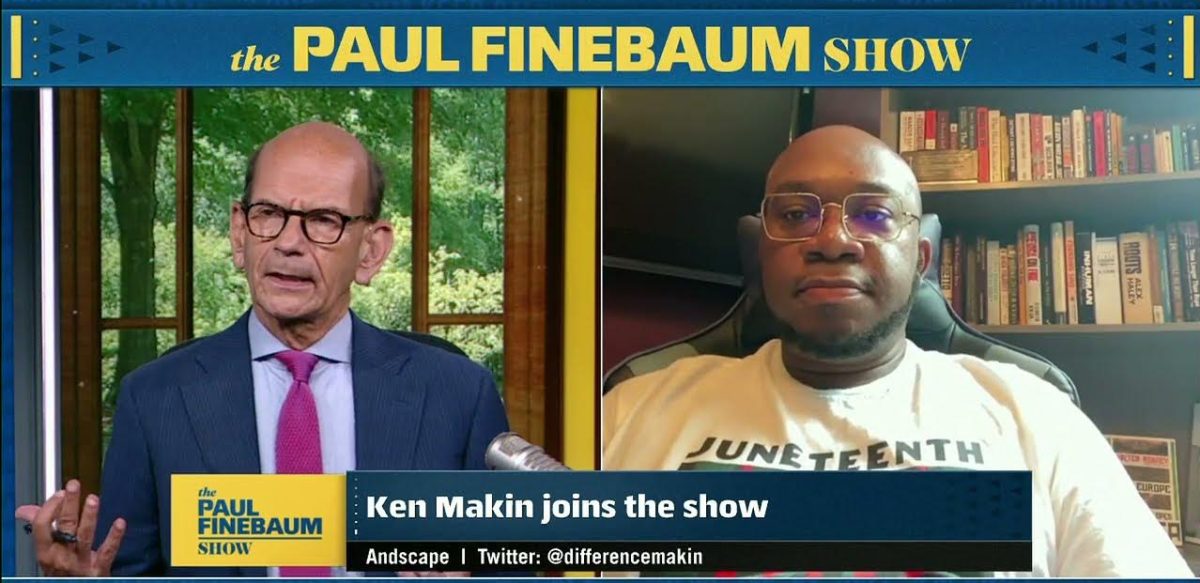
 Ken J. Makin